Geopolitics, EU Crypto Tax Plans and SOL ETF Inflows Shape Market Sentiment
Geopolitical tensions, Germany’s proposed crypto tax changes, U.S. regulatory developments, and continued Solana ETF inflows highlight cross-market pressures shaping crypto investor sentiment.





A flurry of geopolitical, regulatory, and market-structure developments rippled through crypto and broader risk markets this week, as reports of a possible U.S.-Iran agreement to end hostilities collided with unusual oil trading activity, while Europe weighed tougher crypto taxation and U.S. policymakers debated stricter ethics rules for digital-asset legislation.
Geopolitical tension in the Middle East resurfaced after Odaily cited reports that a vessel in the Strait of Hormuz—a critical chokepoint for global crude shipments—was struck by a missile. Any disruption or perceived instability in the corridor can quickly feed into energy prices, inflation expectations, and risk appetite, making it a key macro variable for crypto markets that have increasingly traded as a high-beta proxy for global liquidity conditions.
Against that backdrop, President Trump said on Tuesday ET that he was optimistic about the prospects for a framework agreement between the United States and Iran, suggesting talks could conclude within a week. He indicated that one element under discussion could involve transferring Iran’s highly enriched uranium to the U.S., and said the parties were “close” to a deal aimed at ending the war. Trump also warned that the U.S. could resort to bombing if Iran rejects an agreement, while adding that proposals include Iran refraining from operating underground nuclear facilities and complying with the deal for a substantial period.
Market attention sharpened further after The Kobeissi Letter highlighted what it described as an unusually timed and outsized oil trade. Citing a timeline around an Axios report that the U.S. and Iran were nearing a “14-point” agreement, the analysis said that roughly 10,000 crude-oil futures short contracts—estimated at about $920 million in notional value—were opened in a single burst at around 3:40 a.m. ET on Tuesday, during a period with no major headlines. Axios published its report at about 4:50 a.m. ET, and crude prices were down more than 12% by 7:00 a.m. ET, implying the position could have generated an estimated $125 million in mark-to-market profits. The activity drew scrutiny because of its size and the typically thin liquidity during those hours.
In Europe, Germany is considering a significant shift in how it taxes crypto holdings. PANews, citing Bitcoin News, reported Wednesday ET that German Finance Minister Lars Klingbeil confirmed plans to introduce a different tax policy for Bitcoin (BTC) and other cryptocurrencies. Germany currently treats Bitcoin similarly to gold as a private asset disposal item, exempting gains from tax if the asset is held for more than one year. Removing that exemption and taxing crypto more like stocks would raise the burden on long-term holders and could alter investor behavior in one of Europe’s more crypto-friendly jurisdictions.
Critics argued the proposal could conflict with coalition pledges on tax revenues, while legal experts have raised questions about whether differential tax treatment for Bitcoin could run afoul of constitutional equality principles. Observers also pointed to precedents elsewhere in the region: Austria previously scrapped a holding-period-based crypto tax exemption. Bitpanda co-founder Eric Demuth criticized the idea as potentially increasing administrative costs and complexity without clear benefits.
In the U.S., the now-shuttered exchange Bittrex asked a federal court to void its 2023 settlement with the Securities and Exchange Commission and return a $24 million penalty, according to Decrypt via PANews. Bittrex argued that since President Trump’s inauguration the SEC’s approach to crypto regulation has shifted fundamentally, undermining the assumptions on which the settlement was based. The company had been sued during the Biden administration over allegations tied to unregistered securities activity and later closed operations, citing an inability to continue under the regulatory and economic environment at the time.
Bittrex claimed the SEC has effectively conceded flaws in its prior legal theory that treated most tokens as securities and has paused related enforcement, and it asked the court to order reimbursement before the agency completes a process—said to have started in March—to transfer the penalty to the U.S. Treasury. The motion is being watched as a test of whether evolving regulatory posture can reach backward into concluded enforcement actions.
Security risks in decentralized finance (DeFi) also remained in focus. Blockaid said TrustedVolumes—a market maker and resolver associated with 1inch—was attacked on the Ethereum network, with roughly $5.87 million in assets stolen. The exploited target was a resolver contract, with stolen funds including 1,291.16 wrapped Ether (WETH), 206,282 Tether (USDT), 16.939 wrapped Bitcoin (WBTC), and 1,268,771 USD Coin (USDC), according to PANews. Blockaid assessed that the attacker appears to be the same entity behind the March 2025 1inch Fusion V1 incident, but emphasized that the vulnerability did not stem from 1inch itself; rather, it was linked to a customized RFQ trade proxy contract managed by TrustedVolumes. Further details are expected to be released later.
Despite headline risk, U.S. spot Solana (SOL) ETF flows suggested demand persisted. PANews, citing SoSoValue, reported that U.S. spot SOL ETFs logged net inflows of $21.3014 million on Tuesday ET. The largest contributor was the Bitwise Solana Staking ETF (BSOL), with $20.773 million in daily inflows and cumulative inflows of $850 million. The Fidelity Solana Fund ETF (FSOL) added $528,400, bringing cumulative inflows to $160 million. Total net asset value across U.S. spot SOL ETFs stood at about $938 million, with cumulative net inflows at $1.0444 billion—figures that underscore continued investor engagement with regulated SOL exposure amid broader market crosscurrents.
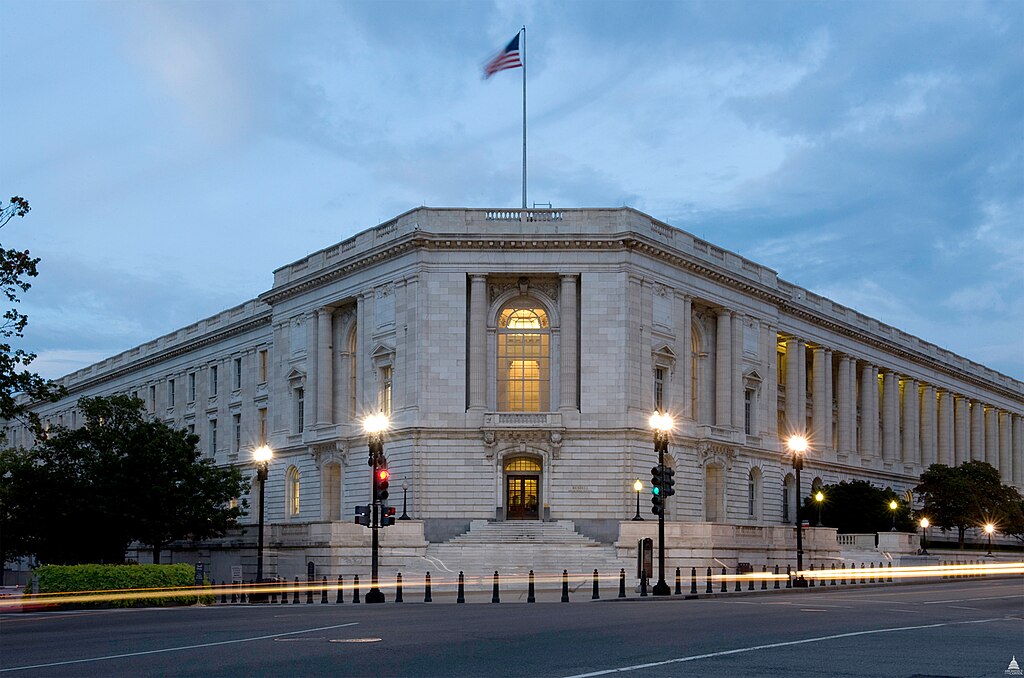
On Capitol Hill, Democratic Senator Kirsten Gillibrand said at the Consensus conference that a crypto market-structure bill may struggle to pass a Senate vote without explicit ethics provisions. Odaily reported that Gillibrand argued lawmakers, senior officials, and the president and vice president should be barred from using inside status to derive private gain from the crypto industry—remarks that come as several Democratic senators have voiced concerns about President Trump and his family’s crypto affiliations. Gillibrand said she is working with the White House and lawmakers from both parties to incorporate ethics language alongside consumer protection and anti-terror-financing provisions, and suggested the bill could pass before the August recess.
In industry developments, Kraken launched a regulated crypto spot leverage trading service for U.S. retail investors, allowing users to post crypto as collateral to access liquidity and trade with up to 10x leverage without selling their underlying holdings. PANews, citing The Block, said the offering is the first product following a licensing push enabled by Kraken parent Payward’s acquisition of Bitnomial. Kraken framed the move as bringing demand back onshore, arguing that U.S. retail traders previously struggled to access such tools in a regulated setting, pushing some activity to offshore, unregulated venues. The company said the acquisition provides a foundation to expand into regulated perpetual futures and options in the U.S., while also supporting its IPO ambitions and broader institutional and derivatives expansion in the U.K. and Europe.
Market participants also monitored token movements that can precede liquidity events. Lookonchain reported Wednesday ET that HyperLabs deposited 400,000 HYPE tokens—worth about $17.34 million—into centralized exchanges Bybit and OKX over roughly 11 hours, after unstaking 421,879 HYPE tokens two days earlier. Large transfers to exchanges are often interpreted as potential sell-side signaling, though no confirmed sale was reported.
Finally, South Korea’s Bithumb said it will list EdgeX (EdgeX) in its Korean won market, according to Odaily, with detailed trading schedules to be provided through the exchange’s official notice.
Taken together, the headlines illustrate how crypto markets are being pulled simultaneously by macro shocks, shifting regulatory baselines, and infrastructure risks. With geopolitical developments influencing energy and inflation narratives, and policymakers tightening scrutiny on ethics and market structure, traders are likely to remain sensitive to both traditional-market catalysts and crypto-native signals in the days ahead.
Article Summary by TokenPost.ai
🔎 Market Interpretation
Geopolitics → Oil → Risk assets: Missile-related reports near the Strait of Hormuz and talk of a potential U.S.–Iran framework deal raised the market’s sensitivity to energy-supply risk. Oil volatility can quickly feed inflation expectations and liquidity conditions—inputs that increasingly influence crypto as a high-beta risk proxy.
Unusual crude positioning heightened “information edge” concerns: A reported burst of ~10,000 crude-oil futures shorts (~$920M notional) during thin liquidity, preceding an Axios report and a >12% oil drop, drew scrutiny around timing and market-structure fragility (and the broader theme of who gets information first).
Europe tax overhang: Germany considering removing the 1-year tax exemption would materially change long-term crypto holder incentives, potentially reducing “HODL” appeal and increasing realized gains activity or outflows to alternative jurisdictions/products.
U.S. regulatory reset being tested in court: Bittrex’s bid to unwind a 2023 SEC settlement frames a key question—whether an evolving enforcement posture can retroactively affect concluded cases—creating uncertainty for precedent, penalties, and negotiated resolutions.
DeFi security remains a persistent idiosyncratic risk: The TrustedVolumes/1inch-related resolver exploit (~$5.87M) underscores that vulnerabilities can sit in third-party/custom contracts even when core protocols claim no direct flaw—keeping “smart contract + integration risk” priced into DeFi.
Institutional/regulated demand signals were mixed but present: U.S. spot Solana ETF inflows (+$21.3M daily; cumulative inflows >$1B) point to continued appetite for regulated SOL exposure despite crosswinds.
U.S. policy optics/economics are converging: Calls for explicit ethics provisions in market-structure legislation show political friction around perceived conflicts of interest, which could slow bills but also increase the odds of clearer guardrails if passed.
Onshore leverage expansion: Kraken’s regulated spot leverage (up to 10x) reflects demand for compliant, U.S.-based risk tools—potentially pulling volume from offshore venues while raising retail risk-management and suitability debates.
Token flow watch: HyperLabs moving ~400k HYPE (~$17.34M) to CEXs is a classic liquidity-event signal (possible sell pressure), though no confirmed sale was cited.
💡 Strategic Points
Track the macro chain reaction: Treat Middle East headlines as a three-step catalyst—(1) supply-risk headlines → (2) oil/inflation expectations → (3) rates/liquidity → (4) crypto beta response. Risk can reprice faster than crypto-native news.
Expect volatility around “deal/no-deal” binaries: If U.S.–Iran talks progress, oil may soften and risk assets may benefit; if talks fail or shipping lanes appear threatened, expect a sharp risk-off impulse (and potential crypto drawdowns) due to liquidity tightening expectations.
Prepare for tax-regime shifts in Europe: Long-term holders and funds should scenario-plan for Germany moving from a holding-period exemption to equity-like taxation: rebalance triggers, realization timing, custody/reporting overhead, and potential migration to regulated wrappers.
Settlement-finality risk: If Bittrex’s motion gains traction, other firms may revisit prior settlements, introducing uncertainty in enforcement “closure.” Traders should monitor legal outcomes as they can shift sector-wide regulatory risk premia.
DeFi counterparty mapping: The TrustedVolumes incident highlights the need to assess not only protocols but also resolvers, RFQ proxies, and market-maker infrastructure. Diversify routing and set tighter limits on integrations with bespoke contracts.
ETF flows as positioning telemetry: SOL ETF inflows can act as a real-time proxy for U.S. regulated demand. Sustained inflows may cushion drawdowns; sharp reversals can foreshadow broader de-risking.
Policy timeline management: Gillibrand’s ethics شرط suggests a negotiation bottleneck. If ethics language is added, passage odds may improve; if not, delays into/after recess could extend uncertainty for exchanges, brokers, and token issuers.
Leverage availability increases tail risk: Kraken’s 10x spot leverage can amplify intraday moves and liquidation cascades in correlated assets. Retail participants should size smaller, use hard stops, and assume higher gap risk around macro headlines.
Watch exchange deposits for near-term supply: Large CEX deposits (e.g., HYPE) are not proof of selling, but they increase the probability of near-term distribution. Combine with order-book depth and funding/borrow rates for confirmation.
📘 Glossary
Strait of Hormuz: A narrow maritime chokepoint through which a large share of global crude shipments pass; disruptions can spike oil prices and volatility.
Crude-oil futures short: A derivatives position that profits if oil prices fall; large shorts opened quickly can signal hedging, speculation, or information advantage.
Notional value: The face value of a derivatives position used to measure exposure; it is not the same as margin or cash invested.
Thin liquidity hours: Periods with fewer active participants and lower order-book depth; large orders can move prices more and draw scrutiny.
Holding-period tax exemption: A rule that reduces/waives capital-gains tax if an asset is held for a minimum time (e.g., 1 year).
Market-structure bill: Legislation defining roles and rules for trading venues, intermediaries, disclosures, consumer protections, and oversight responsibilities.
Ethics provisions: Rules designed to prevent officials from profiting from non-public information or conflicts of interest related to policymaking.
SEC settlement: A negotiated resolution with the regulator, typically involving penalties and compliance commitments without a full trial.
DeFi resolver / RFQ proxy contract: Infrastructure used to source quotes and execute trades (often off-chain quoting with on-chain settlement); customized contracts can introduce unique vulnerabilities.
WETH / WBTC / USDT / USDC: Tokenized representations of ETH and BTC (wrapped forms) and two major U.S. dollar stablecoins, commonly used in DeFi liquidity and settlements.
Spot Solana ETF (U.S.): A regulated fund designed to track SOL exposure; flows/inflows measure net capital moving into these vehicles.
Net inflow: The day’s creations minus redemptions for an ETF; a proxy for demand.
Centralized exchange (CEX) deposit: Moving tokens to a trading venue; often monitored as a potential precursor to selling or liquidity provision.