

 News
News  Coin Information
  About us
  Customer Service


 Add as a preferred source on Google

XRP extended its slide on Thursday ET after the U.S. Senate delayed a key vote on the ‘CLARITY Act,’ a market-structure bill aimed at defining regulatory lines for digital assets—an outcome traders viewed as prolonging ‘regulatory uncertainty’ across the sector.
As of Thursday ET, XRP was changing hands around $1.0332, down roughly 1.45% over the past 24 hours and about 3.93% over the past week, according to figures cited by multiple market trackers. Several outlets described XRP as the weakest performer among major tokens on the day, underscoring how closely the asset’s price action remains tied to changes in U.S. policy expectations.
The Senate’s decision to push the CLARITY Act vote to September dampened near-term sentiment, as the bill is widely seen as a potential framework for clarifying which federal agencies oversee different segments of the crypto market. Analysts said the postponement removes a near-term catalyst and reinforces the view that U.S. rulemaking will remain uneven, keeping risk premia elevated for tokens viewed as especially sensitive to enforcement and classification debates.
Market data suggested selling pressure was met by heavier participation. XRP’s 24-hour trading volume was estimated at about $1.48 billion, up roughly 8.81% day over day, while another report put volume closer to $1.51 billion—figures that point to ‘liquidity’ increasing even as price softened. Traders have been watching the $1.00 area as immediate support, with recent intraday ranges clustering near $1.01 to $1.06. A decisive break below $1.00, some strategists warned, could open the door to deeper downside as stop orders and momentum positioning accelerate.
Fundamentals, however, offered a different narrative from the short-term tape. Ripple, the company closely associated with XRP’s ecosystem, has continued to expand its regulatory footprint in Europe. South Korean outlet TokenPost reported that Ripple recently secured a Crypto-Asset Service Provider license from Luxembourg’s financial regulator, the Commission de Surveillance du Secteur Financier (CSSF). Under the European Union’s MiCA framework, a CASP authorization is viewed as a significant step toward compliant operations and scaling services for institutional clients across the region.
On the technology side, developers in the XRP Ledger (XRPL) community have circulated an upgrade proposal that would move multi-signature coordination from an off-ledger process to an on-chain mechanism. Proponents argue that an on-chain design could improve ‘security’ and ‘transparency,’ features increasingly demanded by enterprise and institutional partners that require auditable controls.
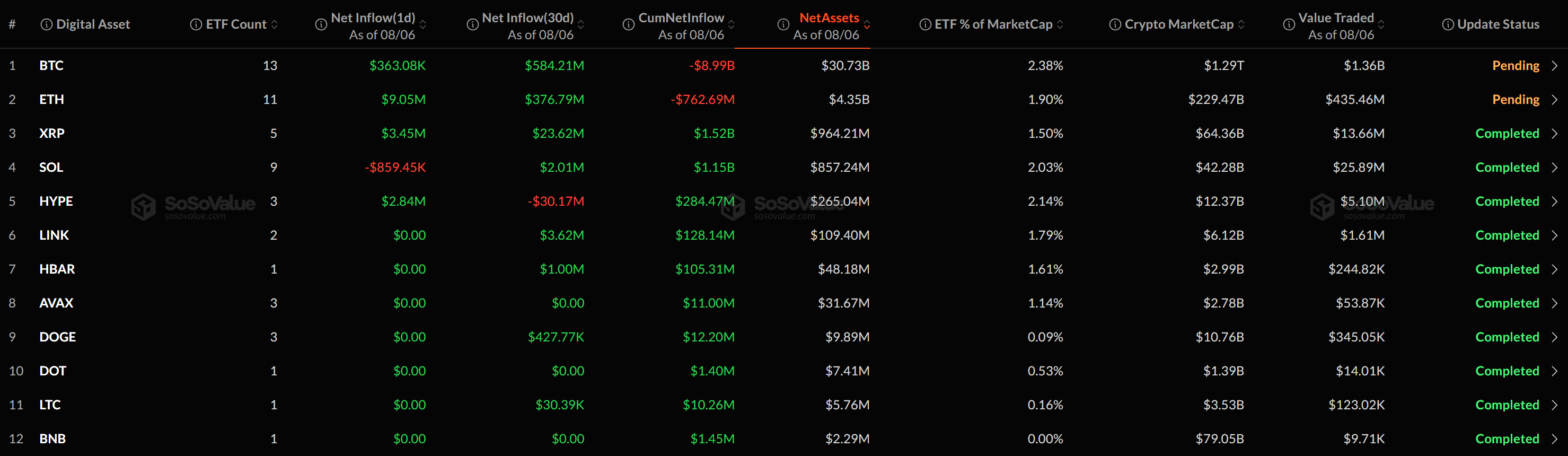
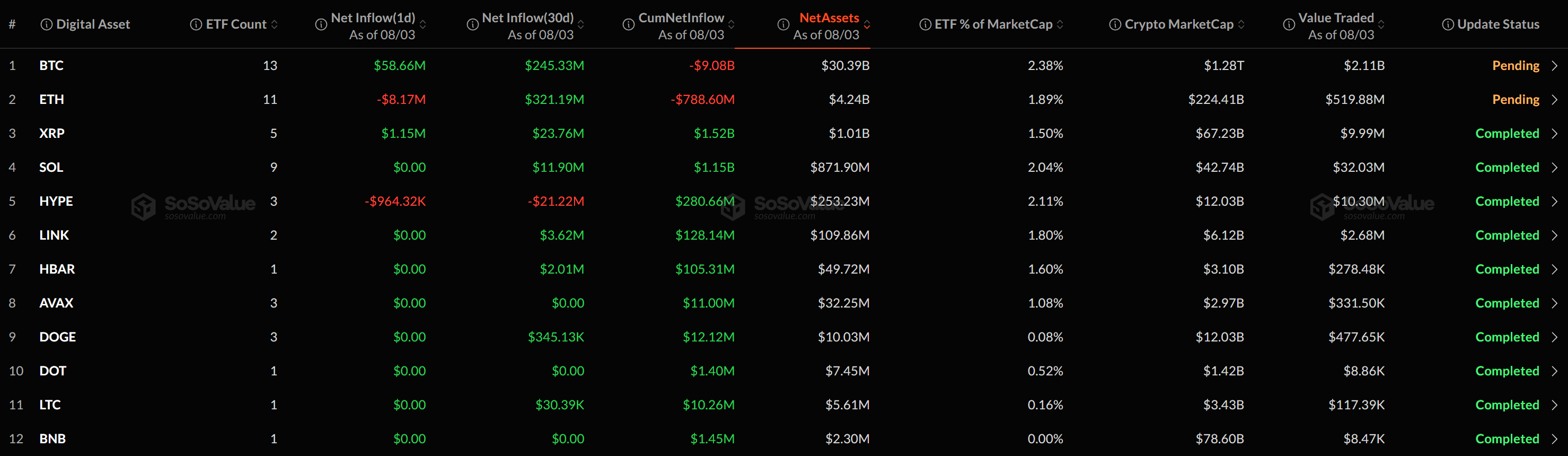
Institutional positioning signals also remained mixed but not outright negative. A Bitget report noted that XRP stayed included in Grayscale’s CoinDesk Crypto 5 ETF (GDLC) through its latest scheduled rebalancing, suggesting that the token continues to hold a place in diversified crypto allocation baskets even amid regulatory headline risk.
Despite the day’s relatively modest decline, XRP’s broader trend remains under pressure. The token is down about 4.11% over the past month and roughly 27.38% over the last 90 days, while maintaining a market capitalization near $64.6 billion—keeping it around sixth place among global cryptocurrencies. Looking ahead, traders are likely to focus on two near-term signposts: whether $1.00 continues to hold as technical support, and whether September’s rescheduled CLARITY Act vote restores momentum to the market’s ‘policy clarity’ narrative.
🔎 Market Interpretation
- Primary driver: XRP weakened after the U.S. Senate delayed the ‘CLARITY Act’ vote to September, extending perceived U.S. crypto regulatory uncertainty.
- Price/return context: XRP traded near $1.0332, down ~1.45% (24h) and ~3.93% (7d), described as among the weakest major-token performers on the day.
- Risk premium effect: Traders appear to be pricing a longer period of uneven rulemaking and enforcement/classification debate—conditions that typically increase discount rates (risk premia) for policy-sensitive assets.
- Liquidity vs. direction: Volume rose to roughly $1.48B–$1.51B (+~8.8% day/day) even as price declined, indicating heavier participation consistent with distribution/hedging rather than a low-liquidity drift.
- Key technical battleground: Market focus is concentrated on the $1.00 level; recent trading clustered around $1.01–$1.06. A clean break below $1.00 is framed as a potential trigger for stop-driven acceleration.
- Timeframe divergence: Short-term sentiment is policy-headline driven, while fundamentals show constructive developments (EU licensing, XRPL upgrade activity) that may matter more on multi-month horizons.
💡 Strategic Points
- Scenario watch (policy catalyst): The rescheduled September CLARITY Act vote is the next major sentiment waypoint; traders may position for volatility around legislative headlines.
- Support/trigger management: The $1.00 handle functions as a clear risk line for both spot holders and derivatives participants; a sustained move below may change market structure from range-trading to trend-following.
- Volume interpretation: Rising volume on a down day can signal either capitulation (potentially near a local low) or distribution (continuation risk). Confirmation typically comes from follow-through price action and whether volume stays elevated.
- Fundamental offset (EU regulatory progress): Ripple’s reported Luxembourg CASP license under MiCA supports a narrative of improving compliance posture and potential institutional access in Europe, partially counterbalancing U.S. uncertainty.
- Network upgrade angle: Proposed XRPL changes to move multi-signature coordination on-chain may improve auditability and controls—attributes valued by enterprise users—though timelines and adoption remain key execution risks.
- Institutional basket signal: Continued inclusion in Grayscale’s GDLC through rebalancing suggests XRP remains part of diversified allocation products, even if standalone sentiment is headline-sensitive.
- Trend reality check: Despite the modest daily drop, XRP remains down ~27.38% (90d), implying rallies may face overhead supply until either policy clarity improves or technical trend reverses.
📘 Glossary
- CLARITY Act: A proposed U.S. market-structure bill intended to clarify regulatory jurisdiction and rules for digital assets; delays can extend uncertainty for token classifications and oversight.
- Regulatory uncertainty: Market condition where unclear or shifting rules increase perceived legal/compliance risk, often widening risk premia and volatility.
- Risk premium: Extra return investors demand to hold a higher-risk asset; in crypto, it can rise with enforcement risk, unclear classifications, or policy instability.
- Liquidity: How easily an asset can be bought/sold without moving price materially; often proxied by trading volume and order-book depth.
- Support level: A price area where buying interest historically emerges; a break can trigger stop-loss orders and momentum selling.
- Stop orders: Conditional orders that execute after a trigger price is reached; can amplify moves when clustered around key levels.
- CASP (Crypto-Asset Service Provider): A regulated entity permitted to provide crypto services (e.g., custody, exchange, brokerage) under applicable frameworks such as the EU’s MiCA.
- MiCA: The EU’s Markets in Crypto-Assets regulation, creating a harmonized licensing and compliance regime across member states.
- XRPL (XRP Ledger): The blockchain network associated with XRP, used for payments and tokenized asset functionality.
- Multi-signature (multisig): A security scheme requiring multiple approvals/keys to authorize transactions; moving coordination on-chain can improve auditability and transparency.
- GDLC (CoinDesk Crypto 5 ETF): A Grayscale product tracking a basket of major crypto assets; inclusion can reflect ongoing institutional product exposure.

















Comment 0