
 Add as a preferred source on Google
Treasury Proposes Rules for U.S. Deals Tied to Sensitive Foreign Tech
The draft would require notice for some transactions and prohibit others, with written comments due Dec. 7, 2026.

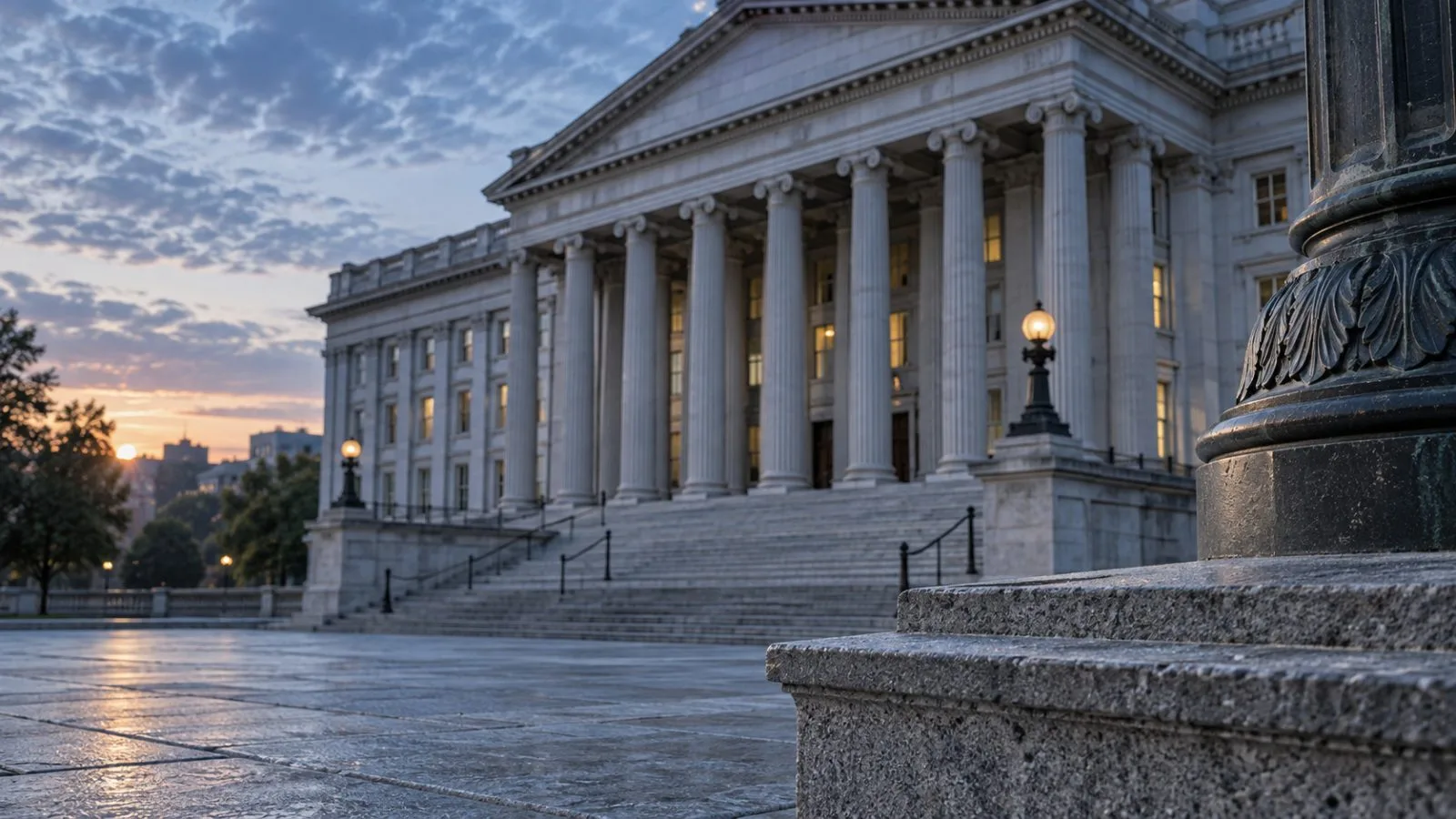
The U.S. Treasury Department proposed rules Thursday that would require notice for some transactions involving covered foreign persons and designated technologies and prohibit others, broadening a national security program for outbound U.S. investment.
The technology categories include semiconductor technology and microelectronics, super intelligence (SI) systems — the draft’s term for AI systems — quantum information technologies, high-performance computing and supercomputing, and hypersonic systems. The draft would also add biotechnology to the program.
The proposed country-of-concern list names China, Hong Kong and Macau, Cuba, Iran, North Korea and Russia. The underlying law also names Venezuela under the Maduro regime, but Treasury’s proposal says Venezuela does not meet that definition because the named regime no longer exists. Some transactions involving Venezuelan entities could still be covered under other provisions.
Potentially covered transactions include equity purchases, certain debt financing, joint ventures, starting new operations or expanding existing ones, and some limited-partner investments in pooled funds. The draft distinguishes between activities that would require notice and those it would prohibit, rather than applying a blanket restriction to every investment in the listed sectors.
Exceptions include publicly traded securities, certain investment-company securities and some fund investments. Treasury proposed a $50,000 de minimis exception for notification requirements only; it is not a general cutoff for the program.
Treasury has also enforced the current program. In 2026, it imposed a $200,000 penalty on Amidi, LLC, over a failure to notify the department about an approximately $92,478 investment in Chinese AI company Noematrix by Amidi’s Chinese fund subsidiary in April 2025. The case was covered in an earlier report on the penalty.
Treasury Secretary Scott Bessent said the proposal “would strengthen the existing Outbound Investment Security Program to prevent our adversaries from using U.S. investment to develop critical technologies that threaten U.S. national security.”
Treasury’s current outbound investment program began operating Jan. 2, 2025, and covers specified transactions tied to China, including Hong Kong and Macau. Those rules remain in place while the proposal is reviewed. Written comments are due Dec. 7, 2026, and the final rule will establish when any new requirements take effect.
Riza Dagoc
Riza Dagoc reports on regulation, investing and the digital-asset business for TokenPost. Send corrections or tips to info@tokenpost.com.