

 News
News  Coin Information
  About us
  Customer Service


 Add as a preferred source on Google

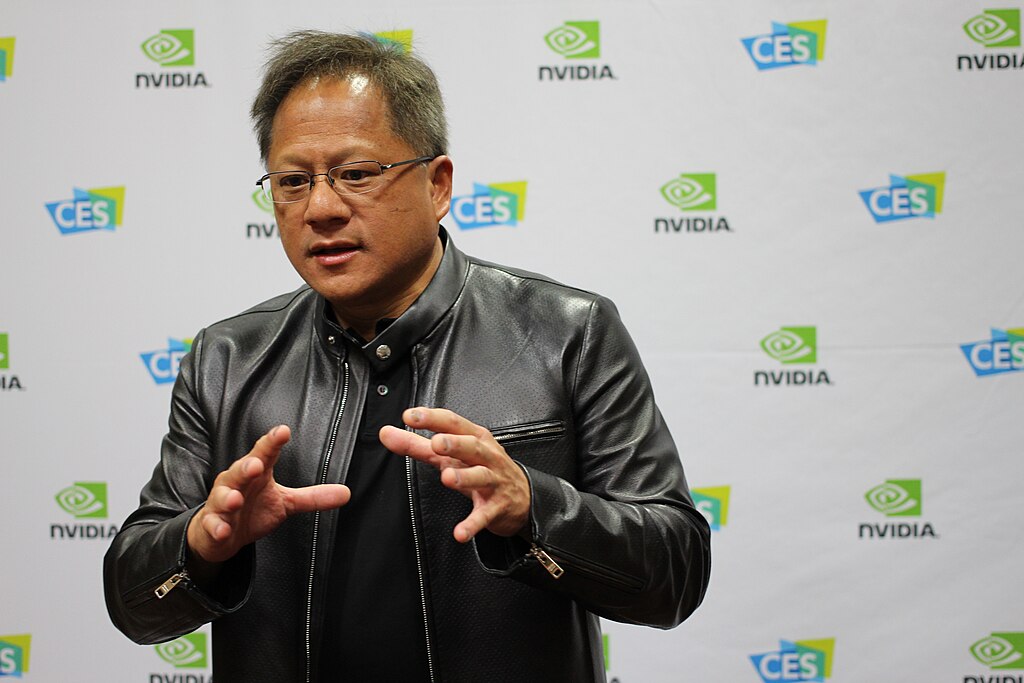
Nvidia (NVDA) CEO Jensen Huang believes the global race for artificial intelligence will not be won through one dramatic breakthrough but through continuous, compounding progress. Speaking on The Joe Rogan Experience, Huang compared today’s pursuit of AI dominance to past technological races, such as the Manhattan Project and Cold War-era innovation, noting that each era reshaped geopolitical power. The difference now, he said, is speed: AI evolves in rapid waves that may seem subtle at first but become undeniable over time.
Huang emphasized that the stakes are extremely high. Nvidia, as a leading maker of advanced AI chips, has seen firsthand how quickly machine intelligence is scaling. According to Huang, AI systems have grown roughly 100 times more capable in just the past two years, driving both excitement and public fear over issues like autonomous weapons, runaway algorithms, and machines operating without human ethical boundaries.
However, Huang countered these concerns by asserting that much of the industry’s progress is moving toward reliability, safety, and practical functionality. He argued that modern AI is becoming more stable, more accurate, and more useful—not more dangerous. He also defended the involvement of the U.S. military in AI development, saying that defense participation brings structure and accountability rather than leaving advanced systems in the hands of opaque actors.
When Rogan raised concerns about AI surpassing human judgment or quantum computers breaking encryption, Huang responded that AI innovation will remain “a click ahead” of such risks. He pointed out that society has often reacted with fear to transformative technologies before ultimately adapting through regulation and familiarity.
Huang’s long-term vision for AI is not a dramatic finish-line moment. Instead, he imagines AI becoming everyday infrastructure—embedded into healthcare, transportation, and countless systems—quietly powering the world in ways people eventually take for granted because the technology simply works.



















Comment 0