
 Add as a preferred source on Google
U.S. Wind and Solar Cost Estimates Undercut Gas as Fossil Plans Grow
Fossil plants account for about 30% of a roughly 285-gigawatt U.S. power pipeline that also includes battery storage.

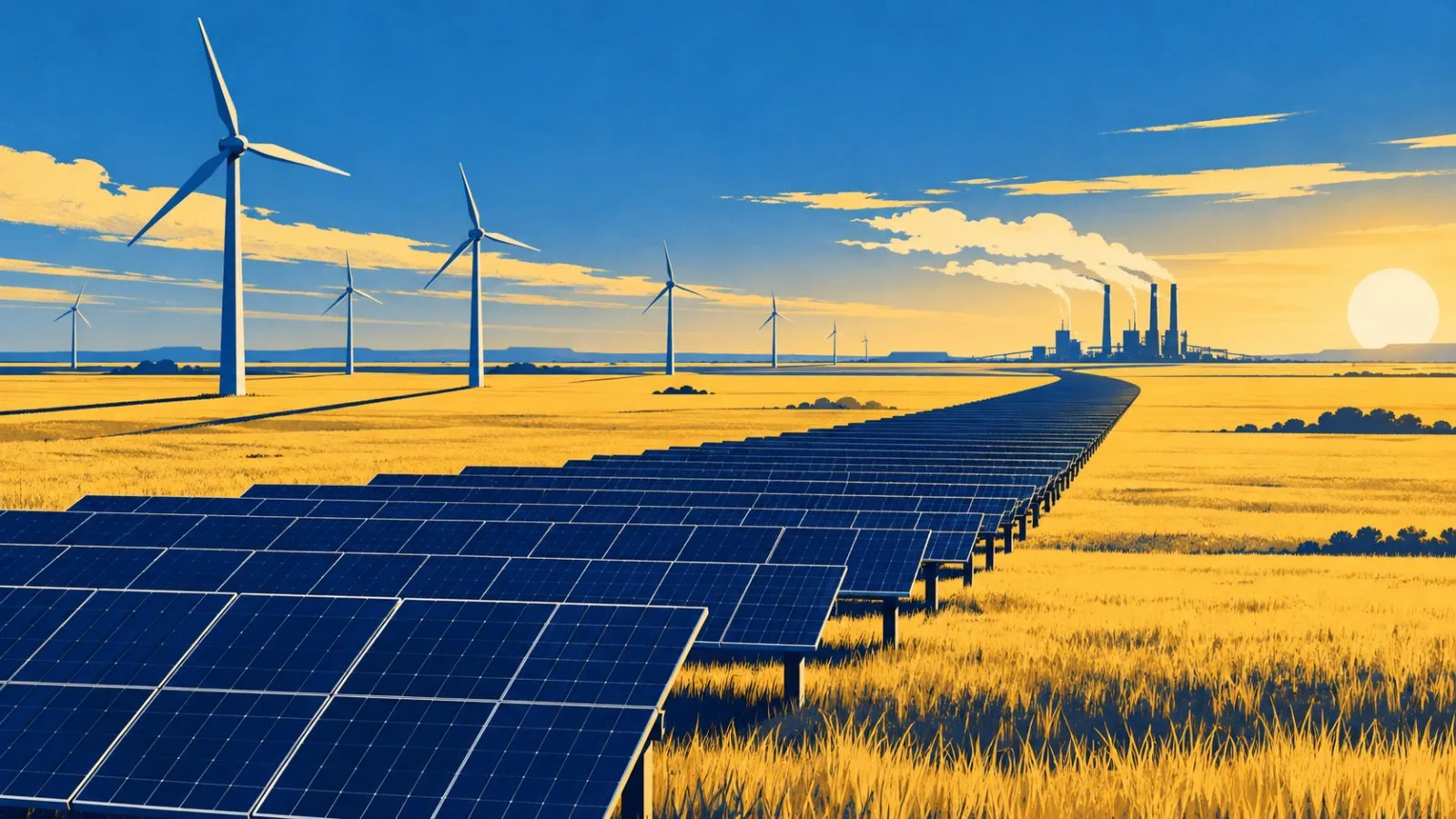
Estimated costs for new onshore wind and utility-scale solar remain below those for combined-cycle natural gas in 2026, even as U.S. developers expand gas-power plans amid rising electricity demand.
On an unsubsidized, levelized basis, onshore wind is estimated at $68 per megawatt-hour and utility-scale solar at $69, compared with $90 for combined-cycle gas. The wind and solar estimates are higher than in 2025; their cost advantage over gas does not mean their estimated costs fell. The comparison excludes some grid costs, including transmission and distribution investment, and may not fully reflect recent increases in gas-turbine costs.
Fossil plants account for about 30% of roughly 285 gigawatts of planned and under-construction U.S. power capacity in the second-quarter 2026 snapshot. That pipeline includes battery storage, and clean power still holds the largest share. Planned fossil capacity measured in gigawatts has reached its highest level since 2016.
Developers expect about 68 gigawatts of new fossil capacity, nearly all natural gas, to enter service from 2026 through 2030. At the end of 2025, their estimate for the same period was 47 gigawatts. Both figures describe planned service dates, not completed plants.
The 30% figure measures fossil fuels’ share of projects in development. It does not describe their share of electricity currently generated in the U.S., and the planned capacity does not guarantee that every project will be built.
U.S. electricity demand is projected to grow 25% to 50% from 2025 to 2050. Electric vehicles and data-center servers account for 50% to 80% of that projected growth across modeled cases. The generation-cost estimates do not establish what individual electricity users will pay.
If schedules reported in the second-quarter 2026 data hold, fossil fuels could provide about 70% of new power capacity entering service in 2030. Gas-turbine shortages and uncertainty over future electricity demand could delay or prevent some of the planned plants.
Simon Yoon
ReporterSimon Yoon reports on blockchain technology for TokenPost. Send corrections or tips to info@tokenpost.com.