

 News
News  Coin Information
  About us
  Customer Service


 Add as a preferred source on Google
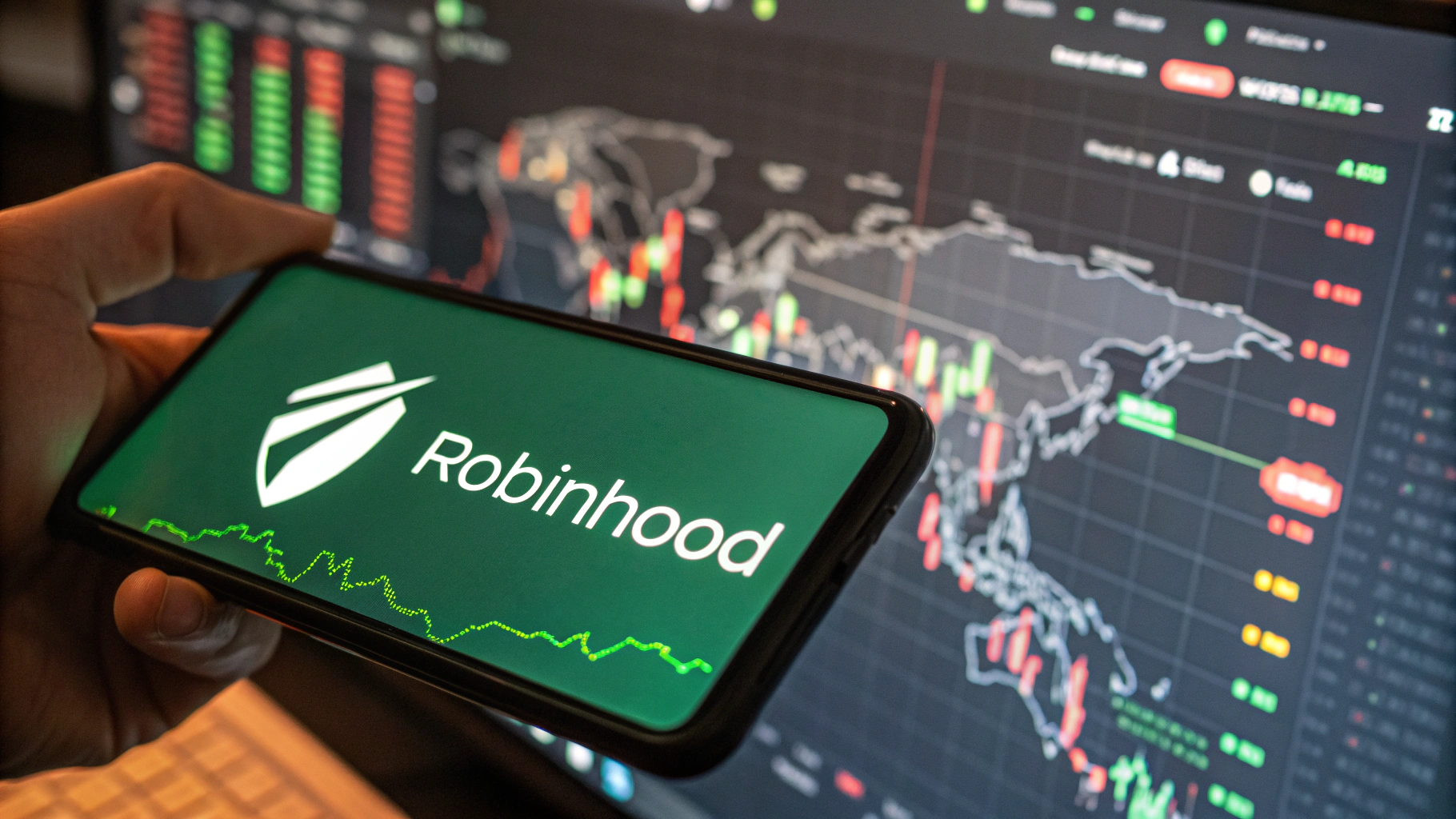
Robinhood Markets ($HOOD) has opened the door for third-party AI agents to not only suggest trades, but to execute them—granting autonomous access to dedicated brokerage accounts and, separately, to a virtual credit card for making purchases. The beta launch, unveiled on Tuesday ET, marks a notable shift in consumer finance as AI tools move from 'advice' to 'action' across both investing and payments.
The new product suite includes 'Agentic Trading', which allows users to connect external AI agents such as Anthropic’s Claude, OpenAI’s ChatGPT, and coding agent Cursor to a separate Robinhood account that functions as a controlled sandbox. Users fund the account, define permissions and rules, and the agent can then place orders on the user’s behalf—without requiring confirmation for every execution if the user enables full autonomy.
Central to the rollout is Robinhood’s adoption of the 'Model Context Protocol' (MCP), an open standard spearheaded by Anthropic that enables AI systems to interact with external services in a structured way. By choosing MCP rather than a closed proprietary interface, Robinhood is effectively positioning its brokerage rails to be accessible by a broad set of AI agents that already support the protocol.
According to the company’s description of the beta, connected agents can view holdings, buying power, and execution history, and can carry out multi-step strategies such as automated rebalancing or conditional buying based on price triggers. Robinhood’s example prompt—buying $100 worth of a stock each time it falls more than 2% in a day—illustrates the direction of travel: rules-based delegation where the AI is trusted to implement a pre-approved plan in real time.
For now, 'Agentic Trading' supports equities only. The company said it plans to extend access to options, cryptocurrencies, event contracts, and futures after the product transitions out of beta, suggesting Robinhood sees AI-driven execution as a cross-asset layer that could eventually span its full product catalog.
In parallel, Robinhood introduced 'Agentic Credit Card', linking AI agents to a virtual version of its Gold credit card so agents can complete purchases such as booking flights or buying event tickets. Transactions initiated by an agent are eligible for 3% cashback, the company said. To reduce exposure, the setup is designed so the agent can access only the virtual card rather than the physical card credentials, while users can set spend limits or require per-transaction approvals.
“We learned that customers want to give their agent the ability to do things on Robinhood, but they want to do so in a very safe way,” Abhishek Fatehpuria, Robinhood’s vice president of product management, told The Wall Street Journal, describing the product’s origin as demand for controlled delegation rather than fully open-ended automation.
Still, Robinhood’s approach places the burden of oversight squarely on the user. The company’s terms warn that 'Agentic Trading' involves significant risk, including the possibility of total loss, and it does not supervise, control, or guarantee the performance of third-party agents. If an agent misinterprets instructions or acts on incomplete or flawed information, Robinhood says the resulting losses are the user’s responsibility.
That liability structure reinforces Robinhood’s positioning less as an 'investment adviser' and more as an execution-and-payments platform: the firm provides infrastructure and controls, while users accept downside risk. Robinhood is adding safeguards such as push alerts, real-time activity feeds, one-tap disconnect, fraud detection, and optional manual approvals, but it is not presenting AI delegation as inherently safer than self-directed trading.
The launch is also being read as a broader signal of 'disintermediation' pressure on traditional finance. With AI agents increasingly becoming the interface through which consumers manage money, incumbents risk being pushed into the background as back-end settlement providers rather than primary customer destinations. Commenting on the trend, Richard Crone, CEO of Crone Consulting, told American Banker that bankers should treat the shift as a wake-up call, arguing that consumer trust could migrate from bank apps to AI models if institutions fail to integrate.
Skeptics, however, warn that delegating financial decisions to a 'black box' creates new categories of risk. Academic and industry research has highlighted systematic biases in large language models, including the possibility of overly optimistic conclusions when data access is uneven across regions or languages. AI-driven strategies also have a mixed track record against passive benchmarks, with researchers often pointing to 'overfitting', fast-arbitraged market edges, and herd behavior as factors that erode performance once similar models are widely deployed.
Market-structure concerns are resurfacing as well. If large numbers of retail users ultimately rely on the same foundation models, synchronized reactions to similar prompts and signals could amplify volatility—echoing earlier episodes where automated trading contributed to rapid dislocations. U.S. regulators, including the Securities and Exchange Commission (SEC), have also repeatedly cautioned firms against 'AI-washing', or overstating AI capabilities in marketing.
The move is likely to be closely watched in Asia, where consumer interest in AI-assisted trading is rising but where the idea of delegating full brokerage and payment authority to third-party commercial AI agents via an open standard remains less common. Industry observers note that legal frameworks around discretionary account management, identity verification, and restrictions on transferring access credentials could collide with the model Robinhood is testing.
Robinhood’s beta underscores a simple thesis: the next battle for retail finance may be fought at the interface layer, where consumers increasingly start with an AI assistant rather than a bank or brokerage app. Whether 'agentic' finance becomes a mass-market norm will depend not just on convenience, but on how effectively platforms manage security, accountability, and the systemic risks that come with automation at scale.





















Comment 0