
 Add as a preferred source on Google
Variational Raises $50 Million, Bets on Low-Cost Model to Unlock Onchain Perps Demand
Variational raised $50 million led by Dragonfly as founder Lucas Schuermann positions its low-cost broker model to unlock latent demand in onchain perpetuals and expand into RWA markets.


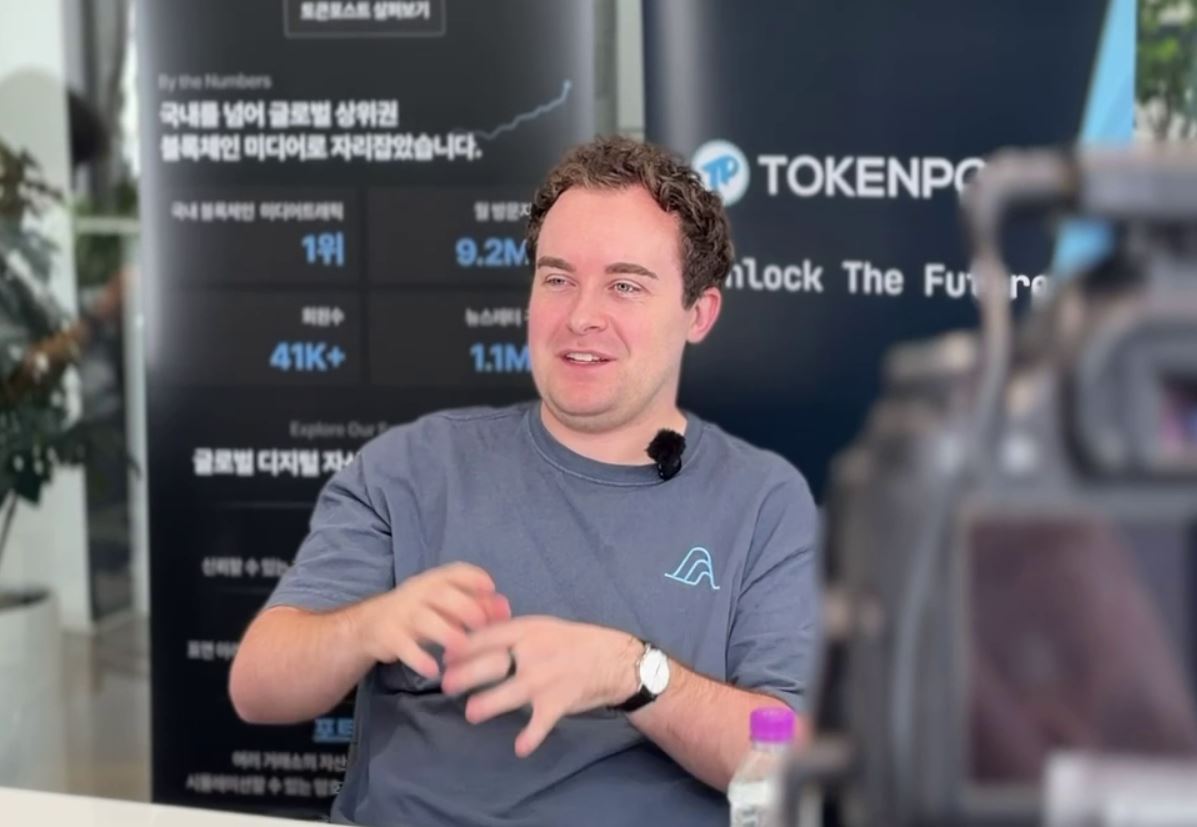
Variational, an onchain perpetuals trading firm that has rapidly climbed into the top tier of decentralized derivatives, is betting that the next wave of crypto growth won’t come from yet another onchain order book—but from making trading cheap enough that demand reveals itself all at once.
In an interview in Seoul, Variational founder Lucas Schuermann argued that the industry’s biggest constraint is not a lack of interest, but a lack of efficient market structure. “A ‘liquidity shortage’ is ultimately a cost,” he said. “When that cost gets low enough, markets explode.”
The comments come weeks after Variational announced a $50 million Series A led by Dragonfly, with participation from Bain Capital Crypto and Coinbase Ventures. The company says its cumulative trading volume has surpassed $200 billion, reaching the upper ranks of onchain ‘perpetual futures’ platforms within roughly six to eight months of launch.
Despite frequent comparisons to Hyperliquid—one of the fastest-growing onchain derivatives venues—Schuermann pushed back on the idea that Variational is simply a “next Hyperliquid.” He said the similarity largely ends at the growth curve, with fundamentally different design philosophies underneath.
Schuermann’s credibility in market structure debates is rooted in a career spanning traditional finance, big tech, and crypto. He previously worked in quantitative finance at Goldman Sachs and later at Google, before joining the digital asset industry. His partnership with co-founder Edward Yu dates back to their time at Columbia University, where they began working together and later launched a hedge fund in New York in 2016–2017.
That fund initially pursued market-neutral FX strategies but pivoted early into crypto market-neutral trading when Ethereum (ETH) was still priced in the tens of dollars. The business, Qu, was later acquired by Digital Currency Group, after which Schuermann became VP of Engineering at Genesis and Yu led quantitative trading during the firm’s 2019–2021 expansion years.
Schuermann said that period offered a front-row view into how brutally competitive liquidity provision can be. “Competing head-on with major market makers on an exchange order book wasn’t the right answer,” he said, describing the realization that ultimately led to Variational’s founding in early 2022.
While many perpetual DEXs emulate exchanges—building onchain order books and incentivizing market makers to quote—Variational has embraced what it describes as a ‘broker’ model. Schuermann compared the approach to Robinhood in the U.S. or Toss in South Korea: consumer-facing platforms that route orders into existing liquidity rather than trying to manufacture it from scratch.
Variational’s retail app, Omni, aggregates liquidity through an RFQ (‘request for quote’) system, sourcing prices across venues and dealers to execute trades. The company’s pitch is straightforward: if liquidity is plentiful and execution quality is strong, user costs fall—and the platform can scale without charging trading fees. Variational says Omni currently supports around 450 perpetual markets and offers ‘zero’ fees, monetizing instead through spreads and order flow—an approach common in traditional brokerage models.
In Schuermann’s framing, the real enemy is not a competitor, but friction. ‘Slippage’ from thin liquidity is a tax; fees are another tax. When those taxes drop below a threshold, he argues, speculative and hedging activity expands dramatically. As an example, he pointed to commodities trading on the platform, claiming Variational has at times seen more activity in gold-linked perpetuals than Hyperliquid—an anecdote he describes as evidence of how quickly traders respond to marginal cost differences.
Where Variational plans to deploy fresh capital is even more ambitious: ‘real-world asset’ (RWA) perpetuals that track traditional markets such as commodities, indices, and equities. The company says it has already rolled out initial markets tied to products like gold, silver, copper, and oil, as well as exposure to pre-IPO names associated with firms such as OpenAI, Anthropic, and SpaceX. A second phase slated for this summer aims to add more than 100 additional markets, including U.S. indices and single stocks.
Strategically, Variational is positioning itself less as a purely crypto-native venue and more as connective tissue between onchain traders and deep pools of offchain liquidity. Schuermann argued that large financial institutions are unlikely to trade directly on an onchain order book due to ‘smart contract risk’ and compliance constraints. Variational’s model, he said, is to internalize and aggregate retail flow onchain and then hedge the resulting exposure through traditional market liquidity in hubs such as New York, Chicago, and Amsterdam.
He added that Variational has already partnered with major dealer and market-making firms—described as ‘household name’ institutions—though he declined to name them. The decision to raise venture capital despite operating profitably, he said, reflected the practical needs of engaging large counterparties. “To work with those institutions, you need a certain balance sheet and trust,” he said, adding that additional investors may be announced in the coming weeks.
Schuermann described the RWA opportunity through the lens of ‘discovered demand’—a concept he ties to the evolution of onchain perpetuals themselves. In his view, early onchain perp demand existed years ago, including during dYdX’s rise, but trading quality and user experience were not yet seamless. Once execution, latency, and liquidity reached a tipping point, demand that had been latent became visible—fueling Hyperliquid’s breakout.
“RWA perps are similar,” he said. “The moment the cost and execution gap versus a U.S. broker disappears, a much bigger explosion comes.” He argued that the long-term appeal is not just access to one token, but a unified margin account where users can trade hundreds of global markets with leverage in a single app—an experience he believes neither onchain platforms nor traditional brokerages fully replicate today.
His market read also reflects shifting trader behavior during drawdowns. With Bitcoin (BTC) under pressure and underperforming assets like stocks and gold in the period discussed, Schuermann said traders are increasingly looking beyond crypto-native volatility. “People aren’t thinking in a ‘crypto asset class’ box anymore,” he said, describing interest in themes like semiconductors, memory stocks, and leveraged exposure to indices such as South Korea’s KOSPI.
He labeled the shift a ‘flight to quality,’ arguing that market participants are starting to evaluate crypto projects with the same discipline applied to equities: revenue, real users, and durable business models. Hyperliquid, he said, represents a benchmark because its product usage and revenue dynamics form a feedback loop with its ecosystem. Variational wants to be in that category—but he cautioned that the broader market may not have fully cleared its most difficult phase yet.
On the institutional side, Schuermann pointed to another inefficiency he believes is ripe for disruption: crypto options trading. Despite the industry’s sophistication, he said, large segments of the options market still rely on manual and semi-manual workflows like chat-based quoting and operationally heavy settlement processes. Variational’s institutional platform, Pro, is designed to modernize that pipeline—an opportunity he framed as addressing “trillions of dollars” in market inefficiency.
Schuermann also outlined an explicit push into South Korea, calling it a ‘major market’ where retail trading culture and crypto engagement are especially strong. Variational has recently added Korean staff and plans additional hiring, he said, alongside a broader regional strategy that could include deeper institutional partnerships in Korea and across East Asia.
One notable area under review is the potential listing of perpetuals tied to Korean equities. Schuermann said the company is conducting regulatory analysis and acknowledged that ‘geoblocking’ could be necessary in certain jurisdictions. “The connectivity is already there,” he said. “It’s a question of how to structure it.”
As Variational prepares its next rollout, Schuermann framed the coming months as a possible inflection point: a broader market set, more traditional liquidity reaching onchain users, and what he believes could become the next instance of ‘discovered demand’ in crypto—this time anchored not only in tokens, but in global financial exposure delivered through onchain rails.