

 News
News  Coin Information
  About us
  Customer Service


 Add as a preferred source on Google
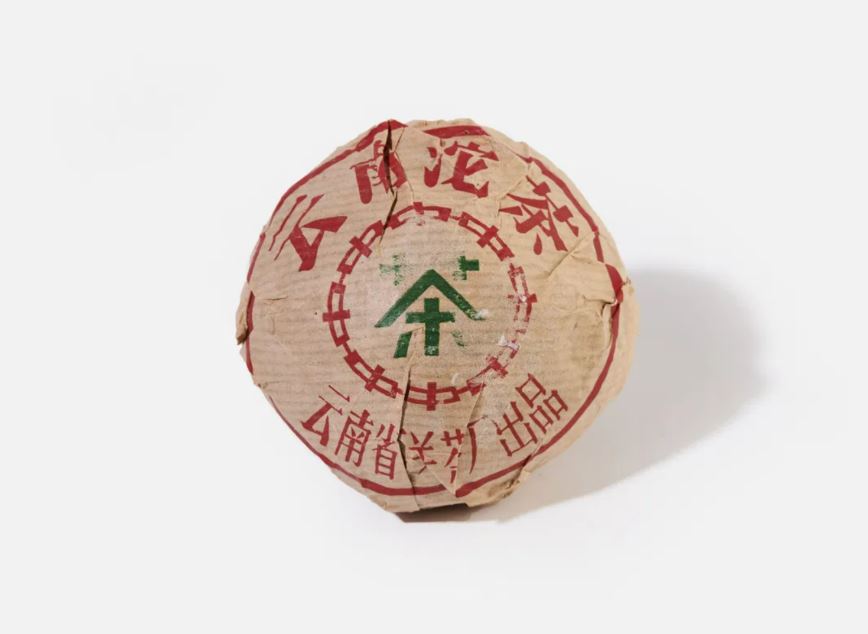
A cache of decades-old pu-erh tea is set to become one of the first non-metal collectibles to trade as a blockchain-linked real-world asset, highlighting how tokenization is moving beyond gold and foreign exchange into alternative stores of value with verifiable provenance.
South Korea-based tea house Kkikdageo, which says it holds one of the world’s largest collections of aged raw pu-erh—119 varieties totaling roughly 120,000 individually wrapped cakes—will list a 1989 vintage “Xiaguan Qingxiao Tuo” on SwitchWon, a global platform focused on asset-based investing. The listing comes as policymakers in key jurisdictions move to formalize frameworks for tokenized claims on physical goods, opening a path that had been blocked for years by legal uncertainty around securities-style issuance.
The core challenge for the aged tea market has long been trust. Unlike mainstream commodities, “old tea” often lacks standardized appraisal bodies, official reference pricing, or transparent transaction histories. According to Kkikdageo executives, that opacity enabled an informal secondary market where high-value tea could be bought at steep discounts from uninformed sellers, leaving collectors and long-term holders with limited recourse.
That problem pushed Son Sung-hoon, CEO of KDGT, to explore blockchain-based authentication roughly six years ago—well before today’s RWA boom. The project’s premise was deliberately conservative: NFTs would function as proof of authenticity and ownership history, similar to a tamper-resistant seal on a high-end whiskey bottle, rather than as speculative digital assets. “The physical item has to come first,” Son said, arguing that any token must be tied to real delivery and documented custody to be credible in a market vulnerable to counterfeits and misrepresentation.
Before building products, the team prioritized tax and legal reviews to understand how transactions would be treated under local rules. That work led to ASSETTEA, described as South Korea’s first dedicated pu-erh auction and authentication platform. Early auctions drew attention beyond Korea, including coverage by Chinese media, and triggered a wave of inbound requests from would-be sellers seeking appraisal—requests that underscored how rare verifiable provenance is in the category. Kkikdageo says it only accepted teas with clear, documentable purchase histories, or items it had originally sold and could vouch for directly.
The SwitchWon listing marks the next step: turning authenticated tea into a tradable RWA instrument. The product to be listed—1989 Xiaguan Qingxiao Tuo—is a 37-year-old raw pu-erh produced by Xiaguan Tea Factory. SwitchWon, which the companies describe as handling more than 10 trillion won in annual trading volume across asset-backed investments, has typically focused on instruments linked to FX and precious metals. This tea would be among its first non-metal physical assets.
Structurally, Kkikdageo is issuing a ‘digital product exchange voucher’ designed to be redeemable 1:1 for the physical tea. Each voucher corresponds to one unit of the underlying product, priced at 2,500,000 won per unit. Holders can trade vouchers on-platform to seek price movement, or redeem for delivery and consume the tea—an important detail for an asset whose end-use is not purely financial. The listed inventory will be stored in a warehouse equipped for custody and preservation, the parties said.
Supporters of the model argue that aged pu-erh has already been treated like an investable asset in parts of Asia, particularly Hong Kong, where collectors and intermediaries routinely trade it with the mindset applied to other collectibles. The pitch echoes other collateralized niche markets—such as banks lending against aging cheese inventory in Europe—where storage, condition, and documentation underpin value.
Why this specific tea? Son said the selection is driven by relative value within the pu-erh market rather than headline rarity alone. Xiaguan Qingxiao Tuo belongs to the “tuocha” form factor, typically produced from smaller, more tender leaves (often considered higher grade within certain classifications) and representing a smaller share of output—estimated by the team at roughly 10% to 15% of production. Yet, they argue, collector attention and auction liquidity have historically concentrated on “bingcha” (pressed cakes), lifting prices there first and leaving some tuocha comparatively ‘undervalued’.
To illustrate the gap, Son pointed to an 1988 “8892” tea—marketed as a recreation of a famed 1950s profile—that can trade around 40 million won for a 400g cake, roughly 10 million won per 100g. By comparison, the 1989 Xiaguan product is priced at about 2.5 million won per 100g. “It’s assessed at about a quarter of comparable teas,” he said, framing the listing as a bid to establish new market benchmarks through broader access and more transparent price discovery.
Even so, the product has already appreciated sharply. Son said the same tea traded around 400,000 to 500,000 won roughly nine years ago—meaning prices are up about fivefold—yet he maintains it remains in a discount zone relative to peers. In his view, pu-erh pricing tends to move in steps: as vintages cross new age thresholds, as record auction prints reset expectations, and as seasonal demand—often around Lunar New Year—supports annual gains.
The initial SwitchWon allocation will be 10,000 units, less than one-tenth of Kkikdageo’s reported total holdings. The company said it is also in discussions about follow-on listings on other RWA venues, signaling an intention to turn select inventory into standardized, platform-tradable assets rather than relying solely on bespoke collector sales.
Broader market data is helping fuel that ambition. The premium tea market in China has expanded rapidly in the past decade, with third-party estimates cited by the company putting the segment at 172.9 billion yuan in 2024, up from 35.5 billion yuan in 2015—nearly a fivefold increase. While that growth does not translate directly into global liquidity for every vintage, it has reinforced the perception of aged tea as a maturing collectibles category with cross-border demand.
That demand is already showing up in inbound interest. Kkikdageo says Hong Kong auction houses have requested inventory for potential sales, though timing was disrupted by the pandemic and shifting regional conditions. The company’s stance is to wait until after the SwitchWon launch, aiming to strengthen its role in ‘price discovery’ rather than selling into what it views as a discounted market.
In Japan, the company said a premier concierge team from Daimaru—tasked with servicing top-tier department store clients—scheduled a visit after hearing about aged pu-erh, treating it more like a high-end collectible than a niche beverage. And in the Middle East, Son described meetings in Abu Dhabi that included interest from entities linked to sovereign capital following the implementation of local RWA rules this year. He added that cultural preferences—where tea often plays a larger role than alcohol—could further support demand for drinkable luxury assets.
The companies are also pursuing a longer-term goal: building a dedicated authentication institution for aged tea, a role they argue does not exist at scale today. Kkikdageo said it is working with a university food engineering research team to extract chemical “metadata” from tiny samples—around 0.5 grams—from its catalog of 119 aged teas to create a reference database by vintage. Preliminary findings, the firm says, show clear compositional signatures by age and distinct differences between raw and ripe pu-erh.
Because ultra-old teas can be worth millions—or tens of millions—of won per unit, assembling that dataset has historically been prohibitively expensive for academic labs. Kkikdageo argues that its inventory depth allows it to fund and operationalize the work. The company said four related patents have already been registered under CEO Ahn Sung-hee, covering platform operations and a verification system combining blockchain, AI training, and seller authentication. By anchoring chemical profiles to NFTs, the firm aims to enable comparative testing for future submissions, potentially offering a standardized method even where traditional appraisal remains subjective.
Regulatory adaptation has also played a role. In South Korea, labeling rules for fermented teas were revised so that, from 2016 onward, products no longer require a uniform expiration date and can instead list manufacturing month and year—reflecting the reality that certain fermented teas can improve with age. Industry participants view that as one of the small but necessary legal foundations for treating aged tea as an asset that can be stored, transferred, and eventually redeemed.
Kkikdageo’s business model, executives say, is built on multi-decade cycles: acquiring teas, aging them under controlled conditions, and selling selectively as they mature into higher-value vintages. The blockchain layer is intended to make that long-duration inventory more liquid while preserving the link to physical custody and provenance.
If the SwitchWon launch succeeds, it could broaden how markets think about RWAs—not merely as tokenized financial instruments, but as tradable claims on culturally specific, consumption-linked collectibles whose value depends on authenticity, storage, and history. For an asset like aged pu-erh, the experiment will test whether blockchain can replace opaque dealer networks with standardized verification and transparent markets—without turning the underlying product into a purely speculative token detached from the tea itself.


















Comment 0