

 News
News  Coin Information
  About us
  Customer Service


 Add as a preferred source on Google
Solana (SOL) hovered just above the low-$70s on Thursday, as traders weighed a fragile technical setup against a burst of on-chain activity and a renewed push for 'governance reform' and network speed improvements.
As of Thursday 1:00 a.m. ET, SOL traded at $73.09, down 0.8% over the past 24 hours. Spot trading volume was about $1.5 billion, while Solana’s market capitalization stood near $42.2 billion, keeping it in seventh place among major cryptocurrencies.
From a technical perspective, near-term sentiment remains cautious. FXStreet said SOL continues to show a bearish bias while trading below $75, with resistance clustered around $75.50 and $92.60. On the downside, the key support level sits near $70.75. Analysts noted that a convincing daily close above resistance would likely be required for SOL to reclaim its 200-day exponential moving average—often viewed as a dividing line between longer-term bullish and bearish regimes.
Beyond price action, the ecosystem saw a potentially negative headline: prediction market platform World.xyz decided to migrate from Solana to Robinhood Chain after an internal review, according to Odaily. While project moves between chains are not uncommon, the shift has fueled debate about Solana’s ability to retain applications as competition among high-throughput Layer 1 networks intensifies.
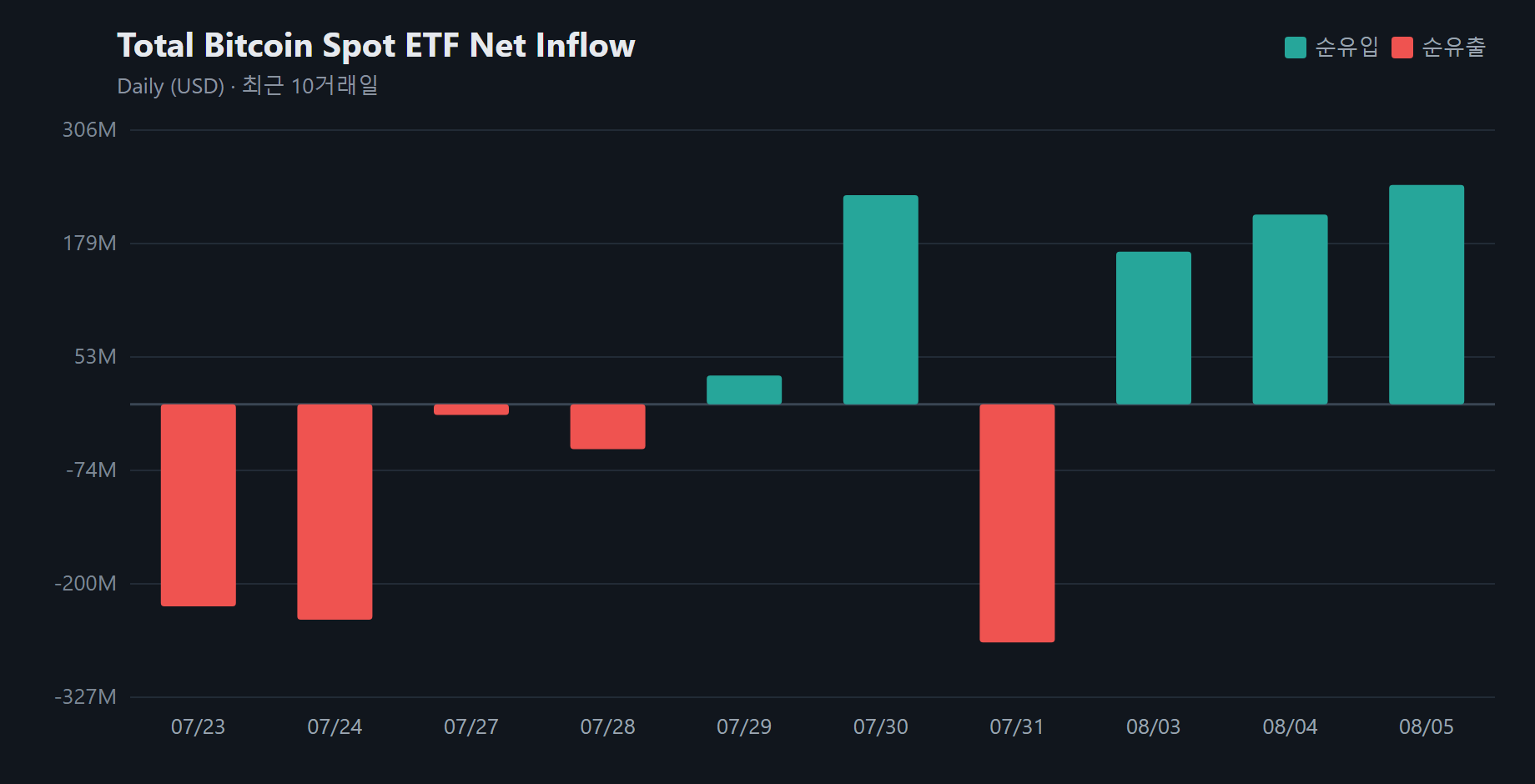
Institutional positioning has also been mixed. Odaily reported that U.S. spot Solana exchange-traded funds recorded roughly $605,100 in daily net outflows, even as cumulative inflows and total assets under management remained positive. The divergence suggests that interest has not disappeared, but near-term positioning may be turning more tactical as volatility persists across the altcoin market.
At the same time, Solana’s community is advancing proposals aimed at reshaping token economics. BingX said governance proposals SGP0002 and SGP0003 have met a 15% stake support threshold, allowing them to move into a formal discussion phase. The measures focus on accelerating 'disinflation' and expanding token 'burns' sourced from network resource fees.
If implemented, proponents expect the changes would reduce SOL issuance over the next six years and bring forward the timeline for reaching the network’s terminal inflation rate. Supporters argue that a lower effective supply trajectory could ease long-term sell pressure and improve the token’s appeal to long-horizon holders, though the final impact would depend on participation dynamics and how fee markets evolve.
On the performance front, Solana also took a step toward faster block production. Hoka News reported that the network activated a testnet upgrade reducing slot time to 350 milliseconds from 400 milliseconds—an early milestone in a roadmap that targets 200 milliseconds. While the change has not yet reached mainnet, it signals continued emphasis on throughput and latency as Solana competes for user and developer activity.
Those technical upgrades arrive alongside record usage data. According to Hoka News, Solana’s weekly transaction count topped 1 billion, reaching an all-time high of 1,012,226,009. Elevated on-chain activity typically reflects expanding engagement across DeFi, NFTs, and gaming applications, and may highlight a gap between short-term price weakness and underlying network usage.
In market commentary, Brave New Coin described SOL as sitting in a potential breakout zone if it can hold support and reclaim key levels, with a path toward retesting $100 contingent on clearing resistance at $75.50 and then $92.60. In the near term, however, traders are watching $70.75 closely; a breakdown there could accelerate downside pressure, while a recovery above $75 accompanied by stronger volume could revive bullish momentum.
For now, Solana is sending mixed signals: price remains under pressure and ecosystem retention questions have resurfaced, yet governance-driven tokenomics changes, ongoing performance work, and surging on-chain activity point to strengthening fundamentals. The next catalyst may come from whether the SGP proposals gain sufficient support, when testnet improvements reach mainnet, and whether SOL can decisively move through its overhead resistance band.
🔎 Market Interpretation
- Price/positioning: SOL traded around $73.09 (-0.8% 24h) with roughly $1.5B spot volume and a $42.2B market cap (ranked #7).
- Technical tone remains fragile: Market bias is described as bearish below $75. Key levels: support ~$70.75; resistance at $75.50 then $92.60. A firm daily close above resistance is framed as needed to reclaim the 200-day EMA (a common long-term regime line).
- Fundamentals diverge from price: Despite weak near-term price action, network usage hit a record with ~1.012B weekly transactions, suggesting underlying activity may be strengthening even as traders hesitate.
- Ecosystem retention risk: World.xyz migrating from Solana to Robinhood Chain adds a negative narrative, reigniting debate about Solana’s ability to retain apps amid rising Layer-1 competition.
- Institutional flows mixed: U.S. spot Solana ETFs saw about $605.1K daily net outflows, while cumulative inflows/AUM remain positive—implying a shift toward tactical, shorter-horizon positioning rather than a full demand collapse.
💡 Strategic Points
- Level-based trade map:
- Hold/bounce scenario: Defending $70.75 and reclaiming $75+ on improving volume could restore bullish momentum.
- Breakout confirmation: A clearer upside path is framed as $75.50 → $92.60; clearing both reopens the narrative toward a $100 retest.
- Downside risk: A breakdown below $70.75 is highlighted as a trigger that could accelerate selling.
- Governance/tokenomics catalysts: Proposals SGP0002 and SGP0003 have crossed a 15% stake support threshold and move into formal discussion. Focus areas:
- Faster disinflation (reducing issuance trajectory over time)
- Expanded burns funded by network resource fees
If implemented, supporters expect lower effective supply growth and potentially reduced long-term sell pressure, but outcomes depend on participation and fee-market conditions.
- Performance roadmap as competitiveness lever: Testnet slot time was reduced from 400ms to 350ms, progressing toward a 200ms target. While not on mainnet yet, it reinforces Solana’s strategy around throughput and low-latency UX.
- Watchlist catalysts (near-term):
- Whether SGP proposals gain sufficient support and move toward implementation
- Timing/validation of testnet performance changes reaching mainnet
- Whether high on-chain activity persists and translates into sustained fee demand and application stickiness
- ETF flow stabilization vs. continued outflows as a sentiment/positioning signal
📘 Glossary
- Support / Resistance: Price zones where buying (support) or selling (resistance) historically becomes stronger.
- 200-day EMA (Exponential Moving Average): A long-term trend indicator; price above it is often interpreted as bullish regime, below as bearish.
- Slot time: The target interval for producing new blocks (or block opportunities) on Solana; shorter slot time generally implies lower latency.
- On-chain activity: Measurable network usage such as transactions, active addresses, and interactions with DeFi/NFT/gaming apps.
- Token burn: Permanent removal of tokens from circulation, typically by sending them to an unrecoverable address.
- Disinflation (crypto context): A reduction in the rate of new token issuance over time (issuance still may grow, but more slowly).
- Terminal inflation rate: The long-run steady-state issuance level a network aims to converge to.
- ETF net outflows/inflows: Daily movement of capital out of or into exchange-traded funds holding the asset, used as a demand/positioning proxy.
- Layer 1 (L1): A base blockchain network (e.g., Solana) that processes transactions and supports applications directly.












Comment 0