

 News
News  Coin Information
  About us
  Customer Service


 Add as a preferred source on Google
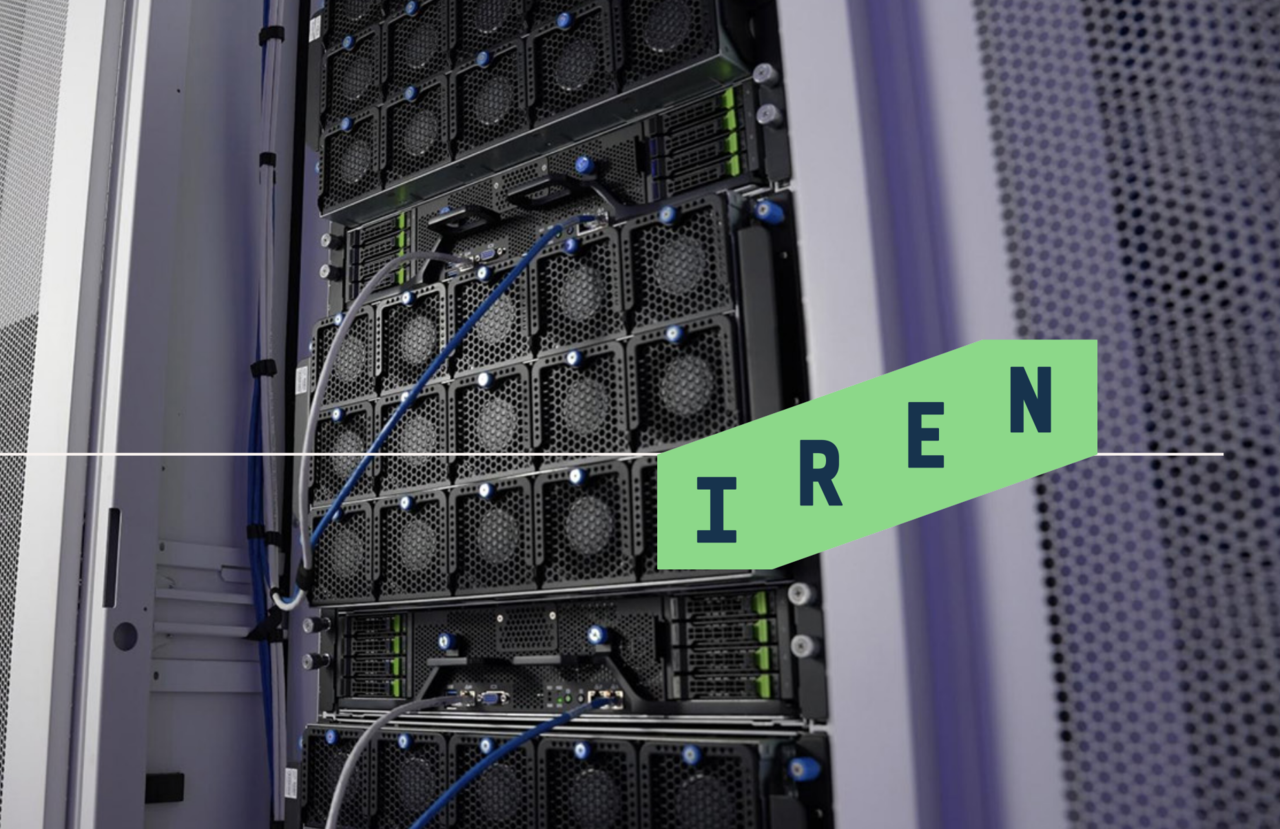
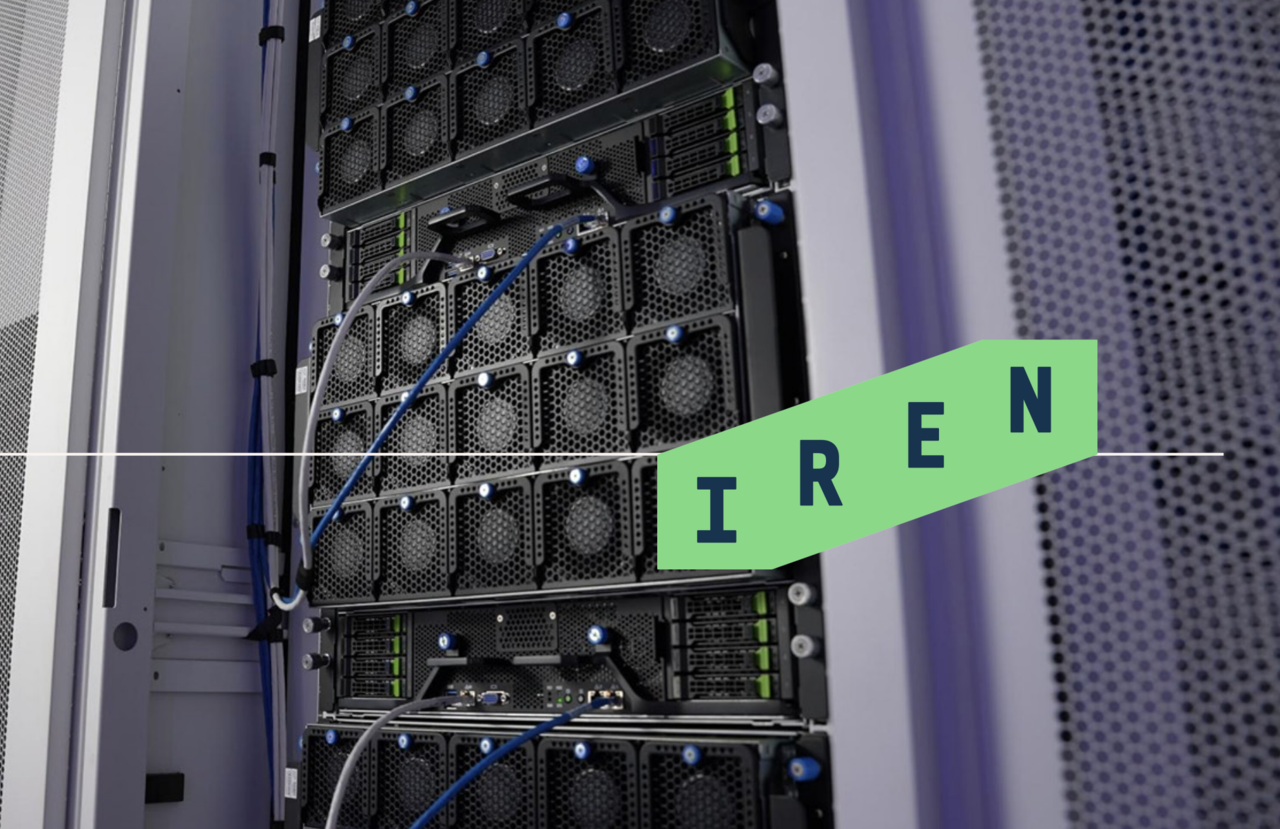
IREN Limited ($IREN) surged more than 30% in its latest session after the company said it has signed $2.8 billion in long-duration AI cloud service agreements with major AI ecosystem players including Microsoft ($MSFT) and Nvidia ($NVDA), underscoring a rapid pivot from Bitcoin mining to high-performance AI infrastructure.
The rally reflects a broader re-rating across parts of the digital infrastructure sector as investors increasingly reward firms that can convert low-cost power access and data-center operating experience into contracted AI compute revenue. For IREN, the new contracts also translate into clearer forward visibility—an attribute markets have tended to prize as AI demand strains global GPU supply chains.
Following the contract announcements, IREN raised its target for AI cloud annual recurring revenue (ARR)—a metric often used to gauge the stability of subscription-like cloud income—to more than $4.0 billion by the end of 2026, up from a prior goal of $3.7 billion. Analyst commentary cited by Zacks and other research coverage suggests roughly 85% of that revised target is already secured through signed agreements, reducing near-term execution uncertainty and helping explain the sharp upside move in the stock.
Management also fueled optimism by signaling that demand continues to outstrip what the company can currently build. In an environment where large-scale training and inference workloads are competing for scarce capacity, such remarks have become an important barometer for investors trying to assess which infrastructure providers have the strongest pipeline and pricing leverage.
To support delivery of its Microsoft-related AI cloud commitments, IREN said it has arranged a $3.65 billion, investment-grade GPU financing package—described as the highest-rated publicly disclosed GPU financing of its kind. Industry watchers view the facility as a crucial enabler for acquiring and deploying large volumes of accelerators needed for hyperscale-class workloads, addressing a key bottleneck in the AI infrastructure buildout.
IREN’s customer and partner roster increasingly resembles that of a scaled AI compute platform rather than a niche miner. Alongside Microsoft and Nvidia, the company has pointed to relationships across the AI stack, including Perplexity, while also engaging in ecosystem tooling efforts aimed at improving data-center observability and fault detection. One example disclosed in recent updates involves work with BE Networks to run a 50,000-node simulation using Nvidia GPU-based AI systems—an initiative framed as part of strengthening operational reliability at scale.
The company’s expansion roadmap is aggressive. Co-founder and co-CEO Daniel Roberts has outlined plans to grow self-built capacity from roughly 3 megawatts in July 2025 to 480 MW this year and 1.2 gigawatts next year, a step-change that would place IREN among a growing cohort of power-advantaged operators racing to meet AI compute demand. The speed of this buildout has become central to the investment case, as sustained contract wins depend on the ability to deliver capacity on schedule.
IREN also said it has secured a grid connection agreement for an 800 MW data-center campus in southern Australia, positioning the site as a cornerstone of its multi-gigawatt AI infrastructure ambitions. The company has highlighted an approximately 6 GW power portfolio that it expects to leverage as it scales, a factor that can materially influence unit economics in energy-intensive compute.
Wall Street has begun to recalibrate expectations. While Zacks currently assigns IREN a Rank #3 (Hold), other firms have turned more bullish. Cantor Fitzgerald analyst Brett Knoblauch reiterated an Overweight rating and lifted his price target to $99 from $77, pointing to strengthening fundamentals tied to contracted AI revenue and financing capacity. A June 2026 survey of broader analyst estimates cited a consensus target range of roughly $74 to $83, with the highest target near $100 and the lowest around $46.
IREN’s move comes as a notable case study in how Bitcoin mining operators are attempting to reposition for the AI era. The company’s combination of $2.8 billion in multi-year AI cloud contracts and a $3.65 billion GPU financing package provides tangible evidence of that transition, while its updated ARR ambition and rapid capacity buildout signal an intent to compete as a scaled AI infrastructure provider. The key question for markets now is whether IREN can translate today’s demand-supply imbalance into sustained delivery and durable, high-quality recurring revenue as competition for power and GPUs intensifies globally.
🔎 Market Interpretation
- Stock re-rating on AI pivot: IREN jumped 30%+ after announcing $2.8B in long-duration AI cloud agreements with major ecosystem players (including Microsoft and Nvidia), reinforcing investor preference for contracted AI compute revenue over more cyclical Bitcoin mining exposure.
- Visibility premium: Markets are rewarding clearer forward revenue visibility as AI demand strains global GPU supply; IREN’s signed contracts increase confidence in near-to-mid-term monetization.
- ARR target raised and largely “de-risked”: IREN lifted its AI cloud ARR goal to >$4.0B by end-2026 (from $3.7B). Reported research suggests ~85% is already secured via signed agreements—supporting the sharp upside reaction.
- Financing as a competitive differentiator: The $3.65B investment-grade GPU financing package is framed as a critical way to overcome a central bottleneck (accelerator procurement), improving the probability of meeting hyperscale-class commitments.
- Execution risk remains key: The market’s next focus is whether IREN can deliver capacity on schedule amid intensifying competition for power, GPUs, and data-center build resources.
💡 Strategic Points
- Contracts → scale race: Multi-year AI cloud contracts create a pull-through requirement: IREN must rapidly expand buildout to convert agreements into recurring revenue.
- Capacity ramp is the investment centerpiece: Management outlined growth from ~3 MW (July 2025) to 480 MW this year and 1.2 GW next year, positioning IREN among power-advantaged operators seeking to capture AI compute demand.
- Power access as the moat: An 800 MW grid connection agreement for a southern Australia campus and an indicated ~6 GW power portfolio may improve unit economics, assuming build and interconnect timelines hold.
- GPU supply chain strategy: The financing facility is intended to secure large volumes of accelerators—critical for both AI training and inference workloads where capacity is scarce.
- Ecosystem positioning beyond mining: Relationships cited across the AI stack (e.g., Perplexity) plus operational tooling efforts (observability/fault detection) signal an attempt to look like a scaled AI compute platform, not a niche miner.
- Operational reliability at scale: Work with BE Networks on a 50,000-node simulation using Nvidia GPU-based AI systems is presented as strengthening large-cluster reliability—important for hyperscale customers.
- Street sentiment is improving but mixed: Zacks shows Rank #3 (Hold), while Cantor Fitzgerald reiterates Overweight and raises a target to $99 (from $77). Broader consensus targets cited cluster around $74–$83, with a high near $100 and low near $46.
- Key watch items: (1) delivery pace vs. contracted milestones, (2) GPU procurement and deployment timelines, (3) margins/returns given power costs and financing terms, (4) durability of “ARR” quality as competition increases.
📘 Glossary
- ARR (Annual Recurring Revenue): A run-rate measure of repeating revenue (often subscription-like) used to evaluate stability and predictability of a cloud business.
- AI cloud service agreement (long-duration): Multi-year contract to provide AI compute (GPU capacity, hosting, or managed services) with defined terms that improve revenue visibility.
- GPU (Graphics Processing Unit) / Accelerator: Specialized chip used for AI training and inference; current market is constrained, making supply access a strategic advantage.
- Hyperscale workloads: Very large computing jobs and infrastructure deployments typical of major cloud/AI players, requiring massive, reliable clusters.
- Inference vs. training: Training builds/updates AI models (very compute-intensive). Inference runs trained models to generate outputs (often latency- and scale-sensitive).
- Data-center observability: Monitoring and analytics (metrics/logs/traces) used to detect issues, optimize performance, and reduce downtime in complex compute environments.
- Grid connection agreement: Formal arrangement enabling a data center to interconnect with the power grid at specified capacity (e.g., 800 MW), critical to site viability.
- Power portfolio: The set of secured or targeted electricity supply options (sites, contracts, capacities) that underpins cost structure and scalability for energy-intensive compute.
- Investment-grade financing: Funding structured or rated to reflect lower credit risk, typically enabling cheaper capital and improving buildout feasibility.
- Re-rating: A market-driven change in valuation multiple as investors reassess a company’s growth profile, risk, or business model (e.g., from mining to AI infrastructure).



















Comment 0