
AI Automation Pushes Planners Toward ‘Human Touch’ to Stay Competitive
At Metacon 2026, MacB Planning COO Lee Il-gu said AI-driven automation is shifting planners' roles toward human-centric design and emotional insight as key competitive advantages.

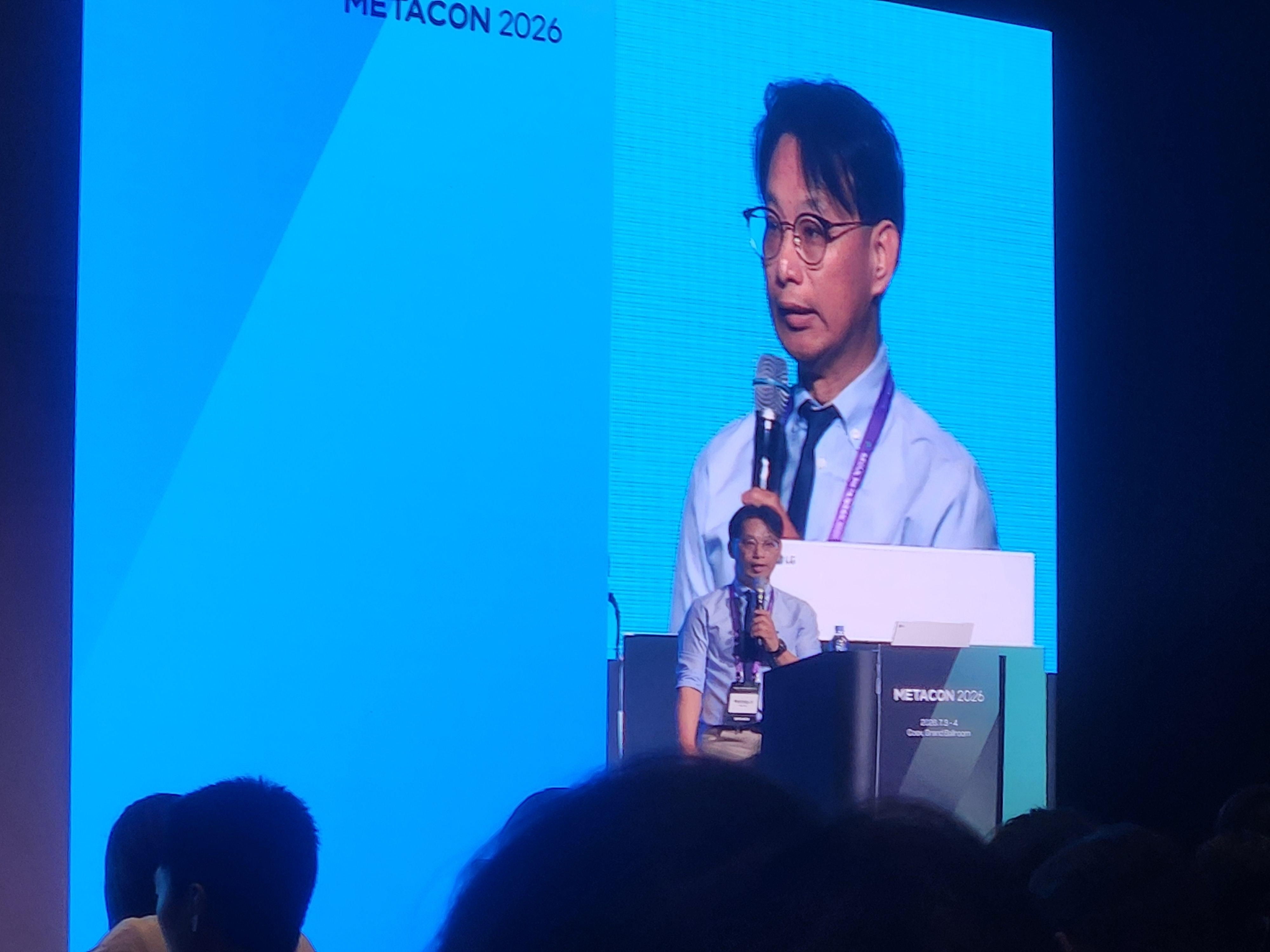
As generative AI rapidly automates once time-intensive planning and product-definition work, professionals who shape digital services are being urged to double down on what machines still struggle to replicate: 'Human Touch'—the emotional, cultural, and contextual insight that turns a functional product into something people actually choose.
Speaking Tuesday ET at 'Metacon 2026', a major South Korean AI conference hosted by TV Chosun and co-organized by TokenPost, Lee Il-gu—better known in the industry as MacB—COO of MacB Planning, argued that the competitive edge for planners in the AI era will not come from producing more documents faster, but from designing experiences that move users. His session was titled 'From AI FOMO to Human Touch: Redefining Planning in the Age of AI'.
MacB framed the current moment as one of accelerating anxiety inside IT and product teams, driven by what he called 'AI FOMO' (Fear of Missing Out). In communities he operates for practitioners, he said discussion topics have shifted decisively toward AI: real-world use cases that improve output, head-to-head comparisons of tools, how AI could reshape careers, and how organizations should approach adoption strategies.
He cited survey findings showing the scale of the pressure. According to the data he referenced, 76% of respondents said they feel compelled to learn new AI tools, while 70% worry AI could reduce hiring. Roughly half said they have personally experienced 'AI FOMO', reflecting a broader concern that failing to integrate AI into workflows could mean falling behind.
That anxiety, MacB added, is already translating into action. Participants joining AI-focused planning study groups frequently cite fears of being “淘汰” by the market if they cannot apply AI in their day-to-day work, and a desire to move beyond fragmented experimentation toward practical, end-to-end implementation inside real projects.
At the core of his argument was a reassessment of what planning work actually is. Historically, he said, planning involved rigorous requirements analysis—defining what to build and why—often demanding substantial time and manpower. The process was complex enough that public-sector standards were created to guide requirements analysis. Now, with a single prompt, AI systems can generate in minutes what previously took teams days or weeks: requirements summaries, feature definitions, information architecture, menu structures, and even wireframes.
That productivity leap, MacB said, makes it impossible to compare “before and after” in a linear way—and forces the industry to redraw boundaries around the planner’s role. In his view, planning is shifting from producing artifacts to designing the 'inputs' that help AI derive the best direction ('WHY') and methodology ('HOW').
As AI increasingly handles drafting and documentation, MacB argued, human planners should concentrate on crafting the 'WOW point'—the emotional hook and contextual clarity that converts a casual explorer into a committed user. In a crowded digital marketplace, he said, success depends on making users feel: “This service is exactly what I need,” and that is difficult to achieve through optimization alone.
He also emphasized that the nature of 'Human Touch' will vary by industry and job function, but for planners it ultimately converges on one question: how to design a service that generates revenue and sustains engagement. Where planners once focused on what to build and how to build it, AI can now perform much of that work at scale. The planner’s value, he suggested, increasingly lies in how a service wins—through narrative, trust, empathy, and cultural fit.
Despite the growing fear that AI could replace planners entirely, MacB pushed back on the idea that planning will disappear. Claims that “planning is dead,” he noted, have surfaced repeatedly over decades. When UX design emerged, planning did not vanish; it fragmented and specialized. The AI era, he argued, will likely drive a similar evolution rather than elimination.
His closing message was less about resisting AI and more about reframing professional survival. Rather than becoming trapped in anxiety about AI overuse, he urged planners to re-architect their roles, focus on understanding people, and execute small, consistent changes that compound over time. “The more those changes are repeated,” he said, “the higher the probability of survival becomes.”
'Metacon 2026' ran from July 3 to 4 ET at Seoul’s COEX Grand Ballroom under the theme 'AI Makers Rise', spotlighting strategies and real-world case studies on how companies and individuals can turn AI adoption into measurable outcomes—and how AI is reshaping industries and day-to-day work.