

 News
News  Coin Information
  About us
  Customer Service


 Add as a preferred source on Google
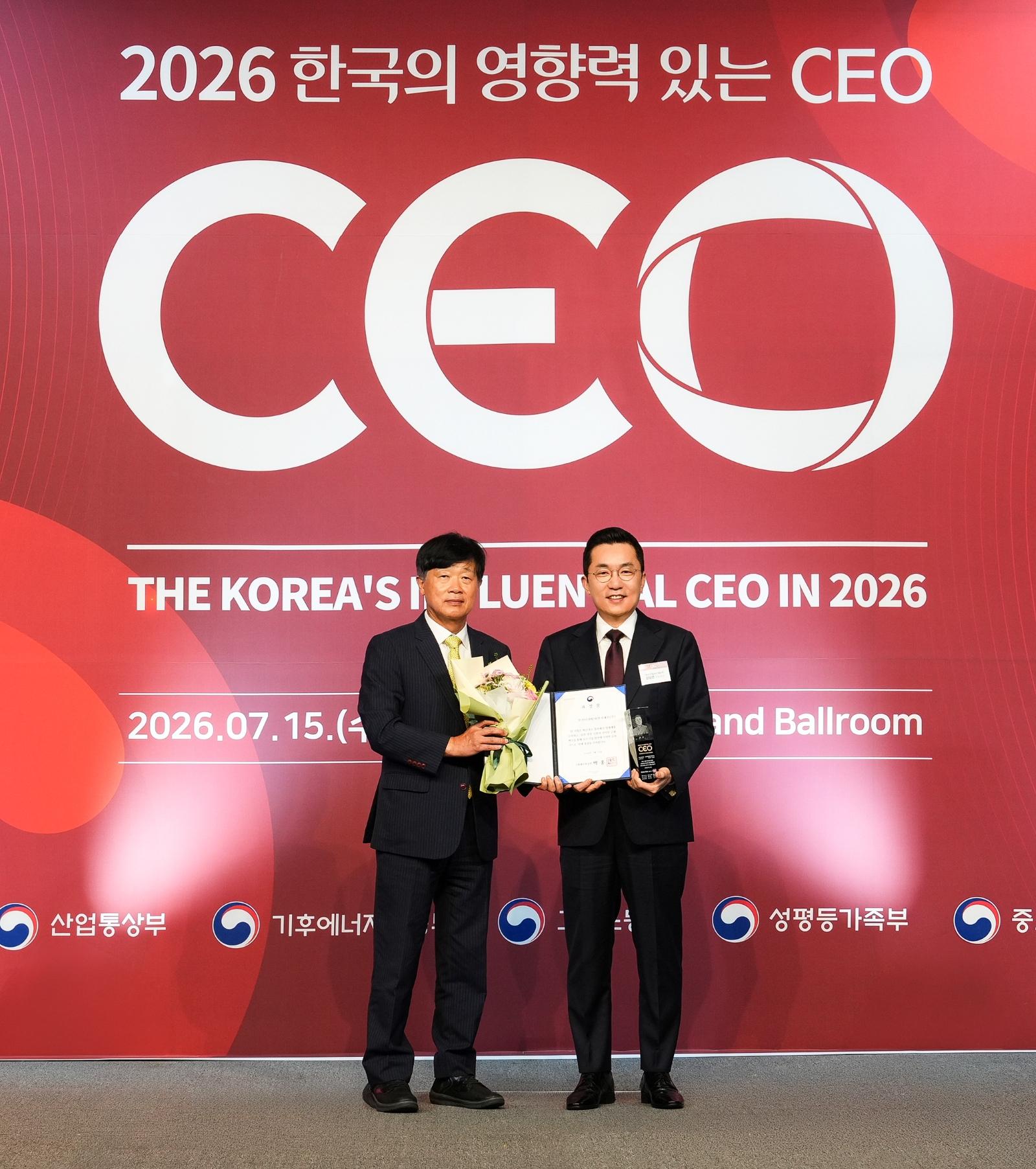
Busan Digital Asset Exchange (BDAX) said Tuesday UTC that CEO Kim Sang-min has been named a winner in the ‘innovation management’ category at the 2026 Korea Influential CEO Awards, a recognition that comes as the exchange’s real-world asset (RWA) platform ‘Bidan’ posts rapid user growth and improving profitability.
According to BDAX, the company also received a ministerial commendation from South Korea’s Ministry of Strategy and Finance at the same ceremony. The awards highlight Bidan’s push to broaden access to traditionally hard-to-reach assets by tokenizing and enabling trading of physical commodities through a mobile-first platform—an area drawing increasing attention globally as exchanges and fintech firms race to build regulated pathways for RWAs.
BDAX positioned Bidan as a “fourth-generation” decentralized digital asset exchange model designed to digitize and trade a wide range of physical assets. As of May 2026, Bidan reported roughly 1.24 million cumulative registered users and approximately 2 trillion won (about $1.45 billion) in cumulative trading volume, underscoring the platform’s traction among retail participants seeking alternative exposure beyond conventional crypto tokens.
The company attributed part of the turnaround to Kim’s dealmaking and operational restructuring. In September 2025, BDAX completed what it described as a preemptive acquisition of a loss-making physical-asset platform, subsequently launching it as a wholly owned subsidiary, Bidan Gold Co., Ltd. BDAX said the business was returned to profitability within three months, citing business model adjustments and strengthened brand communication rather than workforce reductions.
Financially, BDAX said the platform moved from an operating loss of about 4.89 billion won in 2024 to an operating profit of roughly 2.82 billion won in 2025—a swing the company characterized as a significant earnings rebound. Momentum has continued into 2026, with BDAX reporting an operating profit of about 4.18 billion won in the first quarter alone, exceeding the prior year’s full-year result.
Bidan currently offers eight digitized commodities—gold, silver, copper, platinum, palladium, nickel, tin, and coffee—available 23 hours a day, 365 days a year via mobile app. BDAX said the service has gained attention for a trading structure designed to minimize fees and other user costs, a competitive pressure point as platforms try to attract liquidity while maintaining compliance and custody standards for real-world collateral.
Market observers have increasingly framed RWAs as a bridge between traditional finance and digital markets, particularly as commodities and other tangible assets can serve as a familiar entry point for investors wary of pure crypto volatility. While BDAX’s figures reflect growing retail participation, sustained expansion will likely depend on continued product breadth, transparent reserves and settlement processes, and regulatory clarity around digitized ownership and transfer.
BDAX said it plans to expand Bidan’s product lineup to accelerate mainstream adoption of digital RWA trading. “Bidan is building a solid foundation as a leading player in the digital real-world asset trading market that anyone can use easily and conveniently,” Kim said, adding that the company aims to “keep challenging and innovating” to become a standard not only in Korea but globally.
🔎 Market Interpretation
- RWA momentum in Korea: BDAX’s award recognition and Bidan’s growth highlight accelerating interest in regulated, asset-backed tokenization as a bridge between traditional commodities markets and digital trading.
- Retail-led traction: Bidan’s reported ~1.24M registered users and ~2T won cumulative volume suggest strong retail demand for “familiar” exposure (commodities) beyond volatile crypto-native tokens.
- Profitability as a differentiator: The swing from -4.89B won (2024) to +2.82B won (2025), plus +4.18B won in Q1 2026, signals that RWA platforms can move past growth-only narratives—important as investors and regulators scrutinize sustainability.
- Competitive pressure on fees & infrastructure: Bidan’s emphasis on minimizing user costs reflects a broader market race: attract liquidity while maintaining compliant custody, verifiable collateral, and reliable settlement.
- Expansion hinges on trust frameworks: Continued scale will likely depend on transparent reserves, clear ownership/transfer rules, and regulatory clarity—core requirements for RWAs to reach mainstream adoption.
💡 Strategic Points
- Recognition reinforces credibility: CEO Kim Sang-min’s ‘innovation management’ award and a ministerial commendation can strengthen BDAX’s positioning with users, partners, and regulators—key in RWA markets where trust is central.
- Mobile-first, near-continuous access: Offering commodities trading 23/365 via app targets convenience-driven retail flows and differentiates from traditional commodity market hours.
- Focused commodity lineup (8 assets): Gold, silver, copper, platinum, palladium, nickel, tin, and coffee provide diversified “real economy” exposure; expanding breadth could boost retention but increases operational and compliance complexity.
- Turnaround playbook via acquisition: The September 2025 acquisition (re-launched as Bidan Gold Co., Ltd.) and return to profitability within three months suggests BDAX is pursuing scaling through M&A plus operational restructuring rather than headcount cuts.
- Key execution risks to monitor:
- Proof of collateral: Auditability of physical reserves and custody arrangements for tokenized commodities.
- Settlement & redemption: Clarity on how ownership transfers map to legal claims, and how/if redemption works.
- Regulatory alignment: Licensing, investor protection standards, and reporting requirements as RWA rules evolve.
- Liquidity & pricing: Depth of order books and tracking error versus underlying spot/benchmark prices.
📘 Glossary
- RWA (Real-World Assets): Physical or traditional financial assets (e.g., commodities, real estate, bonds) represented and traded digitally, often via tokenization.
- Tokenization: Converting rights to an asset into a digital token that can be issued, held, and transferred on a digital ledger.
- Digitized commodities: Commodity exposure delivered through digital representations that aim to track the value of underlying materials like gold or copper.
- Cumulative registered users: Total sign-ups over time, not necessarily active users.
- Cumulative trading volume: Total value traded over a period (here, since launch), useful for gauging activity and liquidity.
- Operating profit/loss: Profitability from core operations before interest and taxes; a key indicator of business sustainability.
- Custody: Secure holding and management of assets (or the underlying collateral) on behalf of users.
- Reserves transparency (Proof of reserves/collateral): Practices that demonstrate the platform holds sufficient underlying assets to back issued tokens.
- Liquidity: How easily an asset can be bought or sold without significantly impacting its price.















Comment 0