

 News
News  Coin Information
  About us
  Customer Service


 Add as a preferred source on Google

Airstrikes and surging oil prices may dominate television screens, but the more consequential battle is unfolding quietly through payment networks, export controls, and the rapid spread of dollar-linked digital money—tools that can reshape economic power without a single missile launch.
The latest escalation around Iran has rattled markets well beyond the region, with crude briefly pushing above $98 per barrel and U.S. equities turning volatile as investors repriced geopolitical risk. Yet the larger question for global finance is not only how long the conflict persists, but how it intersects with the plumbing of trade settlement and the currencies that increasingly move value across borders at the speed of an app.
One underappreciated dimension is energy flow leverage. Iran’s oil exports have been heavily concentrated, with China historically absorbing the bulk of volumes, making any disruption—whether deliberate or incidental—an indirect squeeze on Beijing’s supply chain. Shipping through the Strait of Hormuz has also been cited as sharply reduced compared with normal levels, reinforcing a familiar reality: in a global energy market still largely priced and settled in dollars, control over supply can become a form of macroeconomic ‘throttle’ on growth.
That same logic is now being applied to digital finance. In Washington, policymakers have been leaning into dollar-denominated stablecoins—crypto tokens designed to track the U.S. dollar—as both a consumer-facing payment instrument and an institutional mechanism that can reinforce Treasury demand through reserve backing. The passage of the ‘GENIUS Act’ last year was framed publicly as a consumer protection measure, but its architecture also encourages a stablecoin model in which expanding circulation translates into expanding holdings of U.S. government debt.
The market is already concentrated: a single product accounts for roughly 60% of global stablecoin activity, with total outstanding supply cited above $187 billion. What looks like grassroots crypto usage—small businesses in Argentina, young workers in Nigeria, freelancers in Vietnam settling invoices in stablecoins—can, in aggregate, function as an on-ramp into a ‘digital dollar’ zone, particularly in economies where local currencies are volatile and capital controls are restrictive.
European officials have been increasingly explicit about the strategic stakes. Warnings that ‘monetary sovereignty’ is being tested are less about ideology than about infrastructure: if day-to-day payments, savings, and remittances migrate onto dollar-linked rails, domestic policy tools become less effective, and the center of gravity in global liquidity shifts further toward the United States.
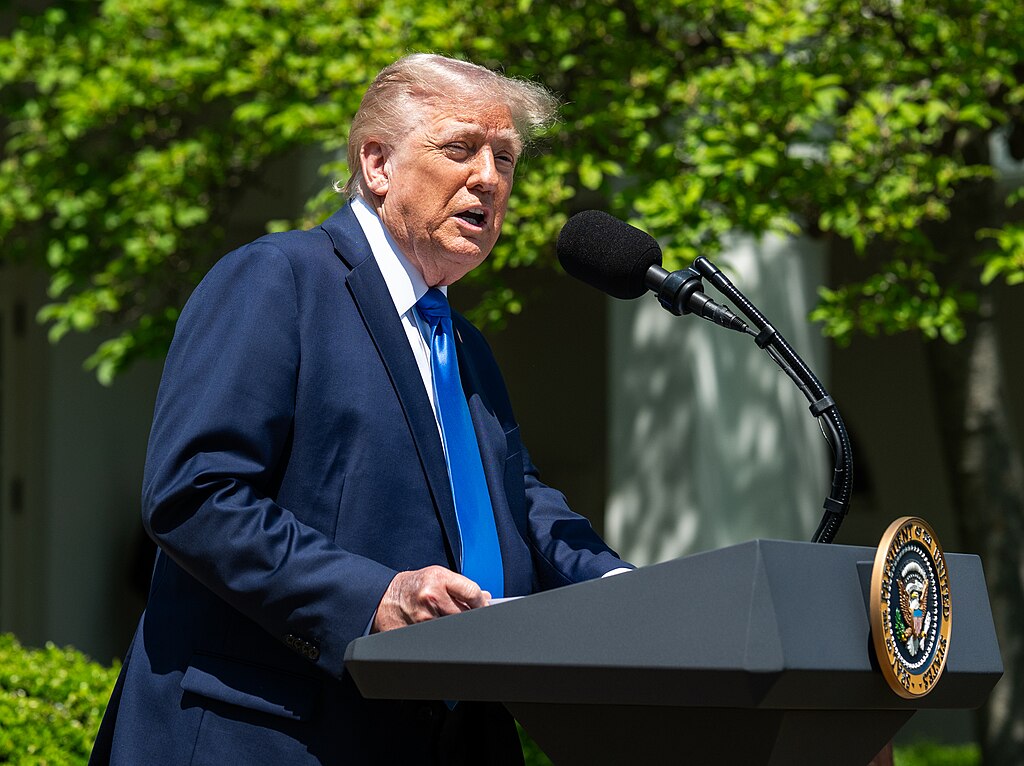
Regulation, in this context, is not merely oversight—it is jurisdictional power. On March 17 ET, the U.S. Securities and Exchange Commission and the Commodity Futures Trading Commission released joint guidance aimed at reducing long-standing legal ambiguity for the crypto sector. In a notable signal, the SEC chair emphasized limits to the agency’s reach, while a list of major assets—reported to include Bitcoin (BTC), Ethereum (ETH), XRP (XRP), and Solana (SOL) among others—was treated as ‘digital commodities’ rather than securities.
For global capital, classification matters as much as technology. Clearer U.S. rulemaking can anchor institutional participation—custody, clearing, listings, and compliant product design—inside American frameworks at a time when other major jurisdictions remain fragmented. China, by contrast, continues to maintain a broad prohibition on cryptocurrency activity, a stance that limits its ability to shape the market’s operating standards even as it explores state-led digital finance alternatives.
Beijing’s parallel hedge has been notably traditional: gold. China’s central bank has continued to add to official gold reserves, which have been reported above 2,300 tons, while gold prices have surged over the past year to fresh highs, reflecting demand for an asset beyond sanctions risk and counterparty exposure. The divergence is stark—China accumulating metal, the U.S. building code-based rails—each pursuing resilience and influence through fundamentally different instruments.
Where this leaves trade-dependent economies is increasingly uncomfortable. South Korea, which imports the vast majority of its energy, cannot treat any disruption around Hormuz as distant theater. At the same time, despite being one of the most active crypto markets by participation, its broader strategy for ‘digital financial sovereignty’ remains less defined, even as dollar stablecoins expand across borders faster than traditional policymakers can respond.
The broader implication is that the next phase of financial competition may be decided less by visible battlefield outcomes and more by who sets the standards for settlement, compliance, and liquidity. Missiles are loud, but the conflicts that rewrite economic history often begin in quiet rooms—where dollars, code, and regulation determine how value moves, and who ultimately controls the rails.













Comment 0