

 News
News  Coin Information
  About us
  Customer Service


 Add as a preferred source on Google

US spot Bitcoin (BTC) exchange-traded funds posted a combined net inflow of $202 million on Sunday ET, extending their streak of positive daily flows to six sessions and reinforcing the narrative of renewed 'institutional demand' after a choppy start to March.
The latest intake came as ETF activity continues to serve as a key proxy for risk appetite in the crypto market, with traders monitoring whether steady allocations can offset bouts of volatility tied to macro headlines and shifting expectations for US monetary policy.
In parallel, US, UK, and Canadian authorities announced expanded cross-border coordination to curb crypto-enabled fraud under an initiative dubbed 'Operation Atlantic', signaling a more synchronized enforcement posture aimed at disrupting scam networks that exploit digital assets for rapid settlement and obfuscation.
Regulators and law enforcement agencies have increasingly emphasized that fraud—not just market abuse—has become a primary vector for consumer harm in crypto, and the new coordination suggests more joint investigations, intelligence sharing, and asset-tracing efforts across major financial jurisdictions.
In South Korea, the National Police Agency moved to update internal rules for the seizure and custody of virtual assets, including—according to local reports—its first dedicated guidance for handling 'privacy coins', reflecting a broader push to standardize evidence preservation and chain-of-custody procedures for on-chain assets.
On the market-structure side, on-chain analytics platform Onchain Lens reported that the WLFI team transferred a total of 20 million WLFI tokens to the exchanges Gate and OKX, a type of flow that investors often watch for potential 'liquidity provisioning' or prospective sell-side activity, though transfers alone do not confirm intent.
In Europe, Spain’s Basque regional police warned that crypto-related offenses are rising sharply in the area, echoing a wider trend across the continent where law enforcement has pointed to growth in investment scams, account takeovers, and cross-border laundering tied to digital-asset rails.
Asia also saw notable corporate and platform developments: Singapore-based digital payments firm dtcpay said it raised $10 million in a Series A round, highlighting continued investor interest in regulated on-ramps and compliant settlement infrastructure despite tighter global scrutiny of crypto payments.
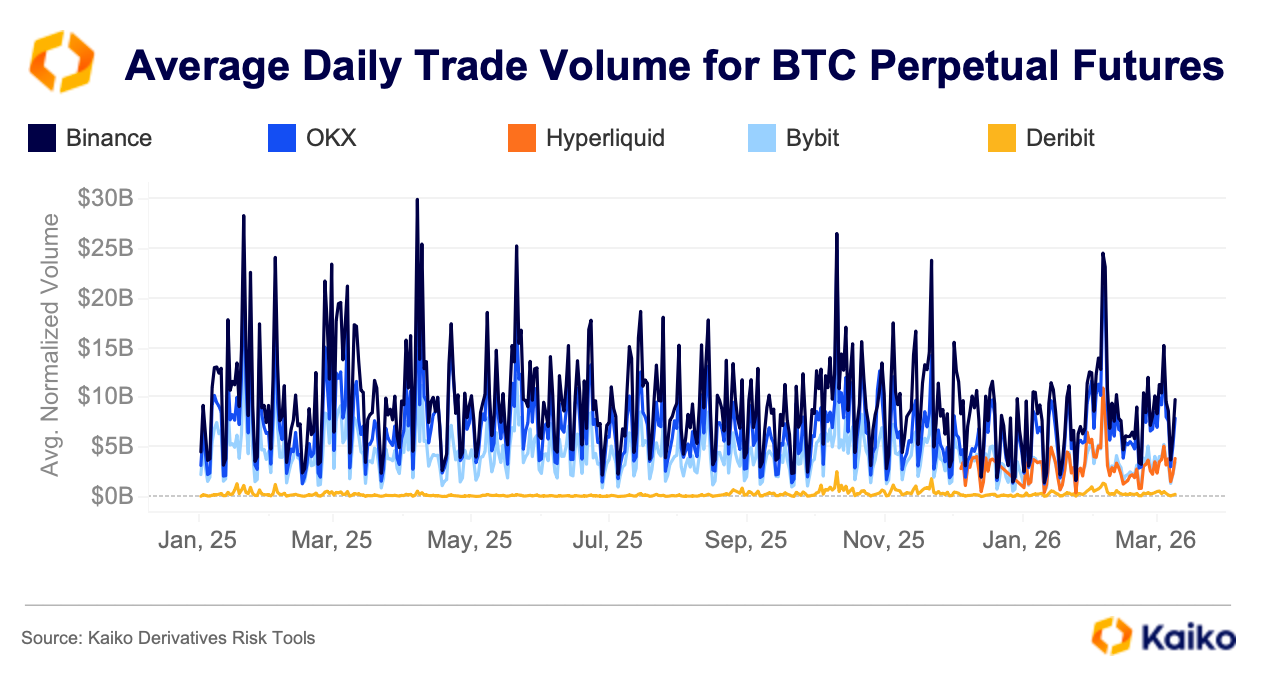
Binance, the world’s largest crypto exchange by volume, announced the addition of four new U-margined cross-margin pairs—AAVE/U, TAO/U, UNI/U, and WLFI/U—underscoring the exchange’s ongoing expansion of derivatives offerings as traders seek capital-efficient exposure and hedging tools.
Separately, Binance pushed back against a foreign media report concerning alleged Iran-linked fund flows, issuing a compliance-focused statement as major platforms face sustained pressure to demonstrate robust sanctions screening and transaction monitoring in an increasingly regulated environment.
Beyond exchanges, prediction market Polymarket resumed Hong Kong weather-related markets after switching its data source to the Hong Kong Observatory, a reminder that 'oracle' selection and data integrity remain central to how real-world events are translated into on-chain or quasi-on-chain markets.
In industry leadership news, crypto research firm Messari said co-founder Eric Turner stepped down as CEO, with Diran Lee appointed as his successor—an executive change that comes as research and data providers compete to differentiate amid consolidation pressures and evolving demand from institutions.
Taken together, the steady ETF inflows, stepped-up international fraud cooperation, and a fresh round of exchange and infrastructure updates point to a market balancing 'capital formation' with intensifying oversight—an equilibrium likely to shape crypto’s next phase as participation broadens beyond early adopters.
Article Summary by TokenPost.ai
🔎 Market Interpretation
- Spot BTC ETF flows reassert as sentiment gauge: US spot Bitcoin ETFs recorded $202M net inflow, extending a six-session positive streak—supporting the view that institutional allocation is stabilizing demand after early-March volatility.
- Macro sensitivity remains the swing factor: Market participants continue to treat ETF creation/redemption activity as a proxy for risk appetite, watching whether consistent inflows can offset volatility tied to US monetary policy expectations and macro headlines.
- Oversight tightens alongside adoption: Expanded enforcement coordination (US/UK/Canada) and updated policing procedures (South Korea) signal a more mature regulatory environment that may reduce fraud over time but raises compliance demands for platforms and users.
- Token-to-exchange transfers add supply-watch pressure: The reported transfer of 20M WLFI tokens to Gate and OKX is a monitorable on-chain supply event; while not proof of selling, it can increase perceived near-term distribution risk.
- Derivatives expansion reflects continued leverage demand: Binance adding new U-margined cross-margin pairs indicates ongoing growth in capital-efficient trading and hedging, which can deepen liquidity but also amplify liquidation-driven moves.
💡 Strategic Points
- Track ETF flow persistence, not single-day prints: A multi-session inflow streak is more informative for positioning than an isolated net inflow day; watch for reversals that may foreshadow broader risk-off shifts.
- Expect higher fraud enforcement intensity: “Operation Atlantic” suggests more cross-border investigations, intelligence sharing, and asset tracing—raising the probability of freezes/seizures on tainted funds and stricter onboarding/monitoring by intermediaries.
- Prepare for stronger chain-of-custody standards: South Korea’s updated rules for seizure/custody of virtual assets (including privacy coins) points to enhanced evidentiary rigor; firms operating locally may face more formalized compliance and documentation needs.
- Interpret exchange inflows cautiously: Large token transfers to exchanges can indicate liquidity provisioning, market-making, collateral moves, or intent to sell; confirm with follow-through signals (order-book pressure, deposits across multiple venues, sustained outflows from team wallets).
- Derivatives listings can change microstructure: New cross-margin pairs may increase hedging efficiency and volumes, but also raise correlated risk across positions; traders should reassess margin utilization and liquidation thresholds.
- Oracle/data-source choices are market-critical: Polymarket switching to the Hong Kong Observatory underscores that data integrity is a core risk variable for prediction markets—participants should verify oracle methodology before sizing exposure.
- Industry consolidation/leadership shifts matter for data users: Messari’s CEO transition highlights competitive pressure among research/data providers; institutional users may reassess vendor durability, coverage quality, and conflict-of-interest safeguards.
📘 Glossary
- Spot Bitcoin ETF: An exchange-traded fund that holds (directly or via custodied arrangements) spot BTC exposure, allowing investors to access Bitcoin through traditional brokerage accounts.
- Net inflow: The value of new money entering a fund minus redemptions/withdrawals over a time period.
- Institutional demand: Buying/allocations attributed to professional investors (asset managers, hedge funds, corporates), often inferred from products like ETFs and prime-broker flows.
- Risk appetite: The market’s willingness to hold riskier assets; higher appetite typically supports crypto prices and inflows, while lower appetite favors cash/treasuries.
- Operation Atlantic: A reported cross-border coordination initiative (US/UK/Canada) aimed at curbing crypto-enabled fraud through joint investigations and intelligence sharing.
- Crypto-enabled fraud: Scams that use crypto for payment, laundering, or rapid cross-border settlement (e.g., investment scams, impersonation, account takeovers).
- Chain of custody: Documented handling of evidence from seizure to storage to ensure integrity—applied here to on-chain assets and access credentials.
- Privacy coins: Cryptocurrencies designed to obscure transaction details (e.g., sender/receiver/amount), complicating tracing and compliance.
- On-chain analytics: Tools that analyze public blockchain activity (wallet flows, exchange deposits, token movements) to infer behavior.
- Liquidity provisioning: Supplying tokens/quotes to facilitate trading, often by market makers; can involve transferring assets to exchanges.
- U-margined (USDT-margined) contracts: Derivatives settled and margined in a stablecoin (commonly USDT), rather than the underlying coin.
- Cross-margin: Using shared margin across multiple positions so gains/losses are netted; improves capital efficiency but can spread liquidation risk.
- Sanctions screening: Compliance processes to detect and block prohibited counterparties/regions and suspicious flows.
- Oracle: A mechanism that supplies external real-world data (prices, outcomes, weather) to on-chain or blockchain-adjacent applications.
















Comment 0