
AI Tool Selection Shifts From Benchmarks to Cost, Data Access at MetaCon
At MetaCon 2026, CEO Lee Bora said AI tool selection should focus on task fit, vendor strengths, and data access rather than leaderboard rankings.

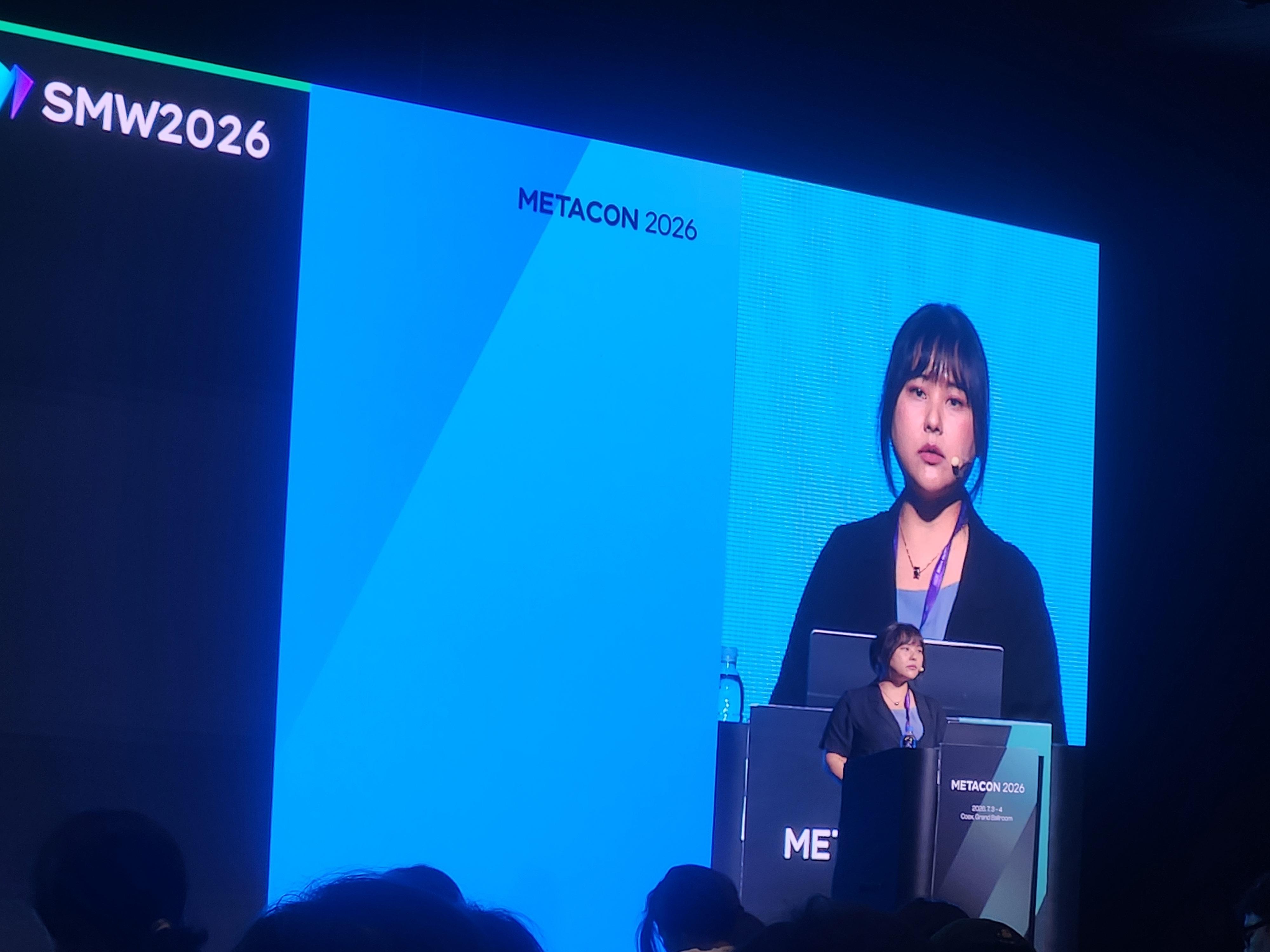
As generative AI tools multiply across every workflow—from coding and design to market research—an emerging consensus is that the “best” model on a leaderboard is often the wrong starting point. At MetaCon 2026 in Seoul, industry speakers argued that tool selection is becoming less about chasing performance rankings and more about aligning with the user’s real operational constraints: task fit, vendor strengths, and cost structure.
Speaking on Friday UTC at the two-day AI conference MetaCon 2026, Lee Bora, CEO of Modern Web Research Institute, laid out an A-to-Z framework for evaluating AI tools amid what she described as a “flood” of new products. Her message was blunt: stop asking which tool is number one, and start asking which tool is structurally advantaged for your work.
“Instead of asking ‘which tool is best,’ you should ask ‘which tool is structurally favorable for the specific nature of my work,’” Lee said, adding that a personal decision framework tends to remain stable even as model rankings and benchmarks shift. She referenced model-ranking platforms such as ‘AI Arena,’ where top performers can change frequently across categories like web development, image generation, and text processing—an inherent volatility that can mislead teams into constant switching.
Three fundamentals: task 특수성, vendor advantage, and pricing
Lee proposed three primary filters for choosing AI tools: the ‘specificity of the task,’ the ‘core strengths of the company’ behind the tool, and price. In her view, the developer’s existing data assets and business environment often determine where a model will be most competitive. As an example, she pointed to Google ($GOOGL), arguing that ownership of YouTube gives the company access to vast video-first data, creating a structural edge for video-centric AI products.
For coding, ‘vertical integration’ matters
For software development workflows, Lee stressed the importance of pairing an AI model with a coding agent from the same provider—a form of ‘vertical integration’ intended to reduce mismatches in context handling, tool-calling patterns, and long-session behaviors. She cited examples of same-vendor pairings such as Claude Code with Claude, Codex with GPT, ZCode with GLM, and Qwen Code with Qwen3-Coder.
When the model and agent originate from different vendors, she warned, differences in prompt formatting and compression schemes can accumulate over time, increasing the risk of context loss, repeated errors, and output degradation—especially in long-running coding sessions. Even in ideal conditions, she said, chat-style sessions have inherent limits: a single chat thread is effectively a single session, and accuracy can deteriorate as the thread grows and the system begins compressing earlier information to cope with overload.
For research, the edge is ‘data access rights,’ not raw model IQ
In research workflows, Lee argued that the key differentiator is less about model intelligence and more about ‘data access rights’—which platforms and datasets the tool can query natively and in real time. She highlighted that leading-edge AI and IT trends often surface first on X, where researchers and founders may post insights earlier than they publish papers or long-form writing.
On that basis, she described Grok’s structural advantage as stemming from native, real-time access to X content. The takeaway, she said, is that buyers should evaluate what proprietary or privileged data sources a vendor can legally and technically access, rather than treating models as interchangeable reasoning engines.
Consumer brands: watch where LLMs source recommendations
For consumer products and marketing, Lee said companies need to understand how AI recommendation systems are being shaped by specific community platforms. She cited analyses suggesting Reddit content may account for roughly 40% of cited data in some large-language-model outputs, positioning it as a critical input for product discovery.
Lee pointed to high-profile examples of Reddit data being monetized through licensing and partnerships, including reported investments and commercial arrangements involving major AI developers. She also referenced Reddit’s reported data-licensing revenue of $203 million as evidence that data provenance is becoming a core competitive asset in the AI economy.
Because LLMs increasingly draw from Reddit when users search for products or request recommendations, Lee argued that brands may need to develop strategies to optimize product visibility within Reddit communities. She added that AI-driven recommendations are not fully neutral today, and that sales and marketing teams should be deliberate about where they allocate resources and how they manage content on the platforms that models most heavily ingest.
Handling massive documents: context windows and ‘multi-agent’ setups
For tasks involving thousands—or tens of thousands—of pages, Lee recommended that teams first check a tool’s context window size and whether it supports ‘multi-agent’ workflows. Feeding massive document sets or large codebases into a single model session can exceed what the model can reliably process, she said.
LLMs have a finite “head capacity” defined by the context window; accuracy tends to remain high when only 5–10% of that capacity is used, but performance becomes uneven as the window fills. According to Lee, academic research has documented the phenomenon where models recall the beginning and end of long contexts more reliably than the middle.
To mitigate this, she advocated splitting large document sets into chapters or sections and delegating them to separate agents orchestrated via natural-language instructions. Even for non-developers, she argued, CLI-based agent tools can be more effective than chat-only apps at scale because they can dynamically create and retire sub-agents—effectively resizing the “team” based on workload.
Geopolitics and regulation can shape product strengths
Lee also emphasized that a vendor’s geopolitical setting and regulatory environment can materially influence product design. She cited Mistral, based in France, as a company shaped by the European market’s complexity—serving 27 EU countries and 24 official languages—arguing that such conditions naturally push vendors to prioritize multilingual and document-processing capabilities.
In video and image-to-video generation, she said, Chinese companies have been particularly competitive, pointing to comparatively lower constraints around training data acquisition and processing, as well as lower infrastructure operating costs—factors that can translate into faster iteration and scale in data-heavy modalities.
Enterprise buyers prioritize reliability over speed
For enterprise adoption, Lee contrasted rapid-release cultures with vendors that emphasize operational stability. She cited GitHub (owned by Microsoft ($MSFT)) as an example of a provider that often runs previews longer, gathers extensive bug reports, and launches only after a more mature stabilization process—an approach she said aligns with the needs of large customers, where outages can cause losses on the order of tens or hundreds of billions of won.
In sectors such as finance and semiconductors—where security and availability are paramount—Lee recommended checking release cycles, operational cadence, and whether a product has gone through a formal general availability (GA) process rather than relying on early-stage releases.
She also highlighted Lovable as an option for users who want to build websites via “vibe coding” but struggle with the practical friction of API keys and integrations. According to Lee, Lovable offers 84 connectors and supports simplified integration with Microsoft 365 and Google Workspace through OAuth-based logins, lowering the barrier for beginners who get stuck during setup.
Red flags: over-viral marketing and aggressive annual discounts
Lee closed with cautionary signals. Tools that suddenly go viral via coordinated influencer marketing should be scrutinized, she said, urging users to distinguish organic adoption from paid promotions. She also warned against companies that offer steep annual-payment discounts, arguing that usage-based pricing better aligns costs with value—and that many AI startups have short runways, potentially pushing aggressive annual plans to shore up cash.
MetaCon 2026, hosted by TV Chosun and co-organized by TokenPost, ran July 3–4 at COEX Grand Ballroom in Seoul under the theme “AI Makers Rise,” bringing together practitioners across technology, enterprise transformation, marketing, and investment to discuss how AI is reshaping industrial workflows.