XRP Holds Near $1.40 as AI Models Signal Range-Bound Trade With Bearish Bias
XRP trades around $1.40 as multiple AI models point to a range-bound market with persistent bearish structure unless key resistance levels are reclaimed.


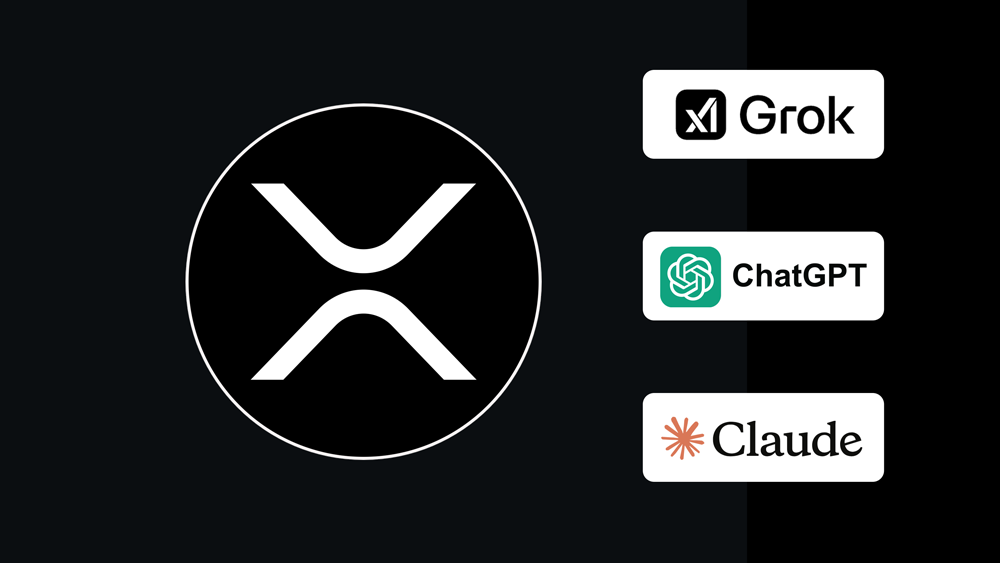
Ripple (XRP) is struggling to establish a clear direction, hovering around the $1.40 level as traders weigh a shaky short-term bounce against a broader bearish technical backdrop. While several major AI models broadly agree the token is in a 'neutral range-bound phase,' they also converge on a key takeaway: downside structure still dominates unless XRP can reclaim critical resistance levels.
As of Saturday ET, XRP was changing hands in the roughly $1.41–$1.42 area, with modest rebound attempts failing to develop into a sustained trend. The main overhang remains the 200-day moving average near $1.75, a widely used gauge for long-term momentum. With price continuing to trade below that line, market participants are treating rallies as tactical bounces rather than confirmation of a new uptrend.
Among the models surveyed, GPT-5.2 framed current conditions as a 'box range with a weak rebound,' pointing to an RSI reading near 53.8—typically considered neutral and consistent with indecision. The model highlighted $1.43–$1.45 as a dense 'resistance zone' and suggested upside conviction would remain limited unless XRP can break and hold above that band. It assigned a 48% probability to a near-term rebound, while flagging $1.37 as a pivotal support and warning that a breakdown could open room toward $1.32.
Claude Sonnet 4.6 took a more cautious stance, emphasizing shrinking volume as the primary risk factor. In its view, sharply reduced trading activity signals thinning 'liquidity,' which can amplify price swings if a catalyst emerges. Technically, Claude noted repeated failures to push through $1.43, arguing that each rejection may be strengthening overhead pressure. It put the rebound probability at 45% and described the most likely outcome as continued consolidation between $1.40 and $1.43 unless participation returns.
xAI 4.1 was the most constructive on the near-term tape, citing neutral-to-positive momentum readings and tentative signs of improving activity as potential indicators of incremental buying interest. It identified $1.418 as a key support reference and suggested that holding that level could enable another attempt at $1.439 and above. xAI assigned a 62% probability to a short-term rebound—highest among the three—while cautioning that a clean break below $1.40 could accelerate losses toward $1.368.
Taken together, the models depict a market trapped between near-term stabilization and a still-bearish structure. The immediate technical battlefield centers on support at $1.40 and resistance spanning $1.43–$1.45. A decisive move beyond either boundary is likely to shape the next directional leg, especially as the market watches for signs that volume is returning.
Over the next 24 hours, the AI-based scenarios coalesce into three broad paths. First, a push above $1.43 could extend toward the $1.45–$1.48 area, turning the upper band into a test of whether momentum can build. Second, a failure of $1.40 support could deepen downside pressure toward $1.37–$1.35, with some estimates extending lower if selling accelerates. Third, if volume remains muted, XRP may simply continue moving sideways within the $1.40–$1.43 range.
In summary, XRP’s immediate outlook hinges on two variables: whether 'trading volume' rebounds and whether buyers can meaningfully clear overhead resistance. Momentum indicators suggest some room for a bounce, but as long as the token remains below its 200-day moving average, market participants are likely to treat upside attempts as fragile and vulnerable to reversal.
Model snapshots provided the following ranges and probabilities: GPT-5.2 projected a potential high of $1.45 and low of $1.36 with a 48% rebound probability; Claude Sonnet 4.6 projected a high of $1.448 and low of $1.392 with a 45% rebound probability; xAI 4.1 projected a high of $1.445 and low of $1.380 with a 62% rebound probability.
Traders commonly use the RSI to gauge overbought or oversold conditions, while the 200-day moving average serves as a benchmark for longer-term trend direction. Tools like Fibonacci retracement are also used to map potential support and resistance during corrective moves. Still, these indicators are probabilistic, and actual price action can diverge based on macro conditions, risk sentiment, and shifts in market positioning.
Article Summary by TokenPost.ai
🔎 Market Interpretation
- XRP is range-bound near $1.41–$1.42, with repeated rebound attempts stalling; price action reflects short-term stabilization inside a broader bearish structure.
- The dominant technical headwind is XRP trading below the 200-day moving average (~$1.75), keeping longer-term momentum tilted bearish and causing traders to treat rallies as tactical bounces.
- The immediate “decision zone” is tightly defined: support at ~$1.40 (then ~$1.37) versus resistance at $1.43–$1.45; a decisive break is likely to set the next directional leg.
- Momentum is neutral overall (e.g., RSI ~53.8 cited), consistent with indecision rather than a confirmed trend reversal.
- Volume is an important variable: shrinking participation increases the odds of choppy consolidation but can also amplify any breakout/breakdown if a catalyst appears.
💡 Strategic Points
- Key levels to monitor (near-term):
- Support: $1.40 (line-in-the-sand), then $1.37; deeper downside targets discussed: ~$1.35–$1.32 and ~1.368 depending on model scenario.
- Resistance: $1.43–$1.45 (dense overhead supply); if reclaimed and held, the next upside area is ~$1.45–$1.48.
- Scenario map (next ~24 hours, per aggregated AI framing):
1) Bullish continuation attempt: Break/hold above $1.43 → extension toward $1.45–$1.48; watch whether volume expands to validate.
2) Bearish continuation: Lose $1.40 → pressure toward $1.37–$1.35 (with some paths pointing toward ~$1.32 if selling accelerates).
3) Sideways base: Muted volume → continued chop within $1.40–$1.43.
- Model bias and probabilities (as presented):
- GPT-5.2: “box range with weak rebound,” rebound probability 48%; range guidance ~high $1.45 / low $1.36; key support $1.37, resistance $1.43–$1.45.
- Claude Sonnet 4.6: cautious due to shrinking volume; rebound probability 45%; expects consolidation $1.40–$1.43 unless participation returns.
- xAI 4.1: most constructive; rebound probability 62%; highlights ~$1.418 support and re-test potential toward ~$1.439+; warns a clean break below $1.40 can accelerate to ~$1.368.
- Practical read-through for traders/investors:
- Upside attempts remain “fragile” while below the 200-day MA; stronger conviction would require sustained acceptance above $1.43–$1.45 and improving volume.
- Risk tends to increase when liquidity thins; sudden moves can overshoot technical levels during low-volume periods.
📘 Glossary
- Range-bound / Consolidation: Price moving sideways between defined support and resistance without establishing a trend.
- Support: A price level where buying demand historically appears, potentially preventing further declines (here: ~$1.40, then ~$1.37).
- Resistance: A price level where selling pressure historically emerges, potentially capping rallies (here: $1.43–$1.45).
- 200-day Moving Average (200D MA): A long-term trend benchmark; trading below it often signals bearish structure or weaker momentum.
- RSI (Relative Strength Index): Momentum oscillator (0–100) used to gauge overbought/oversold; ~50 is typically neutral (article cites ~53.8).
- Liquidity: Ease of executing trades without materially moving price; lower liquidity can increase volatility and slippage.
- Fibonacci Retracement: A tool to map potential support/resistance during pullbacks using key ratio levels; probabilistic, not deterministic.
- Breakout/Breakdown: Price moving decisively above resistance (breakout) or below support (breakdown), often shaping the next trend leg.