

 News
News  Coin Information
  About us
  Customer Service


 Add as a preferred source on Google
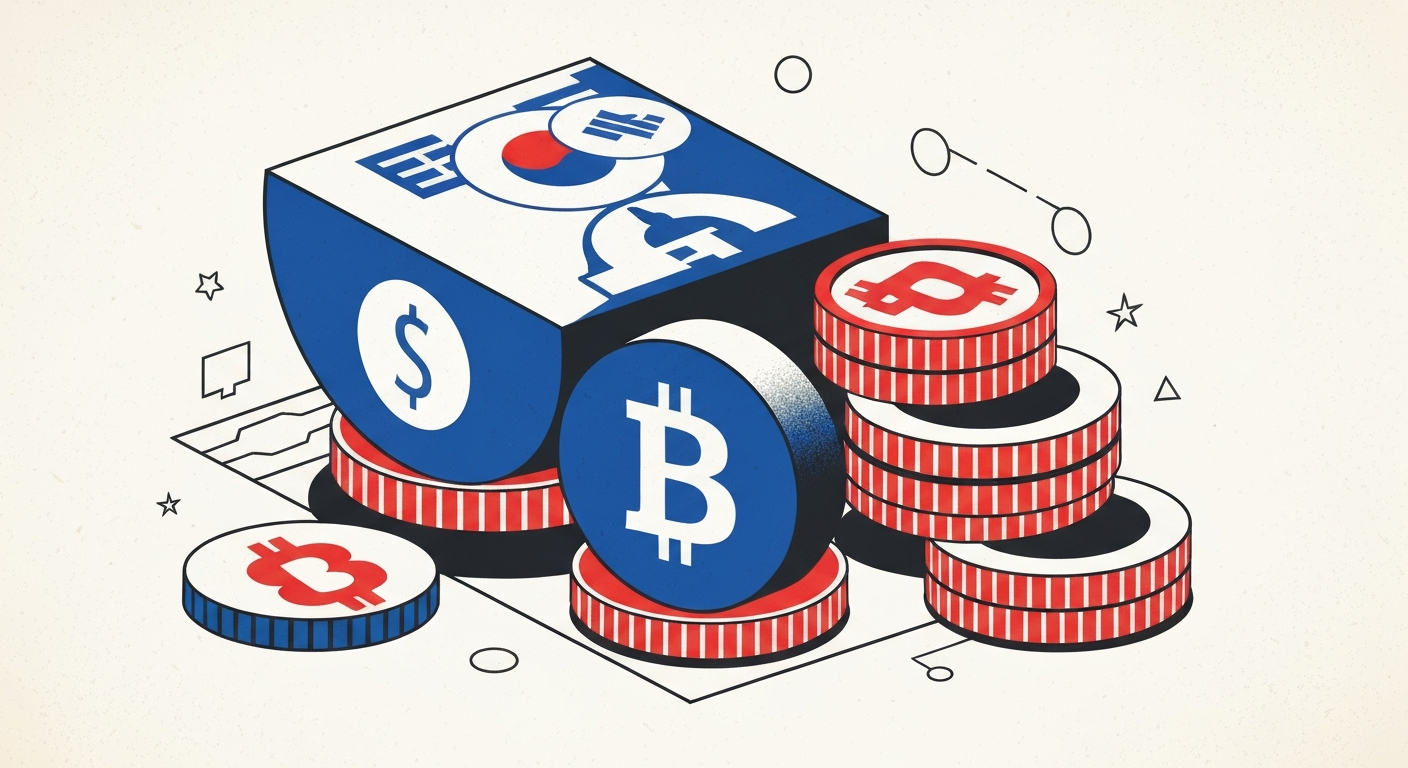
South Korea’s debate over digital money is accelerating—from central bank digital currency (CBDC) pilots to bank ‘deposit tokens’ and proposals for a won-denominated stablecoin. Yet beneath the technological momentum lies a more basic constraint: none of the leading contenders can become an everyday retail payment instrument without meaningful legal and regulatory change, leaving the country in what critics describe as a ‘no man’s land’ for digital currency.
The clash is increasingly visible as policymakers and industry groups promote competing visions of ‘future money’ while the legal system struggles to settle a foundational question: what, exactly, should count as ‘money’ in digital form? Until that definition is clarified, supporters argue, debates about adoption, consumer protection, and settlement take place in a conceptual vacuum—no matter how mature the underlying technology may be.
Among the options under discussion, a Bank of Korea-issued CBDC is often seen as the most straightforward in terms of authority. The central bank’s issuance power and the legal status associated with sovereign money are anchored in existing statutes, including provisions of the Bank of Korea Act. However, the moment a CBDC moves from an institutional concept to a retail payment tool, the complexity shifts from issuance to implementation. Integrating a CBDC into consumer payments would require reconciling potential conflicts with the Electronic Financial Transactions Act and the Personal Information Protection Act, while also redesigning parts of the broader payment architecture. In other words, having the mandate to issue is not the same as being ready to deploy at scale.
Bank-issued ‘deposit tokens’—a digital representation of commercial bank deposits—sit in an even more ambiguous position. In economic substance, they resemble an extension of the existing deposit system. But wrapping deposits in a tokenized format can push them outside account-based rules and supervisory frameworks that were written for traditional banking rails. For now, South Korea’s ability to test deposit tokens largely depends on the Financial Regulatory Sandbox, a special exemption designed to allow experimentation that would otherwise be difficult under current law. The reliance on a sandbox is itself a signal, proponents note, that the framework for tokenized deposits has not yet been formally recognized.
Private-sector won stablecoins face the steepest uncertainty. They hover between categories—treated neither clearly as ‘virtual assets’ nor definitively as regulated electronic payment instruments—creating a gray zone of obligations and permissions. While parts of the market argue that regulation is “too strict,” critics of that framing say the deeper issue is not strictness but vagueness: without a settled legal identity, stablecoins cannot be assessed consistently as currency, a financial product, or simply data recorded on a ledger.
This lack of definition has practical consequences for ‘finality’—the point at which a payment becomes irrevocable and legally complete. In global digital-asset discourse, stablecoins and blockchain-based payments are often criticized for lacking settlement finality. But in the South Korean context, the commentary argues that the weakness is less technological than institutional. Settlement is effectively “certified” only within the established perimeter of bank accounts and central bank systems; even if a blockchain transaction is technically irreversible, it may still be viewed as incomplete through the lens of existing legal and payment conventions.
As a result, the core challenge is framed not as a race to build more advanced platforms, but as the need for social and policy consensus on three questions: what should be recognized as money, what digital instruments should be accepted as payment, and where finality should be defined in a modern settlement system. Without answers, digital-currency innovations could be confined to supplementary roles rather than evolving into broadly usable money.
The digital-currency era has arrived, but the piece argues South Korea still has not decided where to place the ‘period’ at the end of a transaction—who gets to define it, and under what rules. Until that endpoint is established, technological breakthroughs may continue to outpace the legal infrastructure needed to make digital money function as ‘real money’ in daily life.
🔎 Market Interpretation
- South Korea is in a “digital money gap”: CBDC pilots, bank deposit tokens, and won stablecoin proposals are advancing technologically, but cannot become everyday retail payment tools without explicit legal recognition and regulatory alignment.
- The core bottleneck is definitional, not technical: Policymakers lack a settled legal answer to what qualifies as “money” in digital form, leaving adoption and consumer-protection debates without a stable foundation.
- CBDC has authority, but retail deployment is complex: The Bank of Korea’s issuance mandate is comparatively clear, yet scaling a CBDC for consumer payments would require reconciling conflicts across payment and data/privacy regimes and redesigning parts of payment infrastructure.
- Deposit tokens rely on temporary exemptions: Tokenized deposits resemble existing bank money economically, but may fall outside account-based supervisory rules; current experimentation depends on the Financial Regulatory Sandbox—signaling the absence of a permanent framework.
- Won stablecoins face the deepest regulatory ambiguity: They sit in a gray zone—neither clearly “virtual assets” nor regulated payment instruments—making consistent oversight and market development difficult.
- Settlement finality is institutionally bounded: Even if blockchain transfers are technically irreversible, they may not be recognized as legally complete because finality is effectively “certified” within established bank/central-bank systems.
💡 Strategic Points
- Prioritize legal taxonomy before product scaling: Establish statutory definitions for (1) digital money, (2) permissible payment instruments, and (3) settlement finality. Without these, retail use-cases will remain pilots or niche overlays.
- CBDC path requires cross-law harmonization: Any retail CBDC rollout must be designed alongside the Electronic Financial Transactions Act (payments/operations) and the Personal Information Protection Act (data handling), not after the fact.
- Move deposit tokens from sandbox to rulebook: If deposit tokens are to function as mainstream payment media, regulators need explicit prudential, consumer-protection, and operational standards that map tokenized claims to existing deposit protections and supervision.
- Stablecoin viability hinges on regulatory “identity”: The market’s obstacle is less “strictness” than vagueness. A clear classification framework (currency-like instrument vs. e-money/payment instrument vs. financial product vs. virtual asset) is necessary to determine licensing, reserves, disclosures, redemption rights, and AML obligations.
- Define where finality occurs in a modern stack: Policymakers must decide whether finality can occur on-chain, at a regulated intermediary, or only within central bank/bank account rails—then align dispute resolution, reversal rules, and liability accordingly.
- Expect “supplementary roles” absent consensus: Until the endpoint of a transaction is legally defined, digital-currency instruments are likely to remain add-ons (experiments, limited settlement layers, or closed-loop systems) rather than broadly usable money.
📘 Glossary
- CBDC (Central Bank Digital Currency): Digital form of sovereign money issued by a central bank; can be wholesale (institutions) or retail (general public).
- Deposit Token: Tokenized representation of a commercial bank deposit—economically a claim on a bank, but operationally structured like a token for transfer/settlement.
- Won-denominated Stablecoin: A privately issued token designed to maintain a stable value relative to the Korean won, typically via reserves and redemption mechanisms.
- Electronic Financial Transactions Act (EFTA): South Korea’s core legal framework governing electronic payment services, transaction rules, and operator responsibilities.
- Personal Information Protection Act (PIPA): South Korea’s primary privacy law regulating collection, use, storage, and transfer of personal data—critical for retail payment systems.
- Financial Regulatory Sandbox: A controlled regime allowing firms to test services under temporary regulatory exemptions when existing laws do not yet fit new models.
- Settlement Finality: The legally recognized point at which a payment is irrevocable and complete—determining when obligations are discharged and disputes/reversals are limited.
- Tokenized / Tokenization: Representing a claim or asset as a transferable digital token on a ledger, potentially changing how ownership and transfers are recorded and governed.












Comment 0