Kraken Seeks OCC Charter to Expand U.S. Institutional Crypto Custody
Kraken’s parent Payward filed with the OCC to form a national trust bank, aiming to expand regulated institutional crypto custody services in the U.S.


Kraken’s parent company Payward has moved to deepen its foothold in U.S. regulated finance, filing an application with the Office of the Comptroller of the Currency (OCC) to establish a national trust bank—an effort that could meaningfully expand the exchange’s institutional crypto custody business as Washington’s rulebook for digital assets continues to take shape.
According to a report cited by Wu Blockchain, Payward is seeking approval to form “Payward National Trust Company,” a federally supervised trust entity. If granted, the charter would place the firm’s trust operations under OCC oversight, potentially giving Kraken a clearer regulatory pathway to offer qualified custody and related services to asset managers, corporates, and other institutional clients across the United States.
The filing lands amid a broader industry push to bring crypto market infrastructure—particularly custody—further inside the U.S. banking perimeter. National trust charters have historically been viewed as a way for financial firms to offer fiduciary and safekeeping services at scale, and in the digital asset sector they have become a focal point as institutions demand stronger controls around segregation of assets, operational resiliency, and compliance.
Regulatory developments in Washington added to the backdrop. In comments reported by Bitcoin Magazine, the lead counsel of the U.S. Securities and Exchange Commission’s (SEC) crypto task force said a proposed Bitcoin and broader crypto ‘market structure’ bill would strengthen the agency’s ongoing work to clarify how markets should be regulated. The bill under discussion is aimed at sharpening definitions and supervisory boundaries for digital assets—issues that have fueled uncertainty for exchanges, brokers, and custodians seeking to serve U.S. clients.
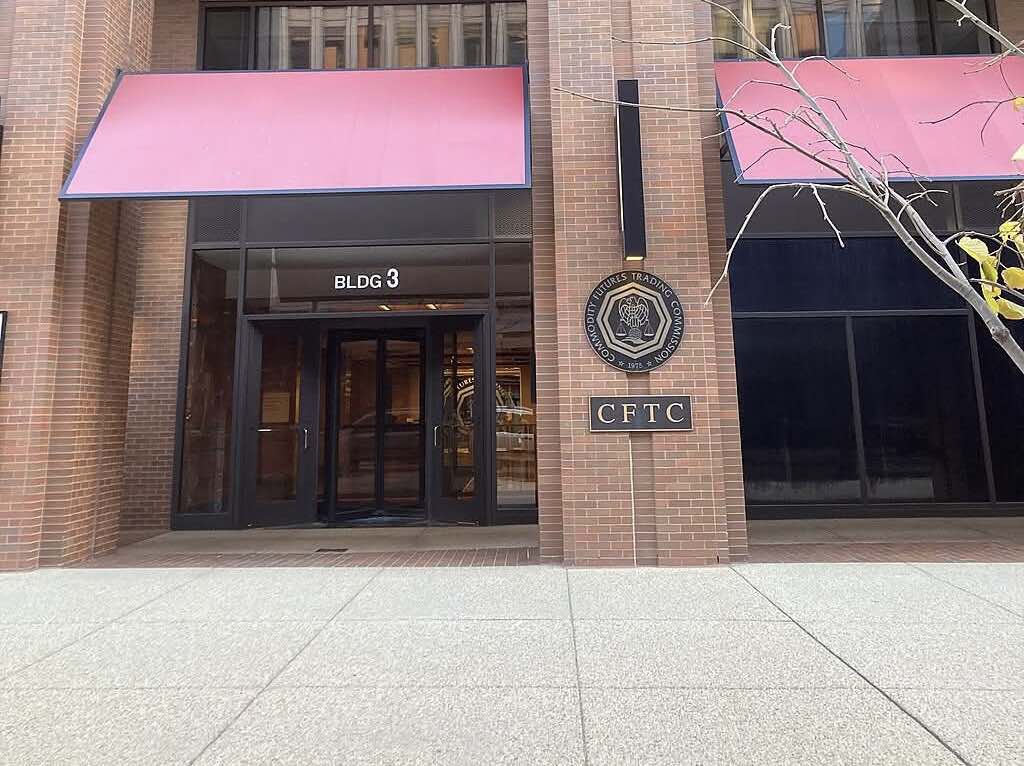
At the same time, major U.S.-facing exchanges are lobbying lawmakers to adjust the Senate’s draft digital asset legislation. Coinbase ($COIN), Kraken, and Gemini have urged the Senate Agriculture Committee to remove a provision that would restrict token listings to assets deemed not vulnerable to manipulation, according to a report from Odaily. The exchanges argue the language could effectively bar the listing of smaller-cap and lower-liquidity tokens and later serve as a basis for tighter oversight by the Commodity Futures Trading Commission (CFTC).
The draft bill would expand the CFTC’s authority over spot markets for digital commodities such as Bitcoin (BTC) and Ethereum (ETH). While the Senate Agriculture Committee has advanced relevant sections, further revisions are expected as lawmakers seek broader political support and negotiate the final contours of U.S. digital asset oversight.
Macro risk factors also remained in focus, with Middle East tensions resurfacing as a potential source of volatility for energy and risk assets. Iran’s Fars News Agency reported—via PANews—that a senior Iranian lawmaker on Thursday signaled the country would respond militarily if the U.S. were to impose a maritime blockade. Separately, Iran’s Foreign Ministry spokesperson Baghaei said Tehran is reviewing a U.S. ‘war termination plan’ and that related talks are ongoing, according to Odaily. Baghaei alleged U.S. military actions between Wednesday night and early Thursday Iran time violated international law and ceasefire arrangements, describing the situation as a “nominal ceasefire” while saying Iran’s forces are prepared to respond if necessary.
On-chain flows underscored how large transfers can add to short-term uncertainty even when intent is unclear. Whale Alert tracked multiple sizable Bitcoin moves, including 3,750 BTC—worth about $299.8 million—shifted between two unidentified wallets, and 1,760 BTC (about $140.8 million) also moved wallet-to-wallet without clear exchange involvement. In another transfer, 2,751 BTC (about $220.6 million) was sent from Coinbase to an unidentified wallet, a pattern often associated with custody reallocation or potential over-the-counter settlement rather than immediate selling.
Not all flows pointed away from venues. Whale Alert also flagged 718 BTC (around $57.5 million) moving from an unidentified wallet to Coinbase, a direction traders often watch for possible selling, though the purpose and any subsequent market activity were not confirmed.
Ethereum-related transfers drew attention as well. Whale Alert reported 25,000 ETH—worth roughly $58.0 million—moved from Binance to Ether.fi, an external platform associated with restaking and yield strategies. Large withdrawals from exchanges to specialized protocols can reflect shifting demand for ‘staking yield’ and on-chain positioning, though they do not necessarily signal a directional price view on their own.
Together, the day’s developments highlighted a market still balancing regulatory repositioning with shifting liquidity patterns: firms are racing to secure sturdier compliance frameworks for institutional adoption, while whales continue to move size across venues and networks—transactions that can amplify volatility even when their underlying motives remain opaque.
Article Summary by TokenPost.ai
🔎 Market Interpretation
Kraken/Payward targets OCC trust charter: Payward’s application to form “Payward National Trust Company” signals a push to operate crypto custody within a federally supervised framework, potentially strengthening Kraken’s credibility with U.S. institutions.
Custody is moving inside the banking perimeter: The industry is prioritizing regulated custody (segregation of assets, resiliency, compliance) as the key infrastructure layer for institutional participation.
Policy uncertainty remains a core market variable: SEC commentary on a proposed “market structure” bill and intensifying Senate negotiations underscore that definitions of digital assets and agency boundaries (SEC vs. CFTC) are still evolving.
Exchanges push back on listing restrictions: Coinbase, Kraken, and Gemini oppose draft language that could limit listings to tokens “not vulnerable to manipulation,” warning it may sideline smaller-cap assets and broaden CFTC leverage over listings/oversight via liquidity standards.
Macro geopolitics adds volatility risk: Renewed Middle East tensions (Iran-related maritime blockade and ceasefire dispute rhetoric) contribute to risk-premium and cross-asset volatility potential.
Whale flows complicate short-term signals: Large BTC wallet-to-wallet moves and Coinbase transfers, plus a major ETH withdrawal from Binance to Ether.fi, highlight shifting custody/yield positioning; some flows are “sell-watch” (wallet → exchange) but intent is not confirmed.
💡 Strategic Points
Institutional custody playbook: An OCC-supervised trust entity can help Kraken compete for mandates requiring qualified custody, potentially expanding services to asset managers, corporates, and fiduciaries across multiple states under a national framework.
Regulatory positioning is a business moat: Firms that obtain bank-like or trust charters may reduce counterparties’ compliance friction (due diligence, risk committees), improving client acquisition in regulated channels.
Watch the “market structure” bill for two catalysts:
Jurisdiction clarity: Any sharper delineation between SEC and CFTC oversight can materially change exchange compliance burdens and product roadmaps.
Token listing standards: Manipulation/liquidity tests could reshape available inventories, market-making economics, and revenue mix (especially for long-tail tokens).
Interpret on-chain flows cautiously:
Exchange → wallet can indicate custody reshuffling, OTC settlement, or long-term holding—not automatically bullish.
Wallet → exchange is often monitored as potential sell supply, but confirmation requires follow-through (order flow, exchange balances, realized volume).
ETH “yield migration” signal: Large ETH transfers from Binance to Ether.fi may reflect investors seeking restaking/yield opportunities, implying competition between centralized venues and on-chain yield markets for asset retention.
Risk management lens: With geopolitics and regulatory headlines active, volatility can spike without clear fundamental triggers; sizing, hedging, and liquidity planning matter more than single-transaction interpretations.
📘 Glossary
OCC (Office of the Comptroller of the Currency): U.S. federal banking regulator that supervises national banks and can charter/supervise certain trust banks.
National trust bank / national trust charter: A federally chartered trust entity focused on fiduciary and safekeeping services (often without full commercial banking activities), operating under national-level oversight.
Qualified custody: Custody services meeting regulatory expectations for safeguarding client assets, often required for registered investment advisers and institutional asset managers.
Market structure bill: Proposed legislation intended to define digital asset categories and clarify which regulator oversees which activities/markets.
SEC / CFTC: U.S. Securities and Exchange Commission; Commodity Futures Trading Commission—two agencies with overlapping/contested roles in crypto oversight.
Spot market: Market for immediate purchase/sale of an asset (as opposed to futures/derivatives).
Whale: A large holder whose transactions can meaningfully impact liquidity or market sentiment.
OTC (Over-the-counter) settlement: Off-exchange trading/transfer of assets, often used for large blocks to reduce visible market impact.
Restaking: Reusing staked assets (or staking derivatives) in additional protocols to earn incremental yield, typically with added smart contract and slashing/financial risks.