

 News
News  Coin Information
  About us
  Customer Service


 Add as a preferred source on Google
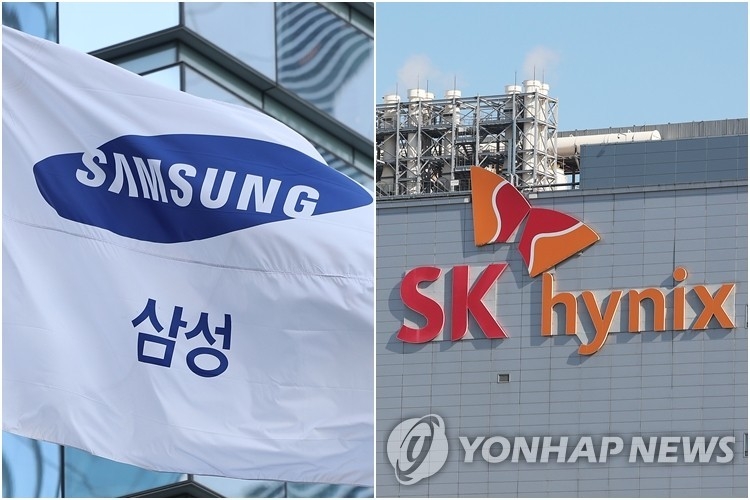
Global memory-chip makers are now being valued above the world’s biggest oil producers, a milestone that underscores how the AI boom is reshaping what markets consider essential infrastructure—and where durable profits may come from.
According to a report by The Wall Street Journal published on Saturday UTC (May 31), the combined market capitalization of three major memory semiconductor companies—Samsung Electronics (005930.KS), SK Hynix (000660.KS), and Micron Technology ($MU)—is about 22% higher than the combined value of three oil giants, Saudi Aramco (2222.SR), Exxon Mobil ($XOM), and Chevron ($CVX). The shift is not limited to the largest players: flash memory company Sandisk also saw its market value nearly triple since March, reaching a scale comparable to PetroChina (0857.HK), the largest oil company in Asia by market cap.
For decades, memory semiconductors were treated as a classic cyclical industry, with prices swinging sharply in response to economic conditions, inventory cycles, and supply-demand imbalances. But the surge in AI data-center spending is changing investor assumptions. Memory—especially high-performance DRAM used in servers—has become a strategic input for scaling AI models, effectively turning supply access into a competitive moat for cloud and platform businesses.
The more consequential change, market watchers say, is not simply higher spot prices but the spread of 'long-term supply agreements'. Memory products have historically traded more like commodities, similar to crude oil, with pricing tethered to near-term market conditions. Now, large technology companies running AI data centers are increasingly willing to sign multi-year contracts to lock in supply, reflecting the operational risk of chip shortages and the high cost of deployment delays.
Micron said in a recent earnings update that it has signed its first five-year long-term supply deal, adding that negotiations for additional agreements have made meaningful progress. Sandisk has also entered into five long-term contracts, which the company indicated amount to more than one-third of its total production capacity—an unusually large share for an industry long accustomed to shorter procurement cycles.
Company commentary and third-party estimates suggest the market is moving toward structurally tighter conditions. SK Hynix has indicated that demand over the next three years is expected to exceed its supply capacity by a wide margin. CFO Woo-hyun Kim noted that as memory becomes a more critical asset, customers increasingly view uncertainty around pricing and supply as a key management risk that must be actively reduced.
UBS analyst Tim Arcuri estimated that up to 30% of industry-wide DRAM shipments next year could be sold through long-term contracts. He also assessed that hyperscalers—such as Microsoft ($MSFT), Alphabet ($GOOGL), and Amazon.com ($AMZN)—have already secured roughly two-thirds of global server DRAM output, signaling a willingness to pay a premium in exchange for guaranteed supply over multiple years and better cost predictability.
Financial performance trends are reinforcing the argument that memory is becoming less volatile and more investable—though valuations have not fully adjusted. Micron’s adjusted earnings per share for its fiscal second quarter (December through February) jumped to $12.20 from $1.56 a year earlier, based on the figures cited in the report. Visible Alpha projections point to Micron’s EPS exceeding $60 in the current fiscal year and rising to roughly $106 in the next fiscal year. Even so, Micron’s forward 12-month price-to-earnings multiple is still below 10x, placing it in the bottom decile of the S&P 500 by that measure, the report said.
Other memory names trade at similarly restrained levels. Sandisk is valued at about 10.5x forward earnings, while Samsung Electronics and SK Hynix are in the 6–7x range—well below the roughly 26x average for constituents of the Philadelphia Semiconductor Index. The gap suggests that many investors continue to price memory as a cyclical business, despite emerging evidence of more stable demand visibility tied to AI infrastructure buildouts.
If 'AI-driven structural demand' and longer-duration contracting continue to expand, analysts increasingly see the potential for memory semiconductors to be re-rated from a boom-bust commodity segment into a core, cash-generative layer of AI infrastructure—more akin to a critical utility for the digital economy than a typical late-cycle cyclical trade.










Comment 0