

 News
News  Coin Information
  About us
  Customer Service


 Add as a preferred source on Google

Crypto markets turned defensive on Thursday as a wave of leveraged liquidations collided with renewed selling pressure from U.S. spot Bitcoin ETF outflows, reinforcing a broader ‘de-risking’ move across majors and large-cap altcoins.
Over the past 24 hours, roughly $298.02 million in leveraged positions were forcibly liquidated, according to aggregated derivatives data. Rather than signaling a dramatic deterioration in spot prices, the flush-out pointed to an unwind of ‘crowded long positioning’ that had built up during the prior rebound. Liquidations were concentrated in Bitcoin (BTC) at $136.83 million and Ethereum (ETH) at $109.60 million—an allocation that suggested risk appetite cooled across the market’s core benchmarks at the same time.
The most acute pressure hit in the short window: in the last four hours of the period, liquidations totaled $59.68 million, with long liquidations accounting for $53.56 million—about 89.74%. The imbalance indicates the market’s leverage structure broke down before spot prices moved meaningfully, a familiar pattern when derivatives positioning becomes one-sided.
Spot declines were comparatively contained. Bitcoin traded around $62,849, down 1.83% over 24 hours, while Ethereum fell 2.01% to about $1,699. Still, the day’s message was clearer in derivatives than in spot: volatility was amplified by forced position closures rather than a broad capitulation in cash markets.
Most major altcoins tracked lower alongside BTC and ETH. XRP (XRP) dropped 3.34%, Solana (SOL) slid 3.66%, Dogecoin (DOGE) fell 2.34%, and BNB (BNB) declined 2.58%. Hyperliquid (HYPE) saw a sharper 5.23% pullback, while Tron (TRX) was a rare outlier, edging up 0.08%. The dispersion suggested limited appetite for rotation, with traders largely stepping back instead of reallocating aggressively within the risk curve.
Market share metrics softened modestly without translating into an altcoin-led bid. Bitcoin dominance slipped to 58.25% (down 0.01 percentage points), while Ethereum’s share eased to 9.48% (down 0.02 points). The small shifts implied broad weakness rather than a decisive change in leadership.
Activity indicators also cooled. Total crypto trading volume over 24 hours was about $75.47 billion. Instead of a panic-driven surge in turnover, the data looked more like a post-volatility pause, as participants reduced exposure after the liquidation spike. Derivatives volume reached approximately $811.68 billion, down 13.02% from the previous day, underscoring that new leverage was not quickly replacing wiped-out positions—an ongoing ‘leverage contraction’ signal.
On-chain and sector-specific activity likewise pulled back. DeFi volume fell to around $11.13 billion (down 12.26%), while stablecoin volume declined to about $78.13 billion (down 10.41%), pointing to a short-term lull in both on-chain engagement and sidelined liquidity deployment.
Liquidations were heavily concentrated on Binance, where about $29.47 million—roughly 49.37% of the total in the referenced breakdown—was recorded. A large share occurring at the deepest liquidity venue suggested the move was market-wide rather than isolated to thinner books. Hyperliquid’s four-hour liquidation mix was especially skewed, with long liquidations reportedly representing 99.58%, highlighting how quickly ‘bounce-hunting’ positioning can unravel when momentum turns.
Flows from U.S. spot Bitcoin ETFs added a second headwind. On Wednesday U.S. Eastern Time, the category posted net outflows of about $90.66 million, shifting institutional-facing flow back toward net selling on the day. BlackRock’s iShares Bitcoin Trust (IBIT) led the outflows, with approximately $96.66 million redeemed—an eye-catching print for the flagship product that can weigh on near-term sentiment even if broader allocations remain intact.
On-chain transfer activity also drew attention as potential supply moved toward exchanges. Analysts flagged transfers of 2,500 BTC to OKX and 1,000 BTC to Coinbase from an unidentified wallet. Exchange inflows do not automatically translate into spot selling, but markets often treat them as a near-term ‘sell-side risk’ until the coins’ next moves are confirmed. Offsetting that signal, a newly created wallet was observed withdrawing 533 BTC from Binance, leaving room for the interpretation that opportunistic accumulation or custody-related transfers are also in play.
Regulatory developments contributed to the cautious tone. U.S. regulators published a draft implementation framework that would require stablecoin issuers to apply bank-level customer identification procedures. While the move can be read as progress toward mainstream integration, it also raises concerns about compliance costs and higher barriers to entry in the short run. Separately, U.S. senators are expected to meet next week to push forward a crypto market-structure clarity bill ahead of the August recess—supportive as a longer-term narrative, but not yet a catalyst strong enough to reverse risk-off positioning immediately.
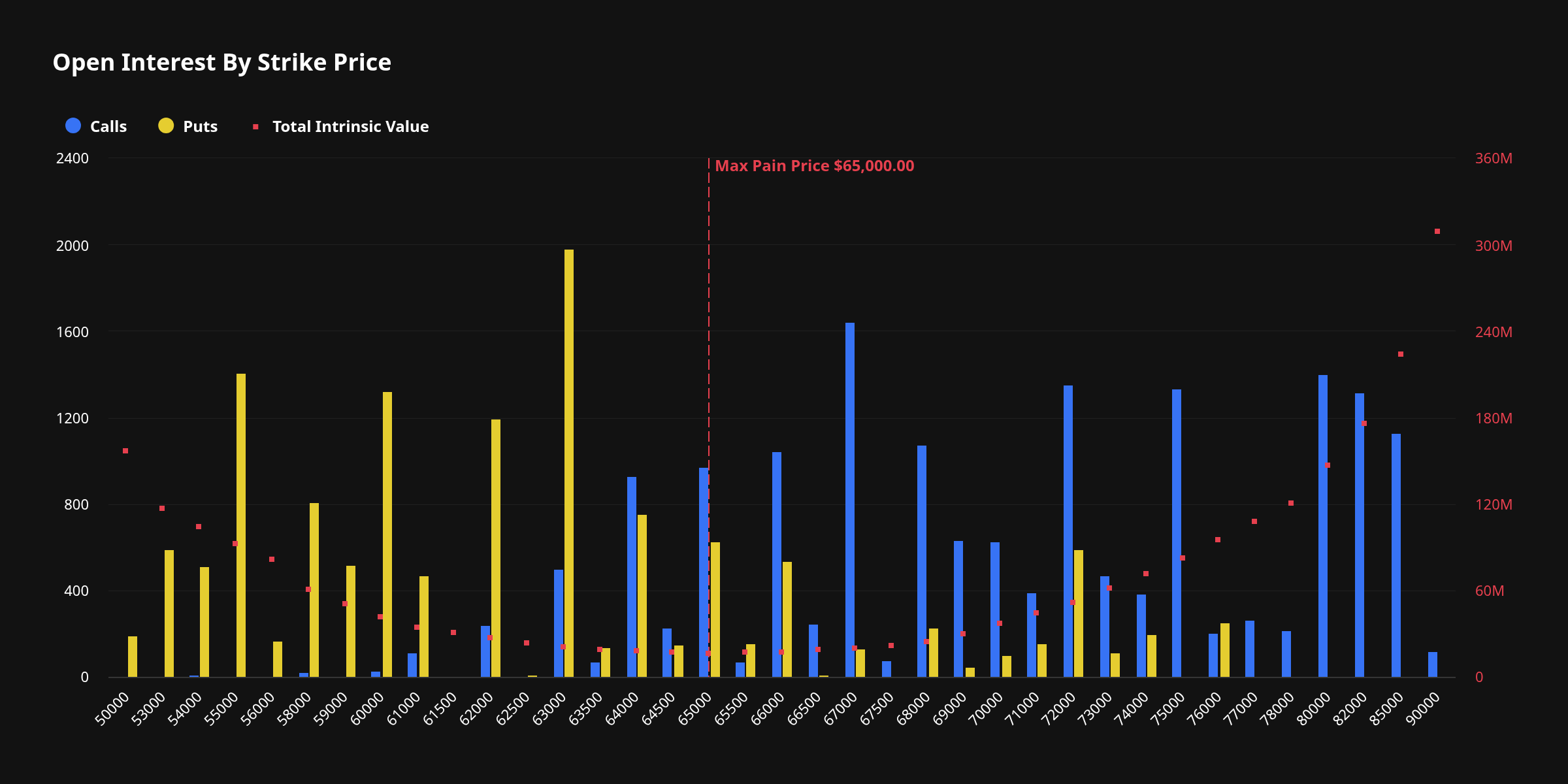
Adding to the day’s positioning churn, roughly 31,000 Bitcoin options and 138,000 Ethereum options reached expiry. When large expiries coincide with outsized liquidations, market direction can be shaped less by fresh conviction and more by mechanical ‘position rebalancing’ across derivatives books.
For now, the session’s defining feature was not the size of the spot pullback, but the speed with which leverage was washed out. With ETF outflows and exchange inflow signals arriving at the same time, traders appear to be navigating a clearer phase of deleveraging—one that could keep short-term price action sensitive to positioning shifts and liquidity conditions.
🔎 Market Interpretation
- Risk-off / de-risking session: Crypto turned defensive as leverage was flushed out while spot declines stayed relatively contained, signaling a positioning-driven move more than a spot-led capitulation.
- Liquidations dominated by longs: ~$298.02M in 24h liquidations with BTC ($136.83M) and ETH ($109.60M) leading; in the last 4 hours ~$59.68M liquidated with ~89.74% from long positions—classic “crowded long unwind.”
- Derivatives drove volatility: Price drops (BTC ~-1.83% to $62,849; ETH ~-2.01% to $1,699) were smaller than the leverage shock, implying forced closures amplified moves before spot materially repriced.
- Broad weakness, little rotation: Majors and large-cap alts fell in tandem (e.g., XRP, SOL, DOGE, BNB down), with TRX a slight outlier; this points to reduced risk-taking rather than sector rotation into “safer” alts.
- Leverage contraction visible in volumes: Derivatives volume (~$811.68B) fell ~13.02% day-over-day—suggesting wiped leverage was not quickly rebuilt; spot volume (~$75.47B) looked more like a post-spike pause than panic.
- ETF flows a second headwind: U.S. spot BTC ETFs posted net outflows (~$90.66M), with IBIT seeing ~-$96.66M—negative for near-term sentiment and reinforcing de-risking.
- Exchange inflow watch: Transfers of 2,500 BTC to OKX and 1,000 BTC to Coinbase raised perceived “sell-side risk,” partially offset by a new wallet withdrawing 533 BTC from Binance (possible accumulation/custody movement).
- Macro/regulatory caution: Draft U.S. stablecoin framework implying bank-level KYC raises short-term compliance/entry-barrier concerns; separate market-structure bill discussions are supportive long-term but not an immediate catalyst.
- Options expiry added mechanical flows: ~31,000 BTC options and ~138,000 ETH options expired—potentially amplifying positioning-related moves via rebalancing/hedge adjustments.
💡 Strategic Points
- Watch leverage conditions first, price second: When long liquidations dominate, near-term direction often depends on how quickly open interest and funding normalize rather than on spot headlines alone.
- Key near-term sensitivity: With leverage reduced and participation cooling, price can become more reactive to incremental liquidity changes (ETF flow swings, exchange inflows/outflows, funding shifts).
- ETF flow check as a daily barometer: Continued net outflows can cap rebounds; stabilization or return to inflows can help spot absorb residual sell pressure from traders de-risking.
- Exchange inflows are a “risk flag,” not confirmation: Treat large BTC deposits to exchanges as potential supply, but confirm with follow-through (subsequent on-exchange selling, order book pressure, or net exchange balance changes).
- Expect choppy conditions after liquidation spikes: Post-flush markets often see range trading and volatility pockets as participants rebuild positions cautiously; sudden squeezes can occur if positioning becomes one-sided again.
- Altcoin behavior suggests beta exposure, not idiosyncratic leadership: Broadly synchronized declines and minimal dominance shifts imply market trading “macro crypto risk” rather than picking winners—favoring selective positioning and tighter risk controls.
- Regulatory headlines can shift stablecoin/DeFi tone: Bank-level KYC proposals may pressure themes tied to on-chain liquidity and stablecoin rails in the short run, even if they support mainstream adoption longer-term.
📘 Glossary
- Leveraged liquidation: Forced closing of margin positions when collateral is insufficient, often accelerating short-term volatility.
- Crowded long positioning: A market state where many traders are long with leverage; vulnerable to cascading liquidations on modest downside moves.
- Long liquidation dominance: A liquidation mix where most forced closures are longs, indicating a downside squeeze of bullish leverage.
- Spot market: Market for immediate asset purchase/sale (as opposed to derivatives contracts).
- Derivatives volume: Trading activity in futures/perpetuals/options; often reflects leverage appetite and hedging intensity.
- Leverage contraction: A decline in outstanding leveraged exposure (e.g., falling open interest/derivatives activity) after liquidations or risk reduction.
- Bitcoin dominance: BTC market cap share of total crypto market cap; small changes can indicate whether capital is favoring BTC vs. broader alts.
- ETF net outflows: More shares redeemed than created; can translate to selling pressure if the ETF must sell underlying BTC.
- Exchange inflow: Coins moving to exchanges; often interpreted as potential intent to sell or reposition, though not definitive.
- Sell-side risk: The risk that available supply increases (e.g., via exchange deposits), pressuring price if demand doesn’t match.
- KYC (Know Your Customer): Identity verification requirements; “bank-level” KYC implies stricter compliance comparable to traditional finance.
- Options expiry: The moment options contracts expire; can trigger hedging adjustments and rebalancing flows that influence short-term price action.





















Comment 0