
IBM Tokenization Roadmap Highlights South Korea’s Strategic Gap in Digital Finance
IBM’s report on the tokenized economy omits South Korea as a standalone market, highlighting the country’s lack of a clear national strategy on stablecoins, tokenized securities, and digital asset infrastructure.


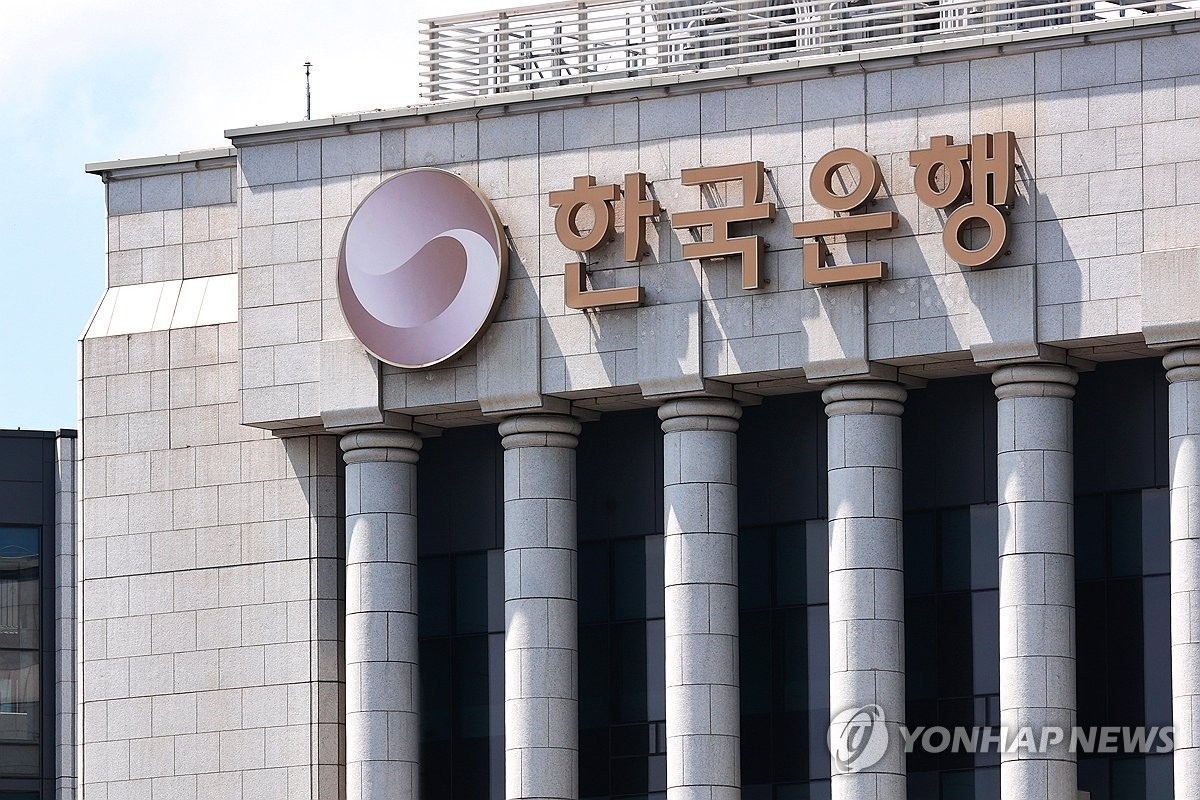
IBM’s latest tokenization roadmap mapped the world into 11 regional strategies—yet South Korea did not appear as a standalone entry. Folded into the broad ‘Asia-Pacific’ category while Japan received its own clearly defined posture, the omission is being read in Seoul’s market circles as more than an editorial choice: it signals that South Korea has not yet articulated a coherent national “coordinate” for the tokenized economy.
The observation comes from the IBM Institute for Business Value (IBV) report, Banking in the Tokenized Economy, which compares how major jurisdictions are approaching tokenized finance—covering tokenized deposits, stablecoins, central bank digital currencies (CBDCs), tokenized securities, custody, and settlement infrastructure. The report’s regional grid includes the U.S., the European Union, Japan, China, the U.K., Canada, Australia, APAC, India, the Middle East and Africa, and Latin America. South Korea—despite being one of the world’s most active retail crypto markets and a country where debate over won-backed stablecoins and security token offerings (STOs) has accelerated—was not separated out.
In practical terms, that matters because tokenization is increasingly being shaped by jurisdiction-level choices: what is permitted, who can issue, how reserve assets are safeguarded, and which settlement rails become dominant. As tokenization moves from pilot projects to production systems, countries that establish their regulatory and infrastructure posture early can set standards—or at minimum ensure their domestic currency and institutions remain relevant inside cross-border onchain markets.
Three models are emerging, and none fit South Korea neatly
IBM’s regional breakdown underscores that tokenization is not converging on a single global template. Instead, strategies reflect monetary power, capital market structure, and regulatory philosophy. The clearest dividing lines run through the U.S., China, and Japan.
The U.S. model, as described in the report, is skeptical toward a retail CBDC while leaning into private-sector stablecoins and asset tokenization. The goal is less about reinventing money and more about controlling the ‘infrastructure’—custody, collateral management, settlement systems, and compliance layers—on which tokenized dollars move. IBM frames this as an economic shift for banks: prioritizing “infrastructure rents” over traditional spread-based revenue, a reminder that whoever builds the rails captures long-duration value.
China’s approach moves in the opposite direction—restricting private stablecoins while pushing forward with retail CBDC initiatives and state-led tokenization. The emphasis is on policy transmission, capital controls, and payment sovereignty, with technological design and governance largely centralized.
Japan, in IBM’s taxonomy, is pragmatic: cautious on retail CBDC and stablecoins, but supportive of wholesale tokenization and institutional settlement modernization. That posture aligns with Japan’s financial structure—deep institutional markets and a long-standing low-rate environment where efficiency gains in funding and settlement are meaningful, and where programmability can be introduced without radically reshaping retail monetary habits.
South Korea, however, cannot simply import any one of these playbooks. It lacks reserve-currency leverage to replicate the U.S. stablecoin-first approach, is unlikely to pursue China-style tight state control over private innovation in open markets, and may find Japan’s institution-first trajectory too narrow for a country with an unusually large and energized retail investor base. The result is a strategic gap: strong local market readiness, but an ambiguous national stance.
Won stablecoins are not a product debate—they are a monetary sovereignty debate
The first “coordinate” South Korea must define is the role of a won-backed stablecoin. IBM notes that the stablecoin market remains overwhelmingly dollar-centric, dominated by USDt and USDC. For countries without a meaningful domestic-currency stablecoin, the implication is structural: tokenized payment and settlement rails default to dollar units of account, while local currencies struggle to find onchain utility beyond fiat on/off-ramps.
That dependency could widen as stablecoins become collateral in decentralized finance, settlement assets in tokenized markets, and the base layer for cross-border transfer flows. In that scenario, the won risks becoming a currency that is used domestically but not natively represented in the tokenized economy—a limitation that could compound over time as liquidity clusters around the most interoperable unit.
South Korea’s policy questions are therefore inherently monetary: whether stablecoin issuance should be restricted to banks; whether non-bank payment firms should be allowed; how reserves are held and audited; how supervisory responsibility is split between the Bank of Korea and financial regulators; and whether interest-bearing designs should be permitted. These are often framed as technical or consumer-protection issues, but they ultimately determine whether the won can function as a settlement asset in tokenized markets without undermining financial stability.
IBM’s survey data highlights why regulators globally treat this as a high-stakes design choice. In the report, 32% of surveyed executives said that, if regulation allows, deposits could migrate meaningfully into yield-bearing stablecoins. Meanwhile, 42% viewed it as plausible that large corporations could issue their own stablecoins. In the Korean context—where platform companies have large user bases and payments reach—those scenarios raise a concrete governance question: if won-based digital settlement is not institutionalized within a clear framework, the void could be filled by dollar stablecoins or by closed-loop corporate tokens with limited openness and unclear systemic risk boundaries.
STOs will be decided by operational capability, not legal text
The second coordinate is tokenized securities. IBM outlines a future in which tokenized securities reshape capital markets, reducing the centrality of legacy exchanges, clearing houses, and custodians as blockchain-based platforms integrate issuance, trading, and settlement. The appeal is straightforward: near real-time settlement, automated compliance, fractional ownership, broader access, and lower intermediation costs. Tokenization could also make traditionally illiquid assets—real estate, bonds, funds, art, and intellectual property—more tradeable by slicing them into smaller units.
Yet IBM’s own confidence level suggests the transition will be uneven. Only 18% of respondents saw that scenario as “highly likely,” implying that while the direction of travel is clear, market structure and infrastructure readiness will define the pace.
That framing is particularly relevant in South Korea, where STO discussions have advanced through proposals to amend the Capital Markets Act and build a legal pathway for issuance and distribution. The harder constraint, however, is execution. Tokenized securities require more than a blockchain layer: they demand tight integration across core banking and brokerage systems, identity and AML controls, investor protection mechanisms, custody arrangements, settlement workflows, tax handling, disclosure obligations, and internal risk controls.
IBM points to a broader industry problem: 94% of core banking modernization projects miss their initial timelines, and 71% of executives cite talent shortages in tokenization-related roles. South Korea’s financial sector—despite high digital adoption—faces the same constraint. In that sense, STO competitiveness will hinge less on whether the law permits issuance and more on whether institutions can actually run compliant, resilient, end-to-end systems at scale.
South Korea’s strength is its market—its weakness is the lack of a unified posture
On fundamentals, South Korea is not poorly positioned. It has world-class digital infrastructure, fast-moving consumer payments adoption, and a deep retail investor culture with extensive experience in crypto trading. Banks, brokerages, fintechs, and large technology firms are all fluent in digital product cycles, while regulators have accumulated more hands-on understanding of digital assets than in earlier market phases.
The constraint is strategic fragmentation. Won stablecoins remain caught between ‘monetary sovereignty’ and ‘financial stability’ concerns without a clear sequencing plan. STO policy work has often centered on licensing structures and statutory definitions, while market participants wait for operational standards. Institutional-grade custody is widely seen as necessary for a tokenized economy, yet consistent market norms are still forming. And broader digital asset legislation continues to balance industry development, consumer safeguards, and the extent of institutional participation without an agreed set of priorities.
IBM’s advice for the APAC region—secure cross-border interoperability to avoid losing capital flows to regional competitors and lower access costs for retail participation—lands directly on South Korea’s doorstep. The country’s most realistic path, analysts argue, is not to copy an external template but to define an integrated package across three fronts: a disciplined won stablecoin framework, a workable STO market with real infrastructure, and credible custody and settlement rails that can plug into regional networks.
A Korean model may look like ‘sovereign openness’
If the U.S. bet is on private stablecoin scale, China’s on state control, and Japan’s on wholesale pragmatism, a Korean model would likely need to combine openness with guardrails—what market participants increasingly describe as ‘sovereign openness.’ That would mean letting private innovation proceed, but not leaving foundational money and settlement standards to emerge offshore by default. It would also mean regulating without choking market development, with licensing, reserve integrity, and operational resilience treated as non-negotiable pillars.
Crucially, won stablecoins and STOs cannot be treated as separate policy silos. They converge on the same core questions: what unit of account tokenized assets trade in, where assets and reserves are held, who settles transactions, who supervises the infrastructure, and who bears liability when failures occur. Those choices determine whether South Korea becomes a rule-taker within someone else’s tokenized rails—or an active designer of its own.
Being absent from the map is a warning—and an opening
South Korea’s absence from IBM’s regional grid is uncomfortable, but it does not automatically imply lagging capability. Instead, it suggests that the country’s tokenization stance is not yet legible to global policy analysts and institutional decision-makers. IBM argues that the next 24 months will be decisive in separating tokenization “winners” from the rest as jurisdictions lock in stablecoin rules, tokenized securities frameworks, custody regimes, and digital settlement architecture.
If South Korea delays, the market is unlikely to wait. Dollar stablecoins already dominate onchain liquidity; global financial institutions are building tokenized asset and custody stacks; corporations may explore proprietary payment networks; and retail users can migrate toward global platforms that offer speed and breadth of product. If South Korea wants its name to appear as a distinct strategic unit in the next tokenization roadmap, it will need to pick its coordinates—defining how the won operates onchain, how securities tokenization is operationalized, and how custody and settlement infrastructure can scale with regulatory trust.
In the tokenized economy, no one assigns a country its position. It has to be designed—and then proven in production.
Article Summary by TokenPost.ai
🔎 Market Interpretation
IBM’s regional tokenization map leaves South Korea “untyped.” Korea is bundled into “APAC” while Japan is singled out, signaling to global institutions that Korea’s tokenization policy posture is not yet legible as a distinct national strategy.
Tokenization is becoming jurisdiction-defined infrastructure competition. As pilots move to production, the key differentiator is not market enthusiasm but who sets rules for issuance, reserves, custody, settlement rails, and compliance standards.
Three strategic archetypes dominate—and Korea doesn’t fit cleanly.
U.S.: retail CBDC skepticism + private stablecoins and tokenized assets; banks pursue “infrastructure rents” (custody/settlement/compliance layers).
China: private stablecoin restriction + retail CBDC/state-led tokenization; centralized governance for policy transmission and payment sovereignty.
Japan: pragmatic institutional/wholesale modernization; cautious retail stance, supportive of settlement efficiency upgrades.
Stablecoins are framed as monetary sovereignty, not a fintech feature. With onchain liquidity clustering around USD units (USDt/USDC), a missing won-stablecoin framework risks pushing Korean onchain settlement and collateral use into dollar rails by default.
STOs hinge on operational readiness more than legal permission. Even if the Capital Markets Act evolves, real adoption depends on end-to-end integration: identity/AML, investor protection, custody, settlement workflows, tax, disclosure, and risk controls.
Time pressure is explicit. IBM suggests the next ~24 months will separate “winners” as stablecoin rules, tokenized securities frameworks, and custody/settlement architectures become locked in.
💡 Strategic Points
Define Korea’s “coordinates” as an integrated package, not silos. Won stablecoins, STOs, custody, and settlement infrastructure converge on the same questions: unit of account, reserve location, settlement finality, supervision boundaries, and liability in failure events.
Publish a disciplined won-stablecoin framework to prevent default dollarization of onchain rails.
Issuer perimeter: banks-only vs. licensed non-bank payment firms vs. tiered licensing.
Reserve requirements: composition, segregation, bankruptcy remoteness, audit cadence, and real-time attestation standards.
Yield policy: whether interest-bearing designs are allowed and under what consumer/investor protections.
Supervisory split: clear roles between the Bank of Korea and financial regulators to reduce uncertainty for issuers and intermediaries.
Plan for deposit migration and corporate issuance scenarios. IBM survey signals:
32% of executives think deposits could shift meaningfully into yield-bearing stablecoins if permitted.
42% think large corporates issuing their own stablecoins is plausible.
Korea should pre-empt “void filling” outcomes: (1) USD stablecoin dominance in domestic tokenized settlement, or (2) closed corporate payment tokens with unclear systemic boundaries.
Make STO policy operational: standardize the plumbing.
Create interoperable standards for onchain issuance, transfer restrictions, disclosure, corporate actions, and investor eligibility.
Specify custody models (qualified custodians, segregation, key management, incident reporting) and settlement finality rules.
Prioritize integration playbooks for banks/brokerages over purely statutory definitions.
Address execution risk: modernization and talent constraints. With 94% of core banking modernization projects missing initial timelines and 71% citing talent shortages, Korea’s competitiveness will depend on sequencing (MVP rails → regulated scaling) and workforce development.
Adopt a “sovereign openness” model. Encourage private innovation while treating foundational money/settlement standards as non-negotiable—so Korea doesn’t become a rule-taker on offshore rails.
Operational north stars to signal globally.
Credible won onchain settlement availability (stablecoin and/or deposit token pathways).
Institutional-grade custody regime with clear liability and resilience requirements.
Regional interoperability strategy to retain capital flows and enable cross-border tokenized markets.
📘 Glossary
Tokenization: Representing money or assets (deposits, securities, funds, real estate) as blockchain-based tokens to enable programmable transfer, settlement, and compliance.
Stablecoin: A token designed to maintain a stable value (often pegged 1:1 to fiat like USD or KRW) backed by reserves and governed by issuance/redemption rules.
Won-backed stablecoin: A KRW-denominated stablecoin; strategically important to keep the won usable as an onchain settlement and collateral unit rather than relying on USD stablecoins.
CBDC (Central Bank Digital Currency): Digital central bank money; retail CBDC is public-facing, wholesale CBDC is for interbank/market infrastructure use.
Tokenized deposits: Bank deposit liabilities represented onchain; often positioned as a regulated alternative to stablecoins with bank-level oversight.
STO (Security Token Offering): Issuance of regulated securities in token form, subject to securities law (disclosure, investor protection, market conduct).
Custody: Safekeeping and administration of digital assets (keys, controls, segregation, recovery processes) for institutions and clients.
Settlement rails: The infrastructure and rules that complete transactions (payment and delivery-versus-payment), determining speed, finality, and risk allocation.
Infrastructure rents: Durable revenue captured by controlling critical market plumbing (custody, settlement, compliance, collateral workflows) rather than earning mainly from interest spreads.
Interoperability: The ability for systems/networks to transact and settle with each other across institutions and borders without friction or duplicated compliance.