

 News
News  Coin Information
  About us
  Customer Service


 Add as a preferred source on Google
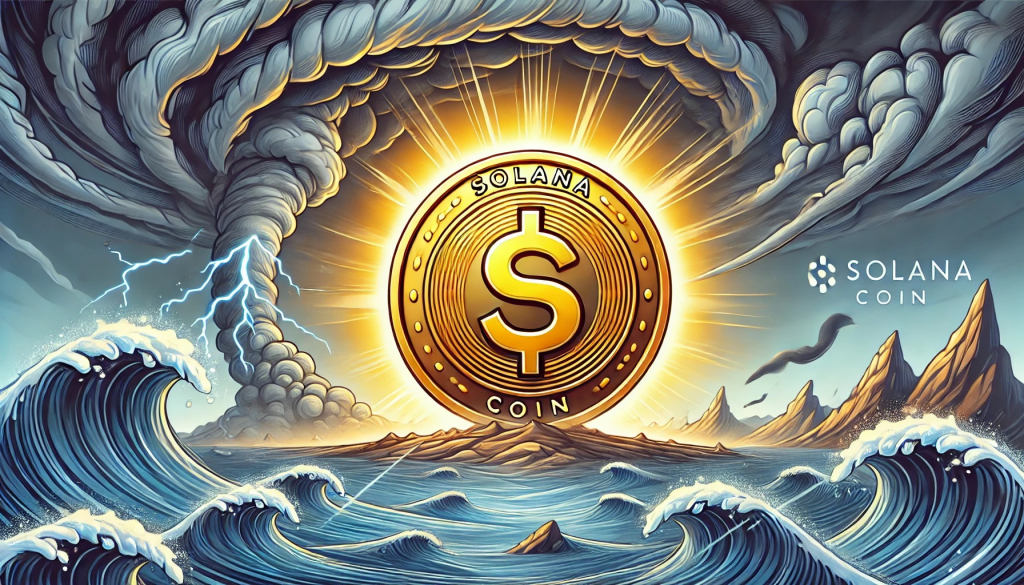
Solana (SOL) climbed above the $70 mark, outperforming major cryptocurrencies as 'spot ETF inflows' and a surge in 'real-world asset (RWA) tokenization' helped reinforce the network’s institutional narrative.
SOL was trading around $70.84 as of Monday ET, up roughly 3.4% over the past 24 hours. Weekly gains were estimated near 5.6%, with market watchers increasingly framing the $67–$70 range as a pivotal support zone that could define near-term direction if broader crypto risk appetite remains intact.
The move comes as investors look beyond Bitcoin (BTC) and Ethereum (ETH), which have dominated institutional allocations but recently showed signs of rotation. For the week ending June 6, spot Solana ETFs recorded net inflows of approximately $15.6 million, according to figures cited in the Korean report. Over the same period, products tied to BTC and ETH saw roughly $3.0 billion in net outflows, a divergence some analysts interpret as a partial shift in positioning rather than a blanket reduction in digital asset exposure.
Market participants caution, however, that Solana’s value-capture mechanics remain a point of debate. Fees and revenue are primarily directed to validators, while direct benefits to token holders are comparatively limited—a dynamic that can leave price targets more 'narrative-driven' than cashflow-anchored. Even so, recurring ETF inflows are widely viewed as an incremental signal of 'regulated demand' that could broaden the asset’s medium-term base of support.
Alongside ETF flows, on-chain RWA activity has become a core pillar of the latest rally. The total value of tokenized RWAs on Solana reportedly reached a record near $3 billion, underscoring the chain’s push into tokenized securities and institution-oriented infrastructure. Analysts cited in the report described Solana’s fundamental backdrop as unusually strong versus competing layer-1 networks, particularly as tokenization platforms expand multi-chain support.
One closely watched example was the launch of tokenized SpaceX equity (SPCX) on Solana, which generated more than $50 million in on-chain trading volume within its first 24 hours, the report said. Separately, tokenization firm Securitize expanded its tokenized AAA collateralized loan obligation (CLO) fund, STAC, to Solana. Stablecoin protocol Ethena is also expected to allocate $250 million to the product, a development that market participants see as evidence of larger 'institutional-grade' RWA products moving onto Solana rails.
Solana is also making a fresh bid for mainstream visibility through payments. The World Series of Poker (WSOP) has integrated Solana, enabling players to use SOL or Solana-based stablecoins for tournament buy-ins and related transactions. Industry observers view the partnership as another attempt to demonstrate low-fee, high-throughput crypto payments in a high-profile consumer environment—signaling an ecosystem evolution beyond DeFi toward real-world commerce.
Broader market conditions also provided a supportive backdrop, with the total cryptocurrency market capitalization rising more than 1% in a mild 'risk-on' tone. Social sentiment indicators referenced in the report pointed to a modestly bullish bias, while technical commentators suggested that a sequence of consecutive down candles may be breaking—raising the odds of a retest of congestion zones between roughly $80 and $98 if momentum persists. A pullback toward $60 remains a scenario on the table, though the near-term probability was described as lower while the $67–$70 support holds.
Still, analysts flagged a structural liquidity risk: if CFTC-approved Solana perpetual futures increasingly draw volume into regulated, off-chain venues, that shift could siphon liquidity from Solana DeFi and potentially cap upside during rallies. The warning highlights a growing tension in crypto market structure, where institutional access can expand demand even as it disperses liquidity away from on-chain applications.
With no major roadmap milestones—such as explicit updates on the Firedancer timeline—highlighted in the day’s materials, attention is turning to demand durability rather than protocol announcements. Traders and analysts are focused on whether SOL can defend the $67 support area, sustain levels above $70, and extend ETF- and RWA-led inflows. Longer term, observers argue that translating ecosystem strength into more durable valuation may depend on whether Solana’s token economics evolve to allow holders to participate more directly in network value creation.
🔎 Market Interpretation
- SOL breaks above $70: Solana outperformed majors, trading near $70.84 (+3.4% daily; ~+5.6% weekly), with $67–$70 framed as the key near-term support band.
- Funds rotation signal: Reported spot Solana ETF inflows of ~$15.6M (week ending June 6) contrasted with ~$3.0B outflows from BTC/ETH products, suggesting a partial reallocation rather than broad risk reduction.
- Institutional narrative strengthening: ETF flows plus a jump in real-world asset (RWA) tokenization are reinforcing the view of Solana as an institution-oriented L1, supporting price via “regulated demand” and new on-chain use cases.
- Technical framing: Market watchers see potential for a retest of $80–$98 if momentum holds; downside scenario remains a pullback toward $60 if support fails.
- Macro backdrop supportive: Total crypto market cap rose >1% with a mild risk-on tone and modestly bullish social sentiment.
💡 Strategic Points
- Define the trade around $67–$70: This zone is treated as the market’s “line in the sand.” Holding it keeps the bullish continuation thesis intact; losing it increases odds of faster mean reversion toward lower liquidity pockets (~$60).
- Watch ETF flow persistence, not just the headline week: Repeated net inflows would strengthen the medium-term support base; a reversal could expose SOL to narrative unwind given debated value-capture for token holders.
- RWA growth is the fundamental catalyst to monitor: Tokenized RWA value on Solana reportedly hit ~$3B. Track whether this TVL is sticky (ongoing issuance, secondary trading, integrations) versus episodic launches.
- Notable RWA/Institutional rails developments:
- Tokenized SpaceX equity (SPCX): Reportedly >$50M on-chain volume in the first 24 hours—signals demand for tokenized private-market exposure, but durability depends on liquidity/market structure.
- Securitize STAC (AAA CLO fund) expansion to Solana: Indicates credible issuers/plattforms adding Solana as a distribution venue; potential catalyst if allocations (e.g., Ethena expected $250M) materialize and remain deployed.
- Mainstream payments visibility: WSOP integration (SOL + Solana stablecoins for buy-ins) adds a consumer-facing proof point for low-fee/high-throughput payments beyond DeFi—watch transaction volume and repeat usage as validation.
- Key risk—liquidity dispersion from regulated perps: If CFTC-approved Solana perpetual futures pull activity into off-chain venues, on-chain DeFi depth could thin, potentially muting upside during rallies and increasing slippage/volatility on-chain.
- Valuation debate remains: Solana’s fee/revenue distribution primarily benefits validators; limited direct value accrual to token holders makes price more narrative-driven. Any evolution in token economics that improves holder participation could change long-run valuation frameworks.
- No major roadmap catalyst highlighted: With limited mention of milestones (e.g., Firedancer timeline), price action is more dependent on demand durability (ETF + RWA + payments adoption) than protocol announcements.
📘 Glossary
- Spot ETF inflows: Net new capital moving into exchange-traded funds that hold the underlying asset directly (not futures), often interpreted as higher-quality/regulated demand.
- RWA (Real-World Assets) tokenization: Representing off-chain assets (e.g., equity, bonds, funds, credit products) as on-chain tokens to enable trading, settlement, and composability.
- Layer-1 (L1): A base blockchain network (like Solana) on which applications and tokens are built.
- Value capture: How economic activity on a network (fees, issuance, MEV, etc.) translates into value for the native token and its holders.
- Validator: Network participant that processes transactions and secures the chain; often receives fees and rewards.
- Perpetual futures (perps): Derivatives without expiry that track spot prices; can concentrate price discovery and liquidity in derivatives venues.
- CFTC-approved: Refers to products/venues operating under U.S. Commodity Futures Trading Commission oversight, typically seen as more institution-friendly.
- CLO (Collateralized Loan Obligation): A structured credit product backed by pools of loans; “AAA” indicates the highest rated tranche.
- Stablecoin: A crypto asset designed to maintain a stable value (often pegged to USD), commonly used for payments and settlement.
- Risk-on / risk appetite: Market environment where investors are more willing to hold higher-volatility assets, often lifting crypto broadly.
- Congestion zone: A price range where trading repeatedly clusters, often acting as resistance/support (here cited around $80–$98).












Comment 0