
Trump Appoints Tech CEOs to AI Advisory Council, Signaling Policy Push
President Trump appoints leaders from Meta, Nvidia, and Oracle to a revamped AI advisory council, signaling a coordinated U.S. policy push on artificial intelligence and national security.

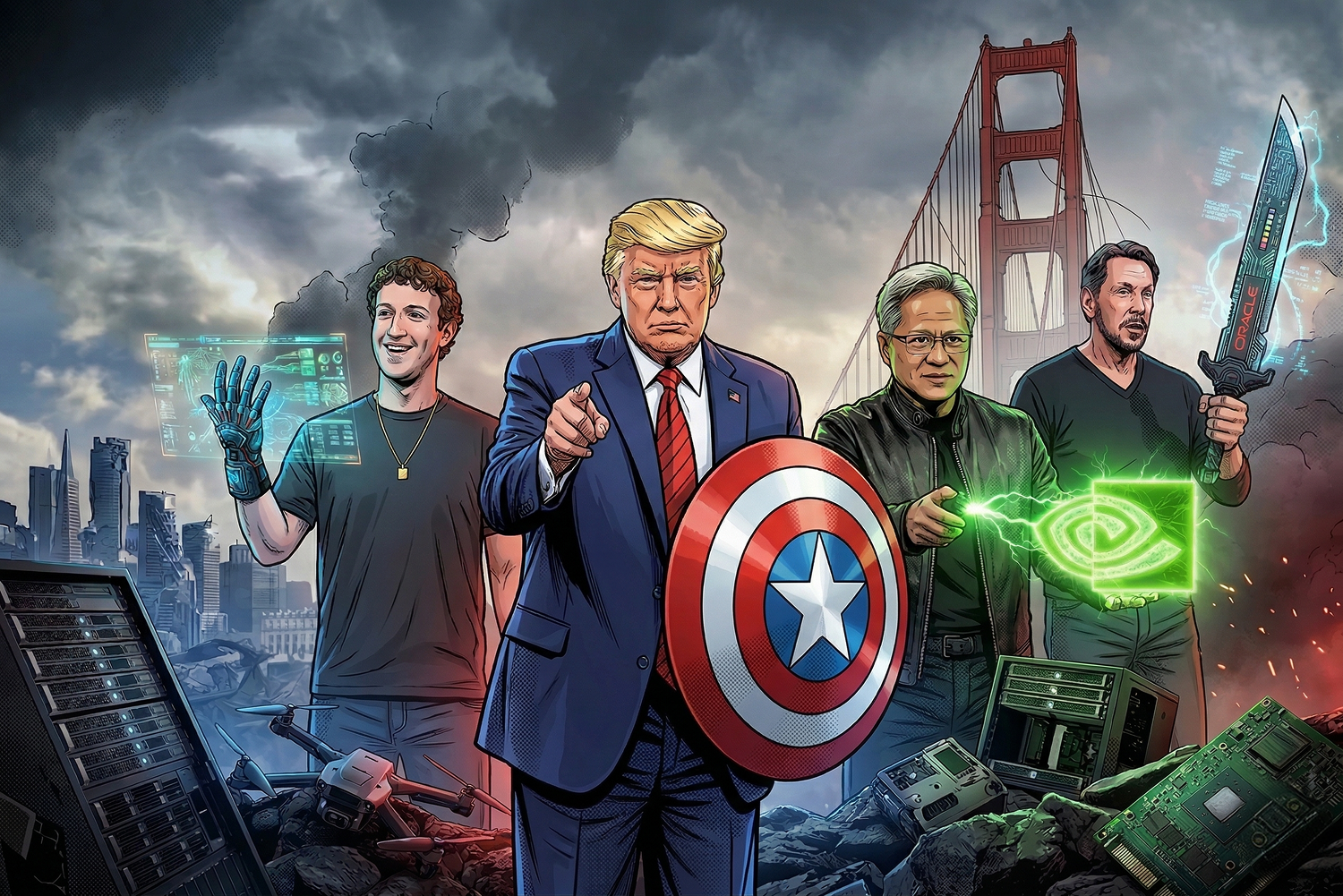
President Trump has moved to consolidate the U.S. technology sector around Washington’s AI agenda, appointing a slate of high-profile executives—including Meta Platforms ($META) CEO Mark Zuckerberg, Nvidia ($NVDA) CEO Jensen Huang, and Oracle ($ORCL) Chairman Larry Ellison—to a revamped presidential science and technology advisory panel. The appointments underscore how the administration is treating artificial intelligence as a central lever of economic power and national security amid intensifying geopolitical strains.
According to reports published Tuesday UTC, Trump named 13 technology leaders as initial members of the President’s Council of Advisors on Science and Technology (PCAST), with plans to expand the body to as many as 24 people. David Sacks and Michael Kratsios will serve as co-chairs, positioning the council to shape White House thinking on AI policy, industrial competitiveness, and security-related technology priorities.
PCAST is a key channel for advising the president on science and technology strategy. The latest lineup is being read by markets and policy watchers as a signal that the administration wants a more coordinated federal approach to AI—one that can both accelerate domestic development and respond to external pressure points, including heightened tensions in the Middle East and the ongoing China–Taiwan rivalry that continues to loom over advanced semiconductor supply chains.
In Washington, the discussion is increasingly framed around 'technology competition' with China. Reports indicate the White House is weighing steps to strengthen a nationwide AI strategy while also exploring ways to limit the spread of state-level rules that could fragment compliance requirements for companies building or deploying AI systems across the U.S.
The composition of the advisory group is notable for spanning the core pillars of the modern AI stack. Meta Platforms ($META) has been pushing an open-weight model strategy centered on its Llama family, aiming to grow an ecosystem of developers and enterprise partners. Nvidia ($NVDA) remains the backbone of AI compute, with its GPUs and networking hardware deeply embedded across hyperscale and enterprise buildouts. Oracle ($ORCL) has positioned itself as an AI infrastructure and cloud services provider, competing to host training and inference workloads through its data center footprint and enterprise relationships.
Industry analysts say the presence of firms representing models, chips, and infrastructure could amplify their influence in the policy process—particularly as federal procurement, export controls, and critical infrastructure planning increasingly intersect with private-sector roadmaps. The same group of companies has also expanded its footprint in Washington through lobbying efforts that have reportedly totaled around $40 million in recent activity, reinforcing the view that AI policy is becoming a high-stakes arena for corporate influence.
Markets appeared to interpret the announcement as supportive for the AI sector. Shares of Nvidia ($NVDA), Meta Platforms ($META), and Oracle ($ORCL) were reported to have traded higher following the news, reflecting expectations that a more unified federal posture could translate into faster permitting, larger infrastructure budgets, and clearer rules for deploying AI at scale. Investors have increasingly focused on 'AI infrastructure'—data centers, power, networking, and advanced chips—as the next major capex cycle tied to the technology.
The advisory reset also lands as AI’s role expands beyond commercial applications into defense and security domains. Recent assessments cited in public reporting have pointed to the growing use of AI-enabled targeting tools and drone-related capabilities in active conflict zones, underscoring how AI competition is converging with security competition. At the same time, these developments continue to draw scrutiny over verification, accountability, and the ethical boundaries of AI deployment—debates that are likely to intensify as government involvement deepens.
Outside the U.S., the shift could ripple across global supply chains. If federal policy accelerates AI buildouts and GPU demand remains elevated, memory and advanced packaging suppliers could see renewed tailwinds—potentially benefiting Samsung Electronics and SK hynix as high-bandwidth memory and related components become more central to next-generation accelerators. Taiwan’s role in leading-edge foundry capacity is also expected to remain a focal point, keeping geopolitics and supply resilience tightly linked to AI’s growth trajectory.
Ultimately, Trump’s move to bring top AI-linked executives into PCAST highlights a broader reality: AI is no longer treated as a standalone tech trend, but as a strategic asset shaping industrial policy, security planning, and capital allocation. How the council’s recommendations translate into concrete regulatory and spending decisions will help define the next phase of the global 'AI arms race'—and the balance of influence between Washington, corporate America, and overseas supply chains.