

 News
News  Coin Information
  About us
  Customer Service



U.S. and global crypto markets faced another day of policy and flow-driven headlines, as New York Attorney General Letitia James urged Congress to tighten federal oversight while exchange listings, ETF movements, and liquidation data underscored how quickly liquidity can shift across the sector.
In written testimony submitted to Congress and cited by local media, James warned lawmakers that proposed federal legislation known as the Digital Asset Market Clarity Act could weaken enforcement by pre-empting state-level rules and transferring key supervisory authority to the Commodity Futures Trading Commission (CFTC). She argued that such a framework risks diluting the ability of state and local authorities to police misconduct—an issue she said is intensifying as retail participation grows.
James said complaints related to crypto fraud filed with her office have tripled over the past three years, with reported losses reaching roughly $500 million over a five-year period. She called for stronger baseline requirements for crypto platforms, including ‘anti-money laundering’ controls, customer identification (KYC), and cybersecurity standards, along with monitoring for suspicious transactions and market manipulation. Platforms that fail to prevent customer losses from fraud should face financial accountability, she added.
The political debate around market structure is also sharpening. Senator Chris Murphy publicly said he would vote against the Clarity Act, according to reports, arguing that it is fundamentally corrupt for President Trump to be a major participant in the crypto industry while also influencing regulation of the sector. The bill has drawn sustained attention in Washington as lawmakers weigh how to divide responsibilities among U.S. regulators and define the boundaries between securities and commodities oversight.
Against that backdrop, crypto market plumbing continued to show signs of institutional positioning. Spot Ethereum (ETH) ETFs recorded a net inflow of $9.23 million on July 27 ET, according to data aggregated by SoSoValue and carried by local outlets. BlackRock’s iShares Ethereum Trust (ETHA) led with $11.75 million of net inflows for the session, bringing its cumulative net inflows to $11.42 billion. Invesco’s QETH posted a $2.52 million net outflow, with cumulative net inflows of $22.1 million.
Total net assets across U.S. spot Ethereum ETFs were estimated at $10.65 billion—around 4.53% of Ethereum’s overall market capitalization—while cumulative net inflows stood at approximately $11.19 billion. The data points are closely watched by traders as a proxy for ‘institutional demand’ and the pace of ETF-driven inventory changes.
Separately, on-chain monitoring cited by reporters showed a wallet associated with BlackRock’s ETF operations transferring more than $271 million worth of crypto to Coinbase Prime, including 3,310 Bitcoin (BTC) valued at about $216 million and 28,400 ETH valued near $55.68 million. Analysts tracking the transaction characterized the move as potentially consistent with rebalancing or ‘sell-side’ preparation, though such transfers can also reflect custody management and authorized participant activity tied to ETF creations and redemptions.
In exchange-related developments, Upbit—one of South Korea’s largest digital asset venues—said it plans to list RLUSD on its Korean won, BTC, and Tether (USDT) markets, according to an official notice cited by PANews. RLUSD is a Ripple-related stablecoin product, and the listing is expected to broaden domestic trading access and deepen local stablecoin liquidity channels.
Binance also announced it will remove several spot trading pairs following a periodic review, ending trading at 12:00 p.m. KST on July 31, which corresponds to 11:00 p.m. ET on July 30 (03:00 UTC on July 31). The pairs slated for removal are ERA/BNB, MAGIC/USDC, MASK/USDC, MOVE/TRY, MOVE/USDC, POL/BTC, STORJ/TRY, and SUSHI/USDC. Binance said spot trading bot services for the affected pairs will be discontinued at the same time, while the underlying tokens may continue trading via other available pairs on the platform.
Macro-regulatory concerns were highlighted in Brazil, where the International Monetary Fund (IMF) said crypto-based cross-border flows have climbed steadily since 2017 and have surpassed traditional capital flow volumes, according to an IMF financial system stability assessment published this month. The IMF attributed a large portion of this activity to stablecoins, which it said are used by both firms and retail participants for efficiency and tax-related reasons.
The IMF added that stablecoin flows appear linked to global and local risk indicators—such as the S&P 500, the VIX, and Bitcoin’s price—and are also influenced by exchange rates, interest rates, policy uncertainty, and tax changes. While Brazil’s central bank has moved to regulate virtual asset service providers (VASPs), the IMF said gaps remain in legal consumer protections and safeguards such as segregation of custodial assets. It also called for fuller implementation of international AML/CFT standards, including the travel rule, and urged closer coordination between domestic and international supervisory bodies. Brazil’s Congress is preparing to review Bill 4308/2024, which would define the legal status of stablecoins.
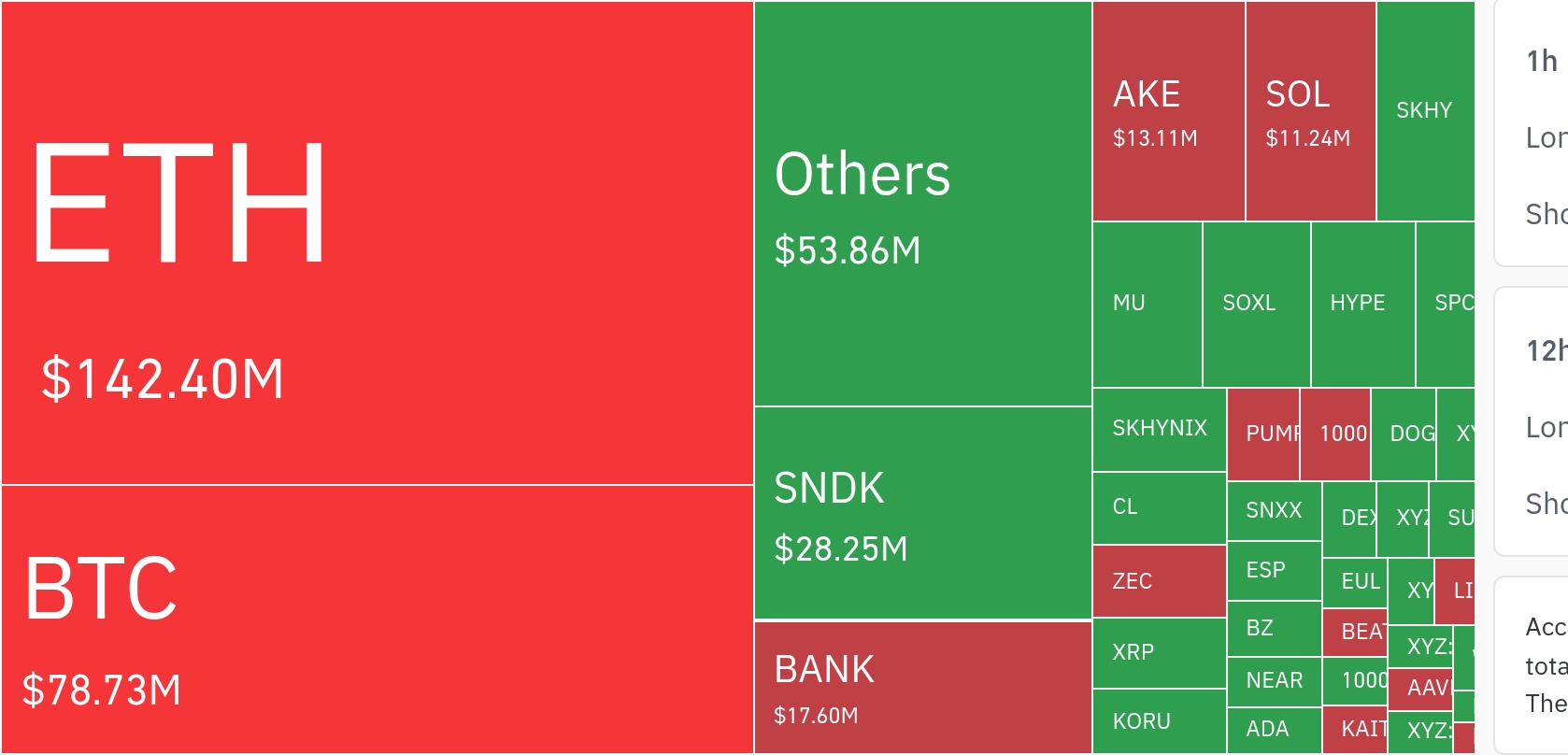
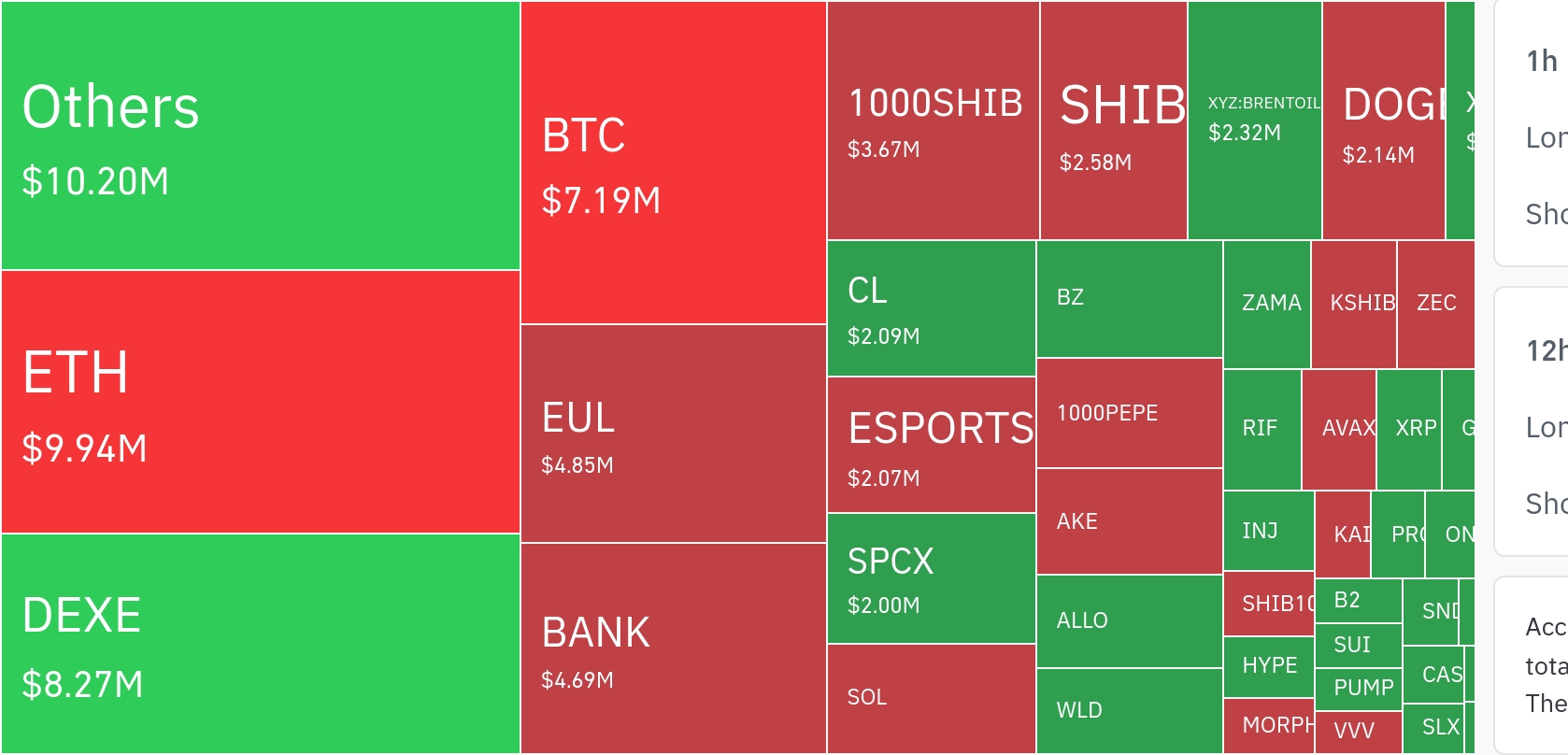
Market volatility was evident in derivatives, with CoinGlass data showing approximately $445 million in forced liquidations over the past 24 hours, impacting 116,561 traders. Long liquidations totaled about $214 million, while short liquidations reached roughly $230 million, indicating two-sided positioning into sharp price moves. Binance accounted for about $208 million—around 46.73% of the total—followed by Bybit at roughly $55.1 million, OKX at about $44.15 million, and Hyperliquid at around $48.45 million. The largest single liquidation was an ETHUSDT position on Aster worth approximately $8.72 million.
Elsewhere, on-chain data cited by local media indicated Bitmine received 7,500 ETH—about $14.61 million—from BitGo, in what observers described as continued accumulation during the week. In corporate treasury news, Australian-listed DigitalX said it sold 80 BTC, lifting its cash holdings to $21 million. Bitcointreasuries.net data cited in reports showed DigitalX now holds 283 BTC, ranking 79th among public companies tracked for Bitcoin holdings.
Taken together, the day’s developments underscored a market balancing ‘regulatory risk’ and accelerating institutional infrastructure: lawmakers debate who should police crypto, while ETF flows, exchange listings, and on-chain transfers continue to reshape near-term liquidity conditions across major assets.
🔎 Market Interpretation
- Regulatory pressure is rising alongside market activity: New York AG Letitia James urged Congress to avoid weakening state enforcement via the Digital Asset Market Clarity Act, signaling continued U.S. regulatory uncertainty as retail participation and fraud complaints increase.
- Institutional “plumbing” remains the key liquidity driver: U.S. spot ETH ETF net inflows stayed positive (net +$9.23M), while large custody/exchange transfers (BlackRock-linked wallet to Coinbase Prime) highlighted how quickly inventory can be repositioned.
- Exchange decisions are actively reshaping tradable liquidity: Upbit’s planned RLUSD listings may deepen KRW-based stablecoin access; Binance’s delisting of multiple pairs could temporarily reduce liquidity/market depth for affected routes while leaving token access via alternative pairs.
- Stablecoins are increasingly macro-relevant: The IMF flagged that crypto-based cross-border flows in Brazil have surpassed traditional capital flow channels, largely attributed to stablecoins and influenced by global risk indicators (S&P 500, VIX) and BTC price.
- Derivatives volatility confirms two-sided positioning: ~$445M liquidations split between longs (~$214M) and shorts (~$230M) suggests whipsaw conditions and crowded leverage on both sides; Binance represented ~46.7% of liquidation volume.
💡 Strategic Points
- Policy headline risk remains a first-order variable: Traders and allocators should treat U.S. market-structure debates (state vs. federal authority; SEC/CFTC boundary) as catalysts for abrupt repricing in exchange, custody, and “regulated access” narratives (e.g., ETFs, stablecoins).
- Track ETF flows and custody-to-exchange transfers together: Daily ETF net flows show demand, while large transfers to venues like Coinbase Prime may signal rebalancing, redemption/creation activity, or liquidity preparation—best interpreted in combination rather than in isolation.
- Watch stablecoin policy as an on-ramp/off-ramp lever: Upbit’s RLUSD listing can change local stablecoin routing and spreads; Brazil’s Bill 4308/2024 may affect stablecoin issuance, usage, and compliance expectations in a major emerging market.
- Expect liquidity pockets to shift around pair removals: Binance removing specific pairs can widen spreads and raise slippage in those quote routes; execution plans may need rerouting (e.g., via USDT or major base pairs) and reduced bot dependency near cutoff times.
- Manage leverage in two-sided liquidation regimes: With large long/short liquidations occurring simultaneously, risk controls (position sizing, wider stop logic, reduced leverage, time-based scaling) become more important than directional conviction.
- Treasury and accumulation signals are mixed: Bitmine’s ETH inflow suggests accumulation behavior, while DigitalX selling BTC to increase cash highlights that corporate treasury actions may be opportunistic and liquidity-driven rather than uniformly bullish.
📘 Glossary
- Digital Asset Market Clarity Act: Proposed U.S. legislation aimed at defining crypto market structure and regulator roles; criticized here for potentially pre-empting state enforcement and shifting authority toward the CFTC.
- CFTC: Commodity Futures Trading Commission—U.S. regulator overseeing derivatives and commodity markets; may gain expanded crypto oversight under certain proposals.
- KYC / AML: “Know Your Customer” identity checks and “Anti-Money Laundering” controls used to prevent illicit finance and improve platform accountability.
- Spot Ethereum ETF: A fund that holds ETH directly and issues shares; flows (inflows/outflows) are monitored as a proxy for institutional demand and inventory changes.
- Authorized Participant (AP): Large broker/dealer that creates or redeems ETF shares, often moving underlying assets as part of the process.
- Coinbase Prime: Institutional brokerage/custody platform often used for large executions, custody movements, and ETF-related operations.
- Stablecoin: Crypto asset designed to track a fiat value (typically USD); frequently used for trading, settlement, and cross-border transfers.
- Travel rule: AML requirement to transmit sender/receiver information for certain digital asset transfers between regulated entities.
- Forced liquidation: Exchange-driven position closure when margin falls below requirements; often amplifies volatility during rapid price moves.
- Trading pair delisting: Removal of a specific market route (e.g., MASK/USDC) while the underlying token may remain tradable via other pairs.















Comment 0