

 News
News  Coin Information
  About us
  Customer Service


 Add as a preferred source on Google
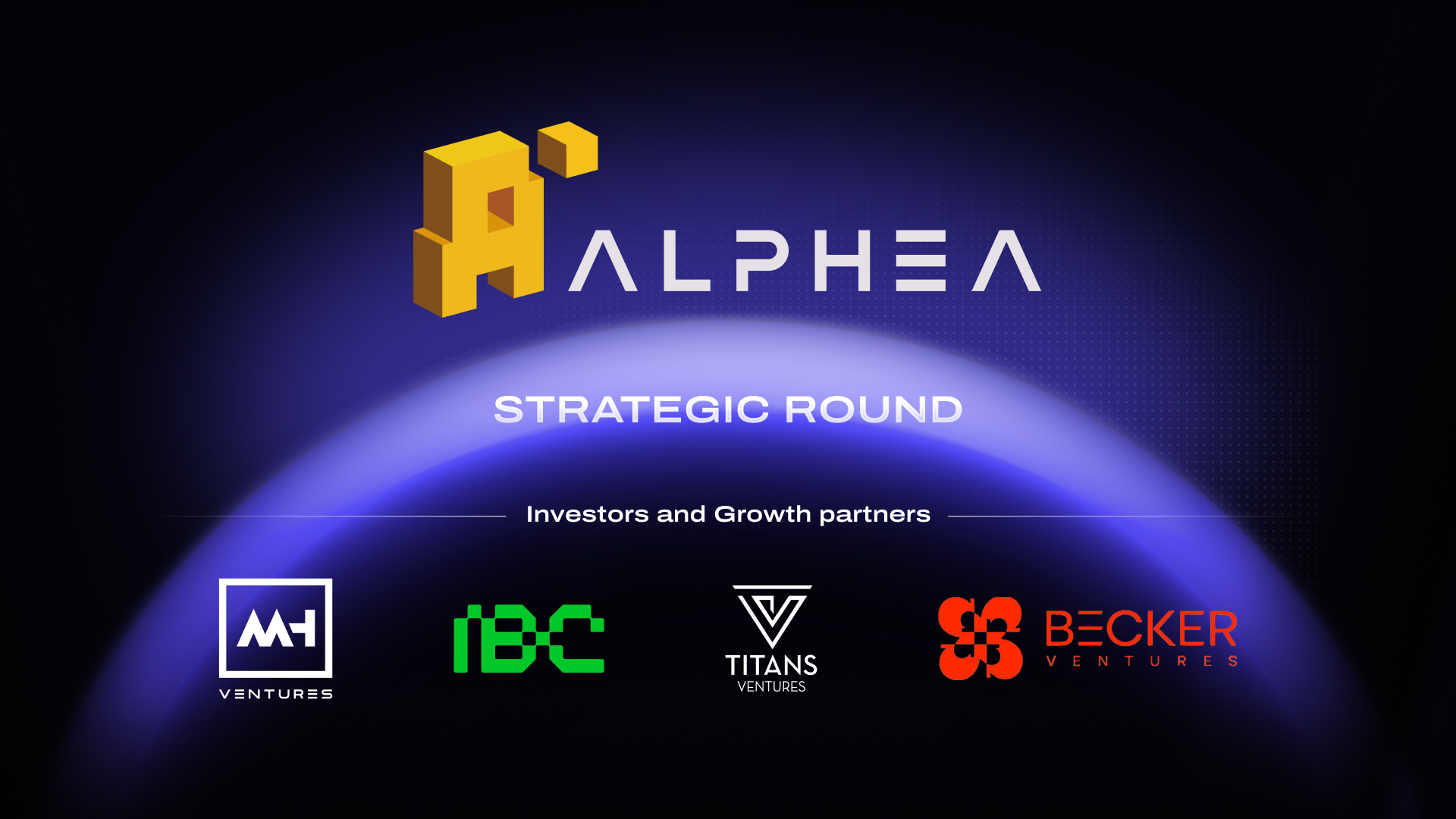
Alphea, an infrastructure project purpose-built for AI agents, said it has raised $5 million in a strategic funding round led by a group of Web3-focused investors—signaling growing interest in the tooling needed to run autonomous software agents at scale.
The company announced Tuesday UTC that MH Ventures, IBC Ventures, Titan Ventures, and Becker Ventures participated in the round. Alphea framed the raise as an effort to secure core infrastructure for an emerging era of ‘autonomous agents’—AI systems designed to make decisions, interact with external services, and complete tasks with minimal human supervision.
As generative AI expands beyond content creation into automated workflows, the bottleneck is increasingly shifting from model capability to reliable deployment. Alphea argues that current cloud and blockchain stacks are not well-suited for continuous agent execution, persistent memory and storage management, or machine-to-machine (M2M) payments—functions the project views as prerequisites for an agent-driven economy.
Positioning itself as an ‘AI-native distributed cloud’ and an ‘operating environment for AI agents,’ Alphea says it aims to provide an integrated runtime where agents can run long-term, collaborate, and consume computing resources efficiently. Unlike many blockchain networks that focus primarily on transaction ordering and settlement, the project is pitching a broader stack that blends execution, storage, networking, and payments into a single environment.
The participating investors described the bet as infrastructure-led, rather than purely speculative. MH Ventures, which focuses on next-generation decentralized protocols and Web3 infrastructure, said the market’s central challenge is no longer just building stronger models but making them durable services. “One of the biggest tasks in the AI era is to build infrastructure that can operate models as stable, long-term services,” an MH Ventures representative said, adding that Alphea’s architecture integrates execution, storage, networking and payment capabilities in one environment, which it expects to become a foundation for an AI agent economy.
The other backers bring region and sector specialization. IBC Ventures focuses on consulting and investment across the Middle East and global Web3 markets, while Titan Ventures has concentrated on Web3 gaming and infrastructure. Becker Ventures participates as a global venture capital firm and accelerator focused on identifying and supporting emerging startups.
Alphea said it will use the funding to accelerate technical upgrades and expand its global node ecosystem. In the near term, the team plans to improve its developer network and testnet readiness, while refining command-line interface (CLI) infrastructure and a ‘delta packaging’ system intended to streamline software updates and deployments. Over a longer horizon, Alphea wants to activate a layered node supply model that incorporates idle PCs, smartphones, and edge devices worldwide into a coordinated distributed supply network.
Kevin Oh, Alphea’s chairman overseeing its long-term strategy, said the round strengthens the project’s ability to build an infrastructure layer where AI agents can collaborate and settle resource consumption using its native token, Alphea (ALP). “We’re excited to work with partners leading in infrastructure and technology,” Oh said, adding that the team aims to build a machine-centered economic backbone where agents operate freely and account for usage via ALP.
The funding highlights a broader shift in the market narrative: as AI agents become more capable, investors are increasingly looking for the middleware and infrastructure that can keep them running—securely, continuously, and with built-in economic rails—rather than focusing solely on model performance.
🔎 Market Interpretation
- Infrastructure over models: The funding underscores a market pivot from “better AI models” to reliable agent operations—runtime stability, persistence, and payments that enable agents to function as long-lived services.
- Agent economy thesis: Investors are backing the idea that autonomous agents will require embedded economic rails (metering, settlement, and M2M payments) to transact for compute, storage, and services without human intervention.
- Full-stack positioning vs. single-purpose chains: Alphea differentiates from typical L1/L2 blockchains by emphasizing an integrated execution + storage + networking + payment environment rather than mainly transaction ordering/settlement.
- Decentralized compute supply expansion: The planned “layered node supply” (PCs, smartphones, edge devices) reflects growing interest in turning underutilized global hardware into a coordinated compute network for AI workloads.
- Web3 investor alignment: The round being led by Web3-focused firms signals continued conviction that tokenized coordination and distributed infrastructure can compete with, or complement, centralized cloud for always-on agent workloads.
💡 Strategic Points
- Use of funds: Accelerate technical upgrades and expand the global node ecosystem, focusing first on developer experience and network readiness.
- Near-term execution priorities:
- Developer network expansion and improved onboarding for builders deploying agents.
- Testnet readiness to validate reliability, performance, and economics under realistic conditions.
- CLI improvements to streamline deployment, monitoring, and lifecycle management of agent services.
- Delta packaging to reduce update friction by shipping only incremental changes—important for frequent agent/runtime updates across many nodes.
- Long-term scaling strategy: Implement a layered node supply model that aggregates idle consumer and edge devices, aiming for cost-efficient compute and geographic distribution.
- Economic design: Position the native token ALP as the settlement layer for resource consumption (compute/storage/network), enabling machine-to-machine accounting and automated payments.
- Core value proposition: Provide an “AI-native distributed cloud” where agents can run continuously, maintain state/memory, collaborate, and pay for resources—addressing operational bottlenecks as agents move into real workflows.
- Investor signals:
- MH Ventures: Frames the challenge as turning models into durable, stable services, endorsing Alphea’s integrated stack approach.
- IBC Ventures: Adds regional and market access across Middle East and global Web3 ecosystems.
- Titan Ventures: Brings perspective from Web3 gaming/infrastructure—useful for high-throughput, always-on applications.
- Becker Ventures: Contributes VC/accelerator support for scaling and ecosystem building.
📘 Glossary
- AI agents (Autonomous agents): Software systems that can plan and execute tasks, interact with external tools/services, and make decisions with limited human input.
- AI-native distributed cloud: A compute platform designed specifically for AI workloads—especially continuous execution, statefulness, and coordination across distributed nodes.
- Runtime: The execution environment where applications/agents run, including orchestration, resource allocation, and lifecycle management.
- Persistent memory / storage management: Mechanisms that allow agents to retain state and data over time (beyond a single session), enabling long-term tasks and continuity.
- M2M payments (Machine-to-machine payments): Automated payments executed directly between software agents or devices to settle costs for services/resources.
- Execution / Storage / Networking / Payments stack: The core components needed to operate distributed applications: running code, storing data, communicating across nodes, and settling usage financially.
- Testnet: A pre-production blockchain/network environment used to test features, performance, and security before main deployment.
- CLI (Command-Line Interface): Text-based tooling developers use to deploy, configure, and manage software and infrastructure.
- Delta packaging: An update method that distributes only the differences between software versions, reducing bandwidth and speeding up deployments.
- Node ecosystem: The distributed set of machines participating in a network by providing compute/storage/bandwidth and helping operate the platform.
- Native token (ALP): The network’s built-in cryptocurrency used for paying fees, incentivizing node operators, and accounting for resource consumption.


















Comment 0