

 News
News  Coin Information
  About us
  Customer Service


 Add as a preferred source on Google
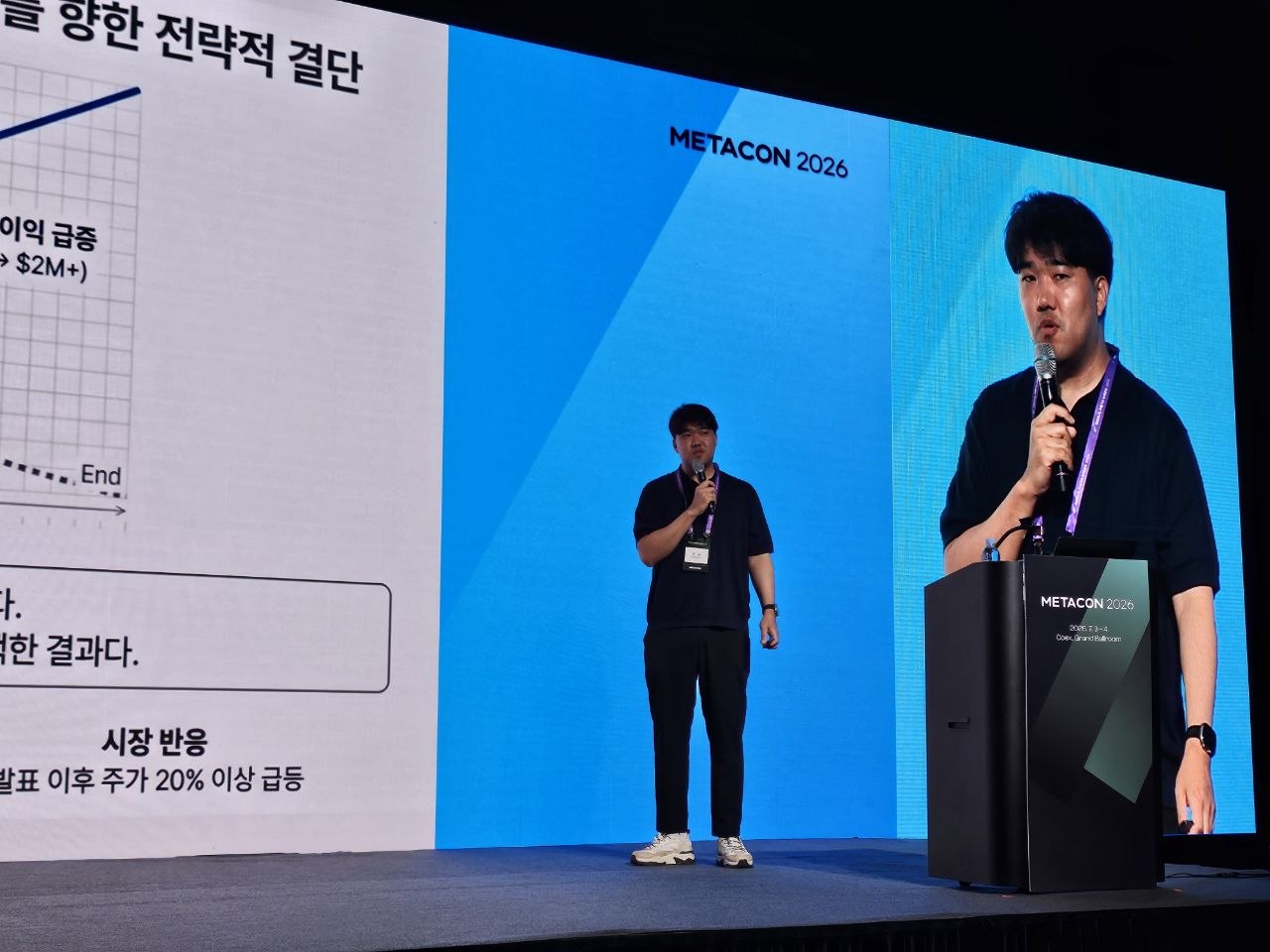
As companies rush to deploy generative AI, a growing number of operators argue the real competitive edge will not come from using AI as a productivity booster, but from rebuilding the firm around it. At a major Seoul conference this week, one founder said the emerging model of the 'AI native company' will reshape everything from decision-making to org charts—potentially making layers of middle management obsolete.
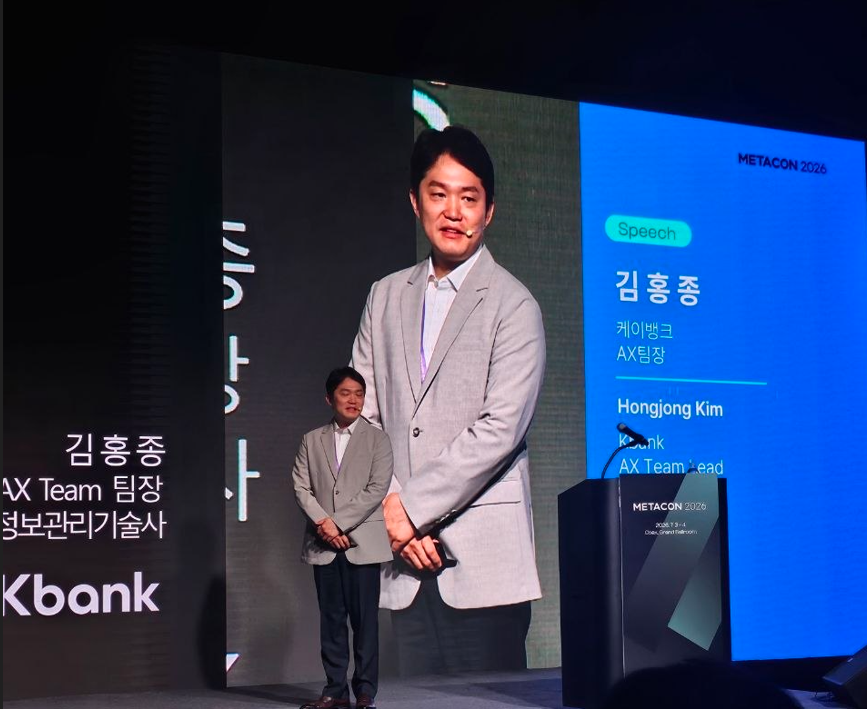
Kim Seung-kwon, CEO of Joshua Company, laid out that thesis on Friday ET (Saturday KST) during Metacon 2026, an AI conference hosted by TV Chosun and co-organized by TokenPost. In a session titled “AI Native Company: How to Work With Your Own AI Employees,” Kim described how organizations are moving from using AI for document summaries or content drafting to treating AI as the 'operating system' of the business.
Kim said most enterprises remain stuck in the early stages of adoption—using models as a “thinking partner” for research and ideation, or at best as a “secretary” that understands limited user context and helps execute tasks. The next stages, he argued, are far more disruptive: AI becoming a full “teammate” without which work cannot proceed, and eventually a “system” where AI sits at the center of operations and humans work on top of it. “What matters is not how well you use AI,” he said, “but how you redesign the organization itself around AI.”
In Kim’s framework, the defining feature of an AI-native enterprise is getting AI to understand a company’s full context—its institutional memory, decision history, workflows, and intent. He pointed to cases where AI agents automate end-to-end operations for online education programs, from building landing pages and managing enrollment to sending messages, running Zoom meetings, transcribing calls, and drafting feedback.
Another pattern he highlighted is consolidating corporate decisions and work logs into a 'single source of truth'—a unified knowledge base that becomes the authoritative reference for both humans and models. In that setup, teams can pair the repository with tools such as Claude Code to align decisions around the same shared “AI memory,” reducing internal friction caused by inconsistent or fragmented information.
Kim also described “in-the-room” deployment: using AI during customer meetings to translate requirements into working product prototypes on the spot, then demonstrating them immediately. In other examples, he said employees are loading business data—business cards, meeting notes, emails, dashboards—into AI-accessible stores and using that foundation to build internal tools tailored to their workflow, blurring the line between end user and developer.
The bigger shift, Kim argued, will be structural. He cited comments from Jack Dorsey, co-founder of Twitter and Block, that AI forces leaders to reconsider core assumptions about what a company is. Traditional hierarchies exist in part to move information down the chain and reporting back up, Kim said. But if AI can ingest and understand “all conversations, records, and context” across the firm, those information bottlenecks—and the layers built to manage them—can erode.
Instead of a pyramid, he predicted a hub-and-spoke model: an organization with AI at the center and employees connected around it in a “circular” structure. In that world, he added, every employee increasingly becomes a 'builder'—someone expected to assemble workflows, prompts, and lightweight applications rather than waiting for centralized engineering teams to deliver solutions.
Kim framed AI literacy as a baseline skill, arguing that failing to use tools like Claude Code or Codex could soon resemble skipping basic computer literacy in earlier eras. He also emphasized the scale effects of agent-driven work: one person can manage hundreds or even thousands of parallel agents, he said, changing not only how teams operate but what “company size” means in practice.
But building an AI-native company is not a one-time deployment, Kim cautioned. He compared it to raising a child: organizations must continuously collect, clean, connect, and feed data back into systems, while refining instructions and feedback loops so the AI improves. The end goal is a 'self-improving' loop—systems that review performance daily, surface mistakes, and propose process improvements without constant human prompting.
As AI becomes more central, he argued, governance becomes the harder problem. Access controls, security, and audit trails must be designed for environments where agents act on behalf of employees and can touch sensitive systems. Kim predicted a new kind of internal control function will emerge—roles focused on managing agent permissions and ensuring AI actions reflect human intent. “In an AI-centered era, what ultimately remains for humans is 'intent',” he said, calling oversight and accountability a future source of corporate advantage.
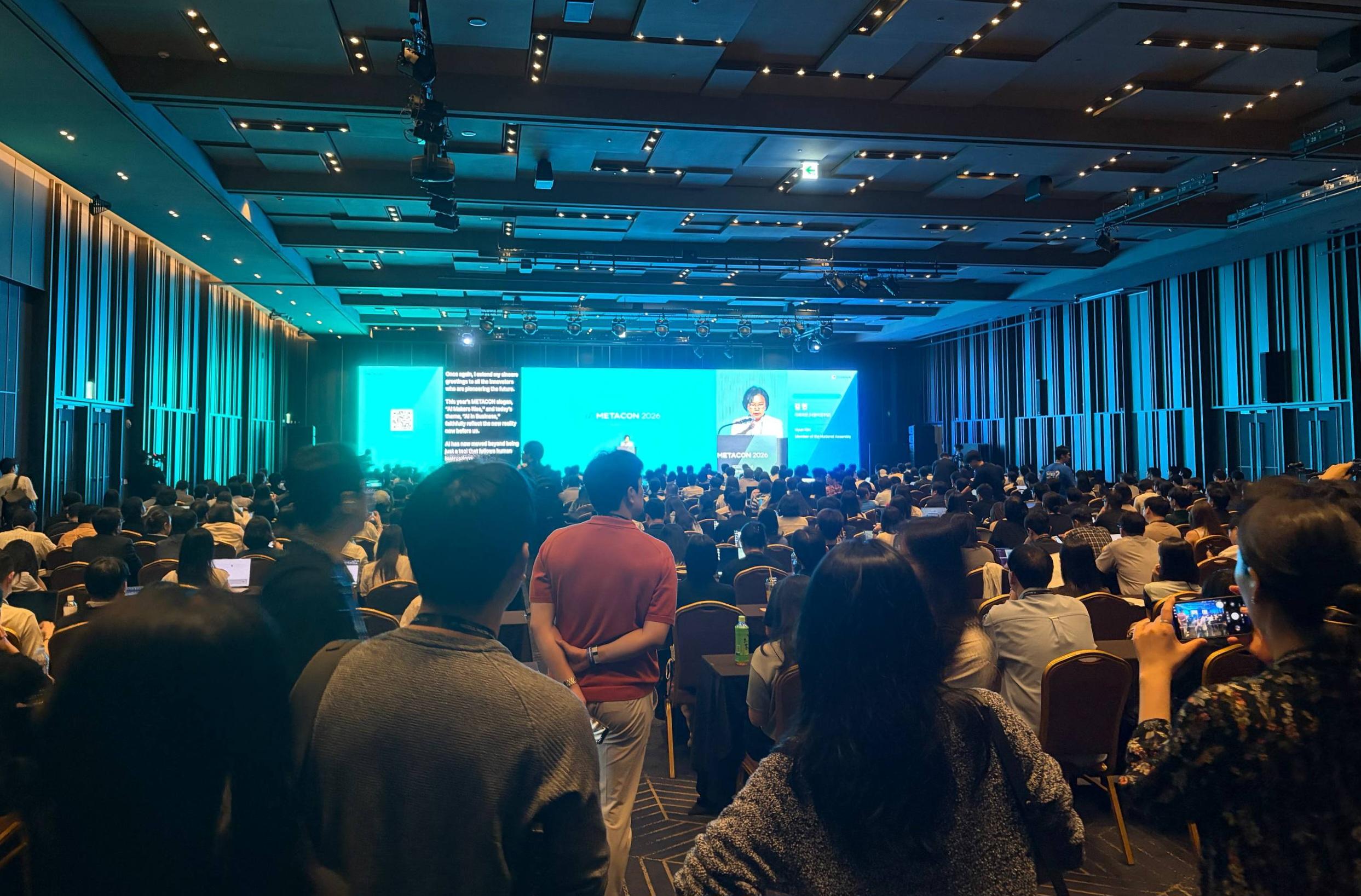
Metacon 2026 ran July 3–4 local time at Seoul’s COEX Grand Ballroom under the theme “AI Makers Rise,” bringing together builders and companies to share execution playbooks across enterprise transformation, marketing, and investment. Kim closed with a stark message: in the AI era, companies that cling to old operating models will fall behind, while those willing to abandon legacy structures and “ride the wave” of AI-driven change will be better positioned for the next phase of competition.
🔎 Market Interpretation
- From “AI tools” to “AI operating system”: The article frames competitive advantage as shifting away from incremental productivity gains (summaries, drafting) toward reorganizing the entire firm so AI becomes the core execution layer.
- Organizational redesign is the differentiator: Companies that treat AI as a central system—rather than a bolt-on assistant—may outpace peers through faster decision-making, lower coordination costs, and scalable operations.
- Flattening of hierarchies: If AI can ingest company-wide context (records, conversations, workflows), the information-routing function of middle management weakens, pushing firms toward flatter, hub-and-spoke structures.
- New definition of scale: Agent-driven work implies “company size” becomes less tied to headcount; a small team can orchestrate hundreds/thousands of parallel AI agents, accelerating output and experimentation.
- Governance becomes the choke point: As AI agents act across sensitive systems, the hard problem shifts from model capability to permissions, auditability, security, and accountability—turning controls into a strategic advantage.
💡 Strategic Points
- Adoption maturity path: “Thinking partner” → “Secretary” (limited context) → “Teammate” (work can’t proceed without AI) → “System” (AI-centered operations). Use this ladder to benchmark where the organization sits today.
- Build an enterprise “AI memory”: Consolidate decision logs, work artifacts, and institutional knowledge into a single source of truth that both humans and models reference to reduce inconsistency and rework.
- Instrument end-to-end workflows: Identify repeatable processes (e.g., online education operations: landing pages → enrollment → messaging → Zoom → transcription → feedback) and design agents that can run the chain with clear checkpoints.
- Enable “in-the-room” prototyping: Use AI during customer meetings to translate requirements into demos/prototypes immediately, compressing feedback cycles and improving close rates.
- Turn employees into builders: Expect non-engineers to assemble prompts, lightweight tools, and automations on top of shared data. Provide templates, guardrails, and internal platforms to avoid fragmentation.
- Establish continuous data/feedback loops: Treat AI rollout as ongoing training: collect/clean/connect data, refine instructions, and implement daily review loops where systems surface errors and propose process improvements.
- Create an agent governance layer: Design role-based access, approval flows, and audit trails for agent actions. Consider a dedicated function to manage agent permissions and alignment with human intent.
- Define “human intent” ownership: Clarify who sets objectives, approves risky actions, and is accountable for outcomes—especially when agents can act autonomously across business systems.
- Upskill for AI literacy: Position AI tooling proficiency (e.g., coding assistants/agent builders) as baseline capability, akin to prior eras’ computer literacy; align incentives and training accordingly.
📘 Glossary
- AI-native company: An organization designed around AI as the core operating layer, not merely using AI tools for isolated tasks.
- AI operating system (business context): A central AI layer that coordinates knowledge, decisions, and execution across the firm—humans work “on top” of it.
- Agent: An AI system that can take actions (e.g., write, send, schedule, update systems) toward a goal, sometimes across multiple tools.
- Single source of truth (SSOT): A unified, authoritative repository for decisions, documents, and work logs that reduces conflicting information across teams.
- Institutional memory: Accumulated organizational knowledge—past decisions, rationale, process history, and context—used to inform current actions.
- Hub-and-spoke (circular) org model: A structure where AI sits at the center as an information/execution hub and employees connect around it, reducing reliance on hierarchical reporting chains.
- In-the-room deployment: Using AI live during meetings to capture requirements and generate immediate outputs such as prototypes, drafts, or workflows.
- Self-improving loop: A continuous system where AI reviews outputs, detects mistakes, and recommends process improvements regularly with minimal prompting.
- AI governance: Policies and mechanisms (security, access control, audit trails, approvals) ensuring AI/agents act safely, legally, and aligned with organizational intent.


















Comment 0